
2026 US Senate Betting Odds
The 2026 Senate elections will reshape Washington in ways most voters haven’t started paying attention to yet. Thirty-five of the 100 Senate seats are on the ballot, Republicans hold a 53-47 majority that traders see as more vulnerable than the topline suggests, and the race for control could come down to a small number of states where the prediction markets and the polls are telling different stories. Below: live US election odds on which party wins the Senate, seat-count probabilities, and the individual races traders are watching most closely.
Will Republicans or Democrats win the Senate in 2026?
The map this cycle is not friendly to Democrats. Of the 35 seats up, more than half are currently held by Republicans, but most of those Republican seats are in states the party isn’t going to lose. The cycle has also produced an unusually heavy retirement list. Seven senators have announced they will not seek reelection: Republicans Thom Tillis in North Carolina, Tommy Tuberville in Alabama (who is running for governor instead) and Mitch McConnell in Kentucky, plus Democrats Gary Peters in Michigan, Tina Smith in Minnesota, Jeanne Shaheen in New Hampshire and Dick Durbin in Illinois. Each retirement reshapes the math for the seat it leaves open.
The competitive contests are concentrated in a handful of places. Maine, where Susan Collins has survived five previous cycles and is being asked to do it again at age 73, with her June 9 Democratic primary producing the nominee she will face. North Carolina, where the open seat created by Tillis’s retirement has produced a marquee general election between former Democratic Governor Roy Cooper and former RNC Chairman Michael Whatley. Georgia, where Jon Ossoff has to defend a seat in a state that has been trending back toward Republicans since 2022. Michigan, where Gary Peters’ retirement leaves an open seat in a Trump-won state. New Hampshire, where Shaheen’s retirement creates a similar open-seat fight. And a few outside chances that move with the broader political environment.
Prediction markets currently price the Republicans as favorites to hold the Senate, with the margin moving inside a roughly 10-point band depending on the news of the week. The number you see at the top of this page reflects what traders believe right now, after weighing all of those individual races plus the macro environment. The same dynamic plays out in the House of Representatives betting odds, where the cumulative effect of mid-decade redistricting fights has narrowed what once looked like a clear Democratic edge.
For Democrats to flip the Senate, two things have to happen. They have to hold every seat they currently control, including the tough ones in Georgia and Michigan, which by itself is a coin flip in this map. And they have to net at least three pickups, which means winning Maine, winning the North Carolina open seat, and finding a third opportunity somewhere. The math is hard. The market knows the math is hard. That’s why even a moderately favorable Democratic environment doesn’t move the party-control odds as much as Democratic strategists would like.
How many Senate seats will Republicans hold?
The seat-count market is the more interesting place to watch this race because it’s where you can see how traders are distributing their uncertainty. The party-control market gives you one number. The seat-count market gives you the whole probability distribution.
Each bucket means something different. Fifty-one Republican seats is a bare working majority and effectively neutralizes the vice president’s tiebreaking vote since the GOP holds the White House anyway. Fifty-two to 53 is the comfortable status quo, where the party can lose a vote or two on any given bill and still hold together. Fifty-four or more is a real Republican wave, the kind of result that would suggest something unusual is happening in the electorate. Anything below 50 means Democrats have flipped the chamber. Anything at 49 means a 50-50 split with the vice president as tiebreaker, which would functionally hand control to Democrats since Republicans hold the White House but lose ties in that scenario.
Watching this distribution narrow over time is one of the best signals you’ll get about where the cycle is actually heading. If the probability mass starts shifting from the 52-53 bucket toward 50-51, that means traders are pricing in a worse Republican night. If it shifts toward 54-plus, they’re pricing in a wave. Right now the distribution is fairly tight around the current status-quo numbers, which is the market’s way of saying it expects this to be a normal cycle with some changes at the margin but nothing dramatic.
Competitive Senate races
The races above are the ones traders consider in play. The list is going to evolve as candidates get into and out of races, as primaries resolve, and as the broader political environment shifts. A retirement announcement can move a seat from “safe” to “competitive” overnight. So can a candidate emerging in a primary who polls dramatically better than anyone expected.
Maine is the most-watched race in the country right now and probably will be all the way through November 2026. Collins won her last race in 2020 by 8.6 points in a state Biden carried by nine, which is the kind of split-ticket result that doesn’t happen often anymore. Whether she can do it again in a year where Trump is term-limited and Democrats are energized is genuinely uncertain, and the market is pricing it as close to a coin flip. The Democratic primary to choose her opponent is on June 9, with Governor Janet Mills, oyster farmer Graham Platner and several others on the ballot. Collins has indicated this would be her final term if reelected.
The North Carolina open seat is the second-most important contest, and unlike most of the country it now has a locked-in general election matchup. After Senator Thom Tillis announced in June 2025 that he would not seek reelection following his clash with Trump over the One Big Beautiful Bill, the primaries that resolved on March 3, 2026 produced a clean two-candidate race. Former Governor Roy Cooper won the Democratic nomination with 92 percent of the vote. Former RNC Chairman Michael Whatley won the Republican nomination with 64.6 percent. The Cook Political Report rates the race as a toss-up, and the prediction-market money has been close to evenly split with modest movement on national environment news.
Georgia is the state where Democrats are most vulnerable. Ossoff won in 2020 by less than two points and the state has shifted modestly to the right since then. The race took its expected shape when Governor Brian Kemp, long seen as the strongest possible Republican challenger, announced in May 2025 that he would not run, instead endorsing former Tennessee football coach Derek Dooley. The Republican primary on May 19, 2026 features Dooley against Representatives Buddy Carter and Mike Collins, with the winner facing Ossoff in November. Without Kemp on the ballot, the market gives Ossoff a slight edge to hold, though Georgia has shown it can swing in either direction.
Michigan, New Hampshire and a handful of long-shot races for both parties fill out the rest of the competitive map. Most of these are not going to determine control, but the cumulative effect of how they break is what produces the seat-count number above.
Senate primary odds
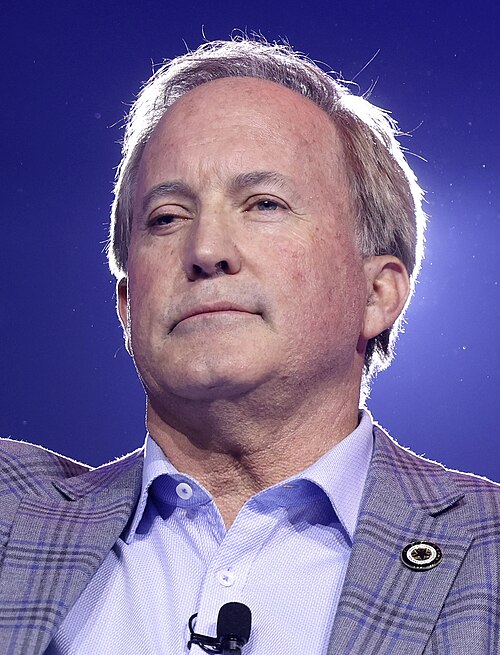
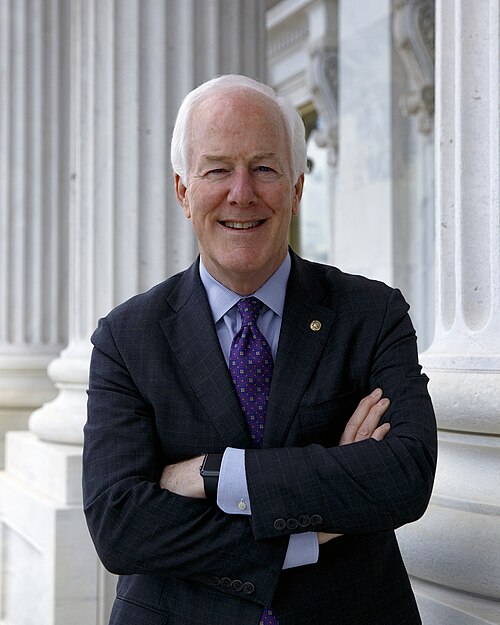
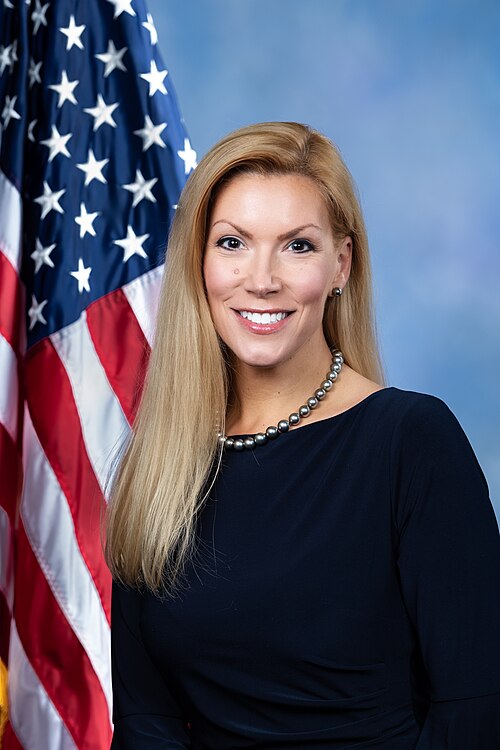
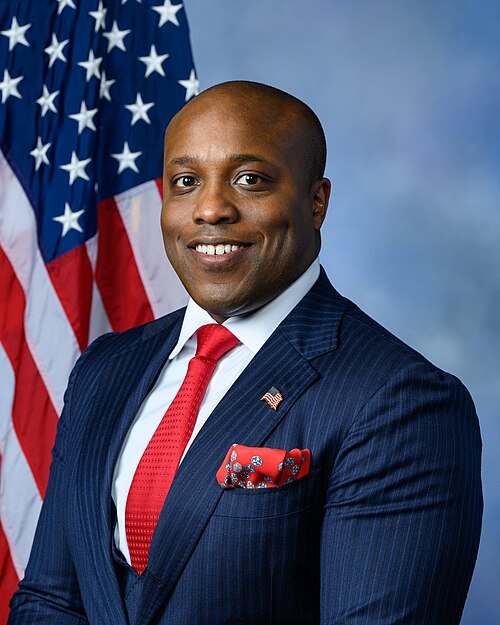
Senate primaries deserve more attention than they get because they often decide the general election before the general election starts. A bad primary winner in a swing state can hand the seat to the other party. A good one can put a previously-safe state in play.
Texas is the primary we currently track most closely, and it’s been one of the more eventful contests of the cycle. The March 3 Republican primary saw incumbent John Cornyn and Attorney General Ken Paxton emerge as the top two from a crowded field, with Cornyn at 43 percent and Paxton at 41 percent. Because no candidate cleared 50 percent, the race goes to a runoff on May 26, 2026 between the two. Polling has the runoff effectively tied, and the prediction-market money has moved several times based on Trump’s signals about whether he intends to endorse before the runoff. The Democratic primary in Texas also went to a runoff. Beyond Texas, the New Hampshire open Democratic seat and the Massachusetts and Minnesota open Democratic seats are producing primaries worth watching. As more primary markets launch on Polymarket and Kalshi, they’ll show up here. The race-by-race coverage on this page updates automatically whenever new markets get added to our tracking.
For most observers, the primary you should watch hardest is the one in the state where your party is on defense. A primary that produces a weak nominee in a competitive seat is how you lose a chamber. A primary that produces a strong one is how you save it.
Why the Senate map favors Republicans this cycle
The Senate is a body designed to make geography matter more than population. Each state gets two senators regardless of size, which means Wyoming has the same Senate representation as California. That structural feature is constant from cycle to cycle. What changes is which states have seats up, and in 2026 the answer is mostly states that lean Republican.
The reason is the way Senate terms stagger. Each senator serves a six-year term, and roughly one-third of the chamber is up every two years. The 2026 class was last elected in 2020, which was a strong Democratic year overall but a year in which Republicans still won most of the rural states. That means the 2026 incumbents up for reelection are mostly Republicans from states Republicans win comfortably, with a small number of Democrats from competitive states who got swept in on the 2020 Biden wave.
When you sort the 35 seats by competitiveness, you end up with a pattern: maybe eight to 10 truly competitive races, most of them either Democratic-held seats Republicans are trying to flip or Republican-held seats in states where Trump won narrowly. The remaining 25 or so are safe for the incumbent party. That’s a much smaller battlefield than you’d see in a year when more swing-state Democrats were on the ballot.
The implication is that even a strong Democratic environment doesn’t automatically produce a Democratic Senate. Democrats need a strong environment plus the specific seats that are up to break their way. That’s why their party-control number can lag their generic-ballot polling, and why the seat-count market keeps the probability mass clustered around the current Republican advantage even when the political winds shift.
How prediction markets compare to Senate polls
Senate races are some of the hardest races to poll accurately, and they’re also among the markets where Polymarket and Kalshi have built their best track record. The reason is that state-level polling has structural problems national polling doesn’t have. State polls have smaller sample sizes. Their methodology varies wildly from outfit to outfit. Many states have only one or two pollsters operating in them, which means a single bad poll can dominate the public average. And the kind of voter who responds to polls in a small state is often systematically different from the kind who actually votes.
Prediction markets aggregate all of this. A market price for a Senate race reflects not just what the public polling shows but also what traders think about the polling itself. If everyone knows a particular pollster has historically had a Democratic lean, the market discounts that pollster’s numbers. If a state’s electorate has been trending in one direction for cycles, the market prices that trend even when no recent poll has caught up. The result is that prediction markets have called individual Senate races more accurately than the polling averages in recent cycles, particularly in the final two months before an election.
The Pennsylvania Senate race in 2022 is the textbook example. Polls had John Fetterman leading throughout, even after a stroke that visibly affected his ability to campaign. The markets pulled back on him as election day approached, pricing in the chance that voters would be turned off by what they saw in the only debate. Fetterman still won, but he won by less than the polls predicted, and the markets had the closer number. Ohio in 2024 produced a similar pattern: the polls had Sherrod Brown overperforming what the political environment suggested, and the markets correctly priced in the gap.
This doesn’t mean the markets are always right. Low-volume Senate markets, especially for primaries or longshot races, can be moved by a single trader and shouldn’t be treated as gospel. But for the major statewide contests where money is flowing, the prediction market price has been a better signal than any individual poll for most of the past three cycles.
How to bet on the 2026 Senate election
If you’re an American resident interested in actually putting money on a Senate outcome, the legal landscape is more accommodating now than it has been at any point in U.S. history, but it’s also more complicated than most coverage makes it sound. Here’s the honest breakdown.
Where U.S. residents can legally bet on Senate races
Kalshi is the only fully CFTC-regulated platform offering Senate election contracts to American residents. Kalshi won a federal appellate court ruling in October 2024 that established its right to host election markets, and it’s been operating openly since. You can sign up with a U.S. bank account, deposit dollars, and trade contracts on Senate control, individual races, and party majorities. Settlement is in dollars and contracts pay out one dollar each if your side wins, zero if it loses. For most Americans most of the time, Kalshi is the simplest and most defensible way to take a Senate position.
State-level restrictions exist and you should check yours. Arizona has charged Kalshi with running an illegal gambling operation under state law, and several other state regulators have signaled interest in similar action. The federal court ruling protects Kalshi at the federal level but doesn’t preempt all state law in all circumstances. If you’re in a state with active regulatory hostility to election betting, the situation is genuinely unclear.
Polymarket is the world’s largest prediction market by volume and lists more Senate markets than Kalshi does, but the platform technically prohibits U.S. residents from creating accounts under the terms of its CFTC settlement. It operates on the Polygon blockchain and settles in USDC, the dollar-pegged stablecoin. Enforcement has been spotty and the platform is accessible from the United States, but using it as an American is a gray area that we don’t recommend taking lightly.
Offshore sportsbooks sometimes list Senate election markets when they’re not specifically restricted by state law. The legality varies by state. We don’t have a recommendation on this option.
What types of Senate bets you can make
The market structure on a Senate race can be more complex than the structure of, say, a coin flip on which party wins the presidency. The main contract types you’ll encounter are:
Party control is the simplest. A binary yes-or-no contract: will Republicans hold the Senate after the 2026 elections? Yes pays one dollar if Republicans end up with 50 or more seats counting the vice president’s tiebreaker. No pays one dollar if Democrats take control. These markets typically have the deepest liquidity of any Senate market because both retail and institutional traders take positions on them.
Seat count markets are bucketed. Rather than a single binary question, you’re betting on a specific range: will Republicans end the cycle with 51 seats? 52? 53? 54-plus? Each bucket is its own yes-or-no contract. The seat-count market is where you can express more granular views about the cycle, but the individual buckets have lower liquidity than the party-control market.
Individual race markets are state-by-state. Will Susan Collins win reelection in Maine? Will Jon Ossoff hold his Georgia seat? Each of these is a binary yes-or-no on a single race. Liquidity varies dramatically. The marquee races have plenty of action. Long-shot races in non-competitive states sometimes have less than a thousand dollars in cumulative trading volume, and at those levels the prices you see are not reliable.
Primary winner markets pick a single winner from a field of candidates. These can have a dozen or more outcomes, each priced at a fraction of a dollar that adds up to one dollar across all candidates. They tend to be active in the months leading up to a primary date and quiet otherwise.
How to read Senate prediction-market odds
Every contract on Kalshi or Polymarket is priced between zero and 100 cents. The price is the implied probability that the outcome will happen, expressed as a percentage. A contract trading at 64 cents means the market estimates a 64 percent probability of that outcome. If you buy that contract for 64 cents and it resolves yes, you get a dollar back, a profit of 36 cents. If it resolves no, you lose the 64 cents.
Comparing across platforms is straightforward as long as you remember that small differences are normal. If Kalshi has Republicans winning the Senate at 62 cents and Polymarket has them at 64 cents, that’s not a discrepancy worth chasing. If the gap is 10 cents or more, you’re either looking at thin liquidity on one of the platforms or a genuine difference in market sentiment between the two user bases. Either way, it’s worth investigating before assuming one is right.
A note on Senate-specific risks
The big-money national markets, like presidential election winner or Senate party control, are some of the most efficiently priced markets you’ll find anywhere on the internet. With tens of millions of dollars flowing through them, they reflect a real aggregation of trader views and they correct quickly when new information arrives. Individual Senate race markets are different. A North Dakota Senate race with $80,000 in total volume can be moved meaningfully by a single trader with $5,000 to spend. Primary markets are even thinner, and the prices you see can lag actual news by hours or days.
The practical implication is that the size of the bet you should take should track the size of the market you’re betting in. Putting real money on the party-control market is reasonable because the market is deep enough that the price reflects something close to the consensus of informed traders. Putting the same money on a primary in a state with a quarter-million dollars of volume means you’re more likely to be one of the larger players in that market, which means you’re more likely to be wrong about why the price is where it is. Bet small in thin markets. Bet bigger in deep ones. The deeper the market, the more the price is doing what prediction markets are supposed to do. The thinner it is, the more you’re effectively making a manual prediction with extra steps.
Senate methodology
The Senate page has some specific considerations that make it different from the presidential page. Here’s what we do and why.
For party-control odds, we pull from both Kalshi and Polymarket and display whichever has the deeper liquidity at the moment. Both platforms run continuous markets on which party wins the Senate, and they tend to agree within two or three points. When they disagree by more than that, the deeper market is the better signal because price discovery works better with more participants. We never average the two because the platforms have different user bases that sometimes hold genuinely different views.
For the seat-count market, we use Polymarket because it offers the most granular bucketed contracts. Kalshi runs a similar market under the KXDSENATESEATS ticker, but the buckets are narrower on Polymarket’s version and the volume tends to be higher. Each bucket on this page reflects the implied probability that Republicans end the cycle with exactly that number of seats, derived from the midpoint of the bid-ask spread for that bucket.
For individual race markets, we use whichever platform has the active market. Polymarket lists more individual Senate races than Kalshi does, particularly for less-prominent states. When a race exists on both platforms, we use the Polymarket version because its outcome naming is cleaner. Kalshi sometimes uses placeholder names in its multi-candidate markets that don’t read well.
Our update cadence is twice daily at 8 a.m. and 6 p.m. Eastern time. Senate races don’t typically move fast outside of election week. The exception is the day after a major poll release, a primary debate, or a candidate announcement, when individual race prices can shift several points in a few hours. On those days the cached numbers on this page can lag, and we recommend checking Polymarket or Kalshi directly for the freshest read.
Frequently asked questions
When is the 2026 Senate election?
The 2026 U.S. Senate elections will be held on Tuesday, Nov. 3, 2026, as part of the broader midterm elections. The new Senate will be seated in early January 2027. Senate elections happen every two years, with one-third of the chamber up at a time, because senators serve staggered six-year terms.
How many Senate seats are up in 2026?
Thirty-five of the 100 Senate seats are on the ballot in 2026. The exact number is 33 regular-term seats plus two special elections to fill seats vacated mid-term. Republicans are defending more total seats this cycle, but most of their seats are in safe states. The competitive battlefield is smaller than the topline number suggests.
Which party currently controls the Senate?
Republicans hold a 53-47 majority entering the 2026 cycle. The vice presidency is held by a Republican as well, which gives the party a tiebreaking vote on a 50-50 chamber, though that scenario is not currently in play given the existing margin.
What does it take to flip the Senate?
Democrats need to net three seats while losing none of their own to flip the chamber outright. A net gain of two seats produces a 50-50 split, which in the current configuration still leaves Republicans in control because of the vice president’s tiebreaking vote. The math is structurally harder for Democrats than it usually is for whichever party is in the minority, simply because the 2026 map has more safe Republican seats than safe Democratic seats.
Can I legally bet on a Senate race in the U.S.?
Yes, on Kalshi, the CFTC-regulated U.S.-based exchange. Kalshi won a federal appellate court ruling in October 2024 that established its right to offer election contracts to American residents. You can sign up with a U.S. bank account, deposit dollars and trade Senate markets directly. State-level restrictions exist in some places, including Arizona, where the attorney general has filed action against Kalshi. Check the rules in your state before signing up. Polymarket lists more Senate markets but technically prohibits U.S. residents under its CFTC settlement.
How accurate are prediction markets at calling Senate races?
In the last three election cycles, prediction markets have called individual Senate races more accurately than the polling averages in most contested states. The advantage is particularly pronounced in the final 30 days before an election, where markets have outperformed pollsters in roughly 70 percent of races studied in academic analyses. They’re not infallible. Low-volume markets and primaries with thin trading can be unreliable. But for the major statewide contests, prediction market prices have been the most accurate single signal available.
Where do these odds come from?
We pull live data twice daily from the public APIs of Polymarket and Kalshi, the two largest prediction markets covering U.S. politics. We never modify the underlying numbers. The probabilities you see are the midpoint of the live bid-ask spread on each market, expressed as a percentage.
Why do Polymarket and Kalshi sometimes disagree?
The two platforms have different user bases. Polymarket is global, crypto-native, and tends to attract international traders and politically engaged hobbyists. Kalshi is U.S.-only, dollar-denominated and pulls in more domestic retail participants. Small disagreements are normal. Larger gaps on a single race usually indicate one platform has thinner liquidity rather than a real difference in beliefs.
We don’t operate Polymarket or Kalshi. We aggregate their public data twice a day and present it in one place, for free, with no affiliate spam.