
2026 Governor Election Betting Odds
Live odds on all 36 governor races on the 2026 ballot, the open-seat fights drawing the most money, and the primaries still to resolve. Prices from Polymarket and Kalshi, updated twice daily.
Thirty-six states will elect a governor in November 2026, more than any other type of office on the ballot that year. That includes some of the largest political markets on Polymarket and some of the most unpredictable races in American politics, because governors win on rules that don't always look like the rules of federal elections. A state can vote 60-40 for one party at the presidential level and elect a governor from the other party by 10 points. It happens every cycle, and the June 2 primaries proved the point: Iowa Republicans rejected a Trump-endorsed congressman for a political newcomer, and California sent a Republican to the general election for the first time in years. Below: live US election odds on every gubernatorial race the prediction markets are pricing, plus the open seats and incumbent fights moving the most money right now.
All 2026 governor races we track
The list above shows every gubernatorial race we currently have live odds for. Each row links to the underlying prediction market, displays the current implied probability for the leading party or candidate, and updates twice daily at 8 a.m. and 6 p.m. Eastern. We add new state races as they launch on Polymarket or Kalshi, so this list grows through the cycle as more markets come online. If you're looking for a specific state and don't see it, it usually means the race is in a state safe enough that no market has formed, or the contract exists but hasn't yet crossed our minimum volume threshold for tracking. You can always click through to any state on the state elections pages for a closer look.
Gubernatorial primary odds
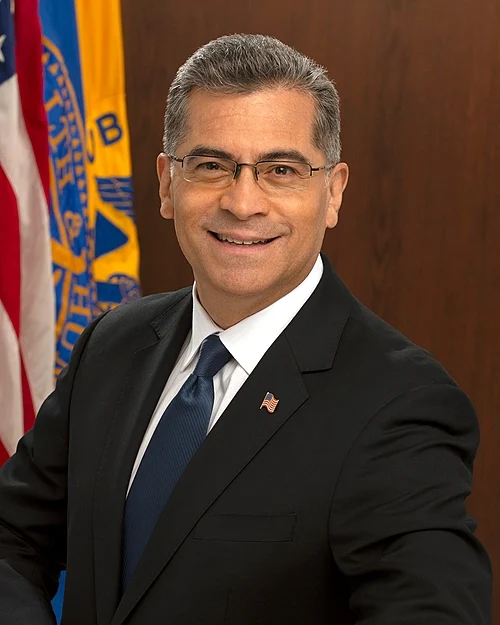
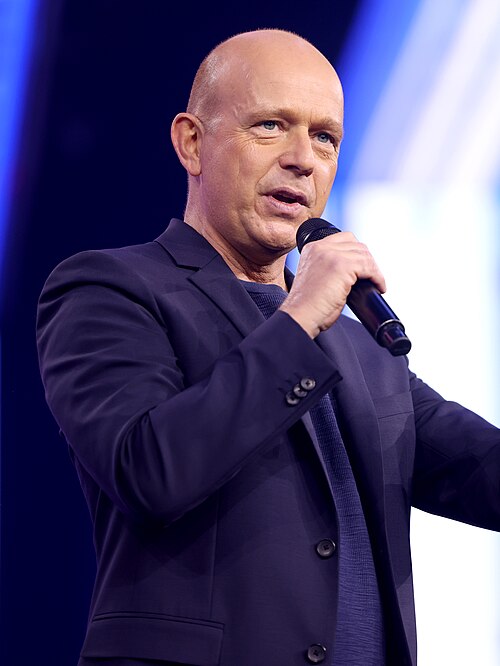
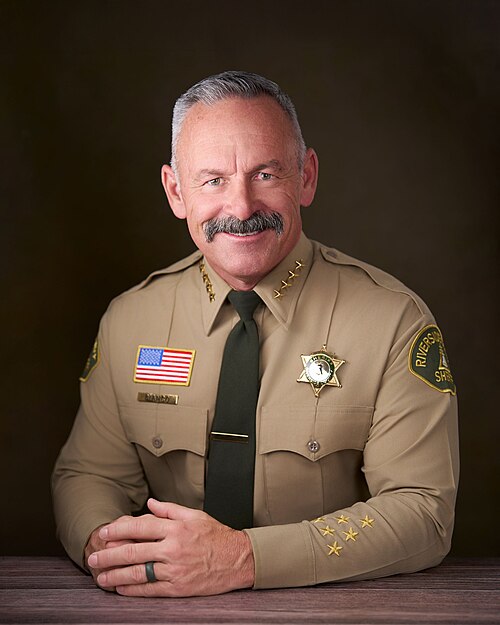
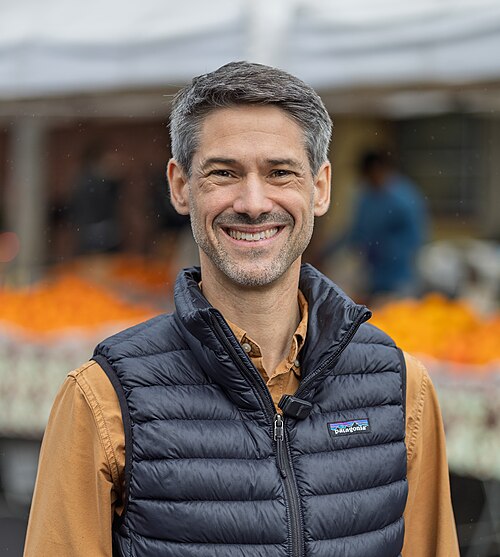
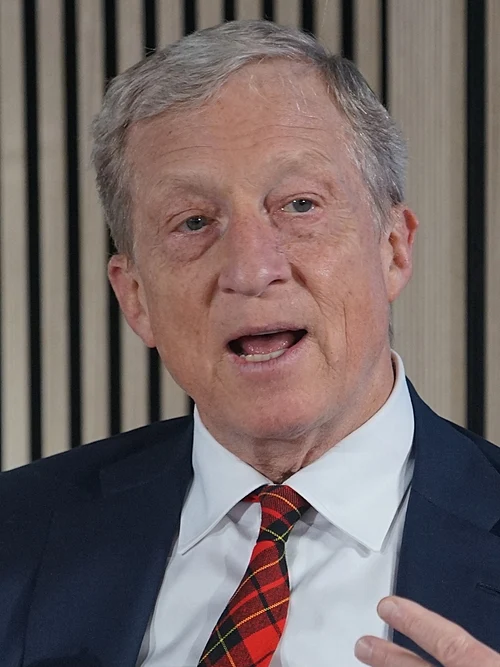
Primary markets in gubernatorial races are interesting precisely because they're harder to predict than primaries for federal office. A governor's primary is fought on state-specific issues, with state-specific candidate networks and state-specific media coverage. National media usually doesn't pay attention until the primary is decided, so prediction markets fill the information gap. The June 2 results showed why the markets matter: in Iowa, businessman Zach Lahn edged Trump-endorsed Rep. Randy Feenstra by under a point, and in California's top-two field, Republican Steve Hilton and Democrat Xavier Becerra advanced while self-funder Tom Steyer finished third and dropped out.
The California top-two primary is the most structurally complex governor primary in the country. Every candidate from every party competes on the same ballot, and the top two finishers advance to November regardless of party. That structure did exactly what skeptics feared for Democrats on June 2: the Democratic vote split across Steyer, Becerra, Porter, Mahan and Villaraigosa, and Republican Steve Hilton finished first, with Becerra taking the second slot. The Florida Republican primary is the most actively traded, with Byron Donalds the long-running favorite. The South Carolina Republican primary, an open seat after Henry McMaster's term-limited exit, has been the most competitive contest for Trump's endorsement.
The races getting the most attention
The highest-volume governor race on the board. Term limits ended Ron DeSantis's career in Tallahassee, and Rep. Byron Donalds has built a commanding Republican primary lead after picking up Trump's endorsement. The lingering question is whether First Lady Casey DeSantis enters. On the Democratic side, former Republican Rep. David Jolly leads a thin field in a state the party lost by double digits in 2024.
Hochul won a full term in 2022 in the closest New York governor's race in two decades. Her 2026 field consolidated fast: Lt. Gov. Antonio Delgado dropped his primary challenge in February, and on the Republican side Rep. Elise Stefanik suspended her campaign, leaving Nassau County Executive Bruce Blakeman. The market gives Hochul a comfortable but not overwhelming lead.
The June 2 top-two primary delivered a surprise: Republican Steve Hilton finished first and Democrat Xavier Becerra second, sending a Republican into a California governor's general election for the first time in years. The Democratic field had scattered after Eric Swalwell exited, splitting the vote across Steyer, Becerra, Porter, Mahan and Villaraigosa. Tom Steyer, who spent more than $132 million of his own money, finished third and failed to advance; Katie Porter and Matt Mahan both conceded on election night. Becerra is favored in a heavily Democratic state, but Hilton's first-place finish makes November more interesting than the partisan baseline suggests. Counting continues through the state's July 10 certification deadline.
Abbott won the March 3 Republican primary with 82 percent and now faces Democratic state Rep. Gina Hinojosa. He entered the cycle with more than $105 million on hand and intends to spend heavily to flip Harris County. The market gives him a strong favorite's position, but Texas is one of the larger gubernatorial markets simply because of the state's size and cumulative volume.
A race that's been talked about for years and is finally happening. Brian Kemp's term-limited exit opens a seat in a state that has swung between the parties at every level. Both primaries are competitive, and the prediction markets price the general as one of the closest in the country.
An open seat Democrats have to defend in a true swing state. Both parties have competitive primaries, and the general election is one of the marquee battlegrounds of the cycle alongside Pennsylvania, where Democrats are also defending an open seat.
Volume tells you which races traders consider most consequential. Florida is the highest-volume governor race in the country and probably will remain so through the August 18, 2026 primary. New York is a different kind of race, a sitting Democrat defending a seat in a state that nearly flipped in 2022. California now moves to a Becerra-Hilton general election that will keep producing news through November. Several other races worth watching as the cycle develops: Arizona and Nevada for swing-state contests with national implications, and Wisconsin for an incumbent Democrat in a state Republicans have been gaining ground in.
Open seats and incumbent races
What separates a governor cycle from a Senate cycle is the number of open seats. Senators serve six-year terms and retire less often. Governors are pushed out by term limits in 36 states. In 2026, more than two dozen of the 36 races on the ballot involve either a term-limited governor or a sitting governor who has chosen not to seek reelection.
Open seats are where the prediction markets get the most useful. When there's an incumbent running, the market mostly prices in incumbency advantage and tracks news about the incumbent. When the seat is open, the market has to weigh candidate quality, primary dynamics, party strength and national environment all at once. The result is more price movement, more volume and more information per dollar traded. The biggest open seats this cycle are Florida, California, South Carolina, Tennessee, Oregon, Arkansas, Iowa and Nebraska.
The incumbent races are mostly less interesting but with notable exceptions. Hochul in New York is the highest-profile incumbent facing real reelection risk. Tony Evers in Wisconsin is running for a third term in a state trending Republican. A useful pattern to know: incumbent governors win reelection at about 75 percent in a normal cycle. The exceptions are governors hit by scandal, governors in states that have flipped politically since their first election, and governors who've alienated their own party's base. Compared to the 2026 Senate election, which has produced an unusual cluster of incumbent retirements, the gubernatorial cycle is mostly the standard mix of term-limited governors handing off to new nominees.
How split-ticket voting affects governor races
The single thing that makes governor races different from federal races is the survival of split-ticket voting at the state level. Federal politics has polarized into something close to pure partisanship, where most voters pull the same party's lever for everything. State politics hasn't fully gotten there, and gubernatorial races are where you still see voters making different choices.
Phil Scott in Vermont is the iconic example, a Republican who's won four straight statewide elections in a state Joe Biden carried by 36 points. Larry Hogan did the same in Maryland. On the Democratic side, Laura Kelly in Kansas, Andy Beshear in Kentucky, and Roy Cooper in North Carolina all won statewide in red or red-leaning states by running as state-issue Democrats.
The implication for prediction markets is that they price different things than presidential markets. A market on whether a Republican wins the Florida governorship in 2026 is not the same as one on whether a Republican wins Florida's electoral votes in 2028. The first is about whether the nominee runs a good enough state-level campaign to overperform the partisan baseline. The second is about national environment and the top of the ticket. The states where polls and markets diverge most are exactly the states where split-ticket voting is most likely. For context on which states lean which way, see our red states vs. blue states map.
Why governor races are harder to forecast
There's a structural reason gubernatorial polling tends to be less reliable than national polling. State-level pollsters work with smaller budgets, smaller samples and less academic infrastructure. Some states get one or two quality polls per cycle. Others get a dozen, but with wildly varying methodologies. The result is that the public polling average for a governor's race can be dominated by a single pollster's house effects in a way the presidential average never is.
Prediction markets pick up the slack in two ways. First, they aggregate not just polls but also the fundamentals pollsters can't capture cleanly: fundraising, what party operatives are saying off the record, early ground-game numbers, national momentum. Second, they update continuously, so a single bad poll doesn't dominate the price for weeks. The places this matters most are mid-tier races in mid-tier states. A governor's race in Iowa or Oklahoma might have three polls all cycle and $200,000 in market volume. The market's signal there is weaker than the national markets, but still typically better than the polling alone.
The other thing about governor races: they often turn on a single state issue that the market starts pricing before the polls catch up. A budget crisis, a state policy fight that becomes a national story, a specific local issue that defines the campaign. Traders pick up on these faster than the polling industry, which is on a slower release cycle and tends to ask generic questions rather than issue-specific ones.
How to bet on the next governor
Kalshi, the CFTC-regulated U.S. exchange, hosts contracts on most major governor races, and U.S. residents can sign up and trade in dollars. State-by-state legality is murkier for governor markets than federal ones: Arizona has charged Kalshi with illegal gambling, and several other state attorneys general are watching. Polymarket lists more races but prohibits U.S. residents under its CFTC settlement.
Most governor markets are binary: will a specific party or candidate win, yes or no, priced between zero and 100 cents as an implied probability. Races with deep fields, like the Florida or California primaries, use multi-outcome markets where each candidate has a price and all the prices add up to a dollar.
Governor markets are smaller than federal markets. The largest, like Florida and California, reach eight figures in cumulative volume, but most are far thinner. A thin-market price tells you what two or three traders thought, not an efficient consensus. Scale your confidence to the liquidity.
Governor races move on state-specific news that national feeds miss: a primary debate, a candidate gaffe, a state-budget fight. Candidate quality matters more here than in any other race, because a weak nominee can lose a state that should be a coin flip. Watch the candidates, not just the partisan lean.
A note on betting your own state
One thing specific to gubernatorial markets: there's a real chance you have private knowledge about your own state's race that the broader market doesn't price. Someone following the Hochul-Blakeman race on local New York news knows things the national market is slow to absorb. This isn't insider trading in any legal sense, but it does mean betting on your own state may give you a genuine informational edge, and betting on a state you don't follow puts you at a disadvantage to traders who do.
The smart play for most bettors is to focus on states where you have actual knowledge, either because you live there or follow them closely, and avoid markets where you're just guessing. The standard responsible-betting advice applies as everywhere: only stake money you can afford to lose, treat it as entertainment rather than income, and don't chase losses. The governor-specific version is about market depth. The thinner the market, the more you should treat your bet as a manual prediction with extra steps rather than a position in an efficient market.
Find your state's governor race
Click any state to see its full governor race odds, candidates and history.
- Alabama
- Alaska
- Arizona
- Arkansas
- California
- Colorado
- Connecticut
- Delaware
- District of Columbia
- Florida
- Georgia
- Hawaii
- Idaho
- Illinois
- Indiana
- Iowa
- Kansas
- Kentucky
- Louisiana
- Maine
- Maryland
- Massachusetts
- Michigan
- Minnesota
- Mississippi
- Missouri
- Montana
- Nebraska
- Nevada
- New Hampshire
- New Jersey
- New Mexico
- New York
- North Carolina
- North Dakota
- Ohio
- Oklahoma
- Oregon
- Pennsylvania
- Rhode Island
- South Carolina
- South Dakota
- Tennessee
- Texas
- Utah
- Vermont
- Virginia
- Washington
- West Virginia
- Wisconsin
- Wyoming
How we source this data
We track every gubernatorial market with meaningful trading volume on either Polymarket or Kalshi. For most major-state races we pull from Polymarket first, because it lists more individual governor races and structures them with cleaner candidate names than Kalshi does. Where Polymarket has the market, we use it. Where it doesn't, we fall back to Kalshi if available, and where neither has built a market, we don't show one.
Primary markets are pulled separately from general election markets. The same state can have an active Republican primary market, an active Democratic primary market and an active general election market simultaneously, and each gets its own row. Once a primary resolves, the market closes and the winner becomes the named candidate in the general election market.
We update twice a day at 8 a.m. and 6 p.m. Eastern. Governor markets typically move slowly outside major news events, so the half-day cadence is plenty. The exceptions are primary night, debate nights and the days after a major candidate announcement, when prices can shift several points within hours. The volume figures shown on each race are total cumulative volume, not 24-hour volume, because cumulative volume is a better proxy for how much information is priced into a market.
Frequently asked questions
How many governors are elected in 2026?
Thirty-six states will hold gubernatorial elections in 2026, on Nov. 3, alongside the rest of the midterm ballot. The states not on the 2026 ballot are New Hampshire and Vermont, which elect governors every two years and last did so in 2024, plus Virginia, New Jersey, Louisiana, Mississippi and Kentucky, which operate on odd-year or off-cycle schedules.
Which 2026 governor races are most competitive?
Florida, New York, Georgia, Arizona, Michigan, Pennsylvania, Nevada, Wisconsin and Maine are typically the states traders price as most competitive. The list shifts as candidates announce and primaries resolve. California's general election is usually safe for Democrats, but its June 2 top-two primary sent Republican Steve Hilton through alongside Democrat Xavier Becerra, so the November race may draw more attention than a typical California governor contest.
Are governor races easier or harder to predict than Senate races?
Generally harder. Governor races have less national polling, smaller state-level pollster operations, and a stronger element of candidate-specific factors that polls don't capture well. Prediction markets tend to outperform polls in gubernatorial races by a larger margin than they outperform polls in Senate races, precisely because the polling baseline is weaker.
Can I legally bet on a governor's race?
Yes, on Kalshi, the CFTC-regulated U.S.-based exchange that offers governor election contracts to American residents under authority established by an October 2024 federal court ruling. State-by-state legality varies, with Arizona having taken the most aggressive regulatory stance and several other states' attorneys general signaling interest. Polymarket lists more gubernatorial markets but prohibits U.S. residents under its CFTC settlement.
Why are gubernatorial primary markets so volatile?
Primary markets are smaller than general election markets, with fewer participants and thinner liquidity, which makes them more sensitive to news and trader sentiment. They also resolve faster, since the primary date is typically months before November, so traders are weighing nearer-term factors. Both features add volatility relative to the long-running general election markets.
How do you decide which races to show?
We show every gubernatorial market with meaningful trading volume on Polymarket or Kalshi. As of this update, that includes the open-seat races traders are most actively pricing plus the incumbent races where there's genuine competition. As more markets launch on either platform, they appear here automatically.
Why do governor races sometimes go the opposite way from the presidential vote?
Split-ticket voting. Governor races are won on state-specific issues, candidate quality and personal political brands that don't reduce neatly to national partisanship. Vermont elects Republican governors while voting Democratic nationally. Kansas, Kentucky and North Carolina have elected Democratic governors recently while voting Republican for president. The pattern is shrinking over time but still exists, and it's the single biggest reason gubernatorial markets are sometimes worth betting differently than presidential markets.
We don't operate Polymarket or Kalshi. We aggregate their public data twice a day and present it in one place, for free, with no affiliate spam.