
2026 Election Tracker
Florida Election Odds - 2026 Live Betting Odds & Voting History
Florida 2026 election odds for the open governor race with Byron Donalds, the Ashley Moody Senate special, and the new map plus Florida voting history.
| Electoral votes | 30 |
|---|---|
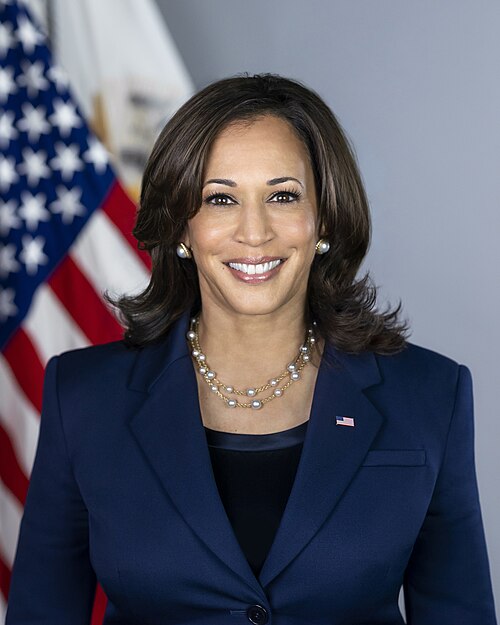
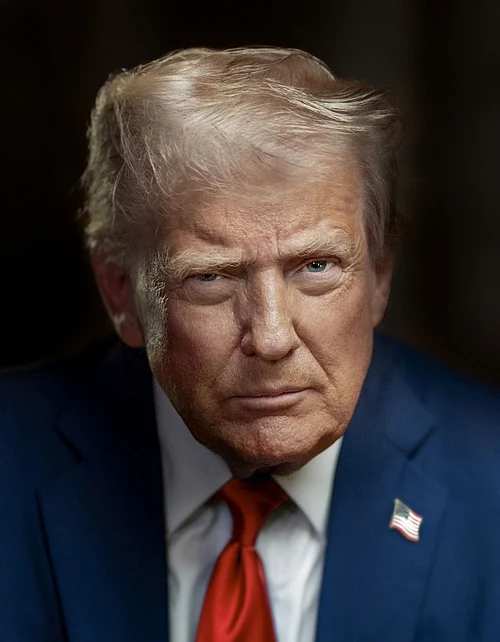
| 2024 presidential result | Trump 56% / Harris 43% (R+13 margin) |
| Current governor | Ron DeSantis (R), term-limited |
| U.S. senators | Ashley Moody (R, appointed January 2025), Rick Scott (R) |
| 2026 races on the ballot | Governor (open seat), U.S. Senate special election, all 28 U.S. House seats under new map |
| Cook PVI | R+6 |
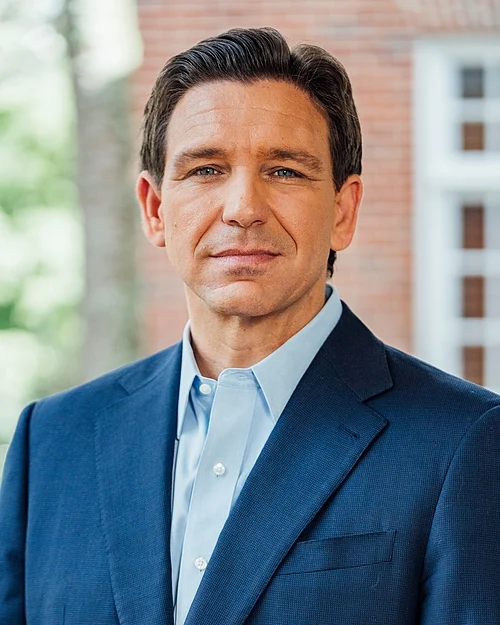
Florida is the third-largest state in the country and a Republican stronghold whose political weight in 2026 is impossible to overstate. With 30 electoral votes, a term-limited governor in Ron DeSantis, and an active mid-decade redistricting fight that just produced a new congressional map after a contentious April special session, Florida is generating more prediction-market volume on its 2026 races than any other state in the country. Polymarket alone has tracked nearly $20 million in trading on the California gubernatorial race this cycle, but Florida governor and Florida Senate special election markets are not far behind, and the new redistricting layer is producing its own market activity on whether DeSantis's map will survive the inevitable court challenges. Our team here at ElectionOdds.com has it all covered.
Is Florida a Red State or a Blue State?
Florida is now a solidly red state, after spending most of the 21st century as the country's most famous swing state. Trump carried Florida by 13 points in 2024 after winning it by 3.4 in 2020 and 1.2 in 2016. The state has not elected a Democrat to statewide office since 2018 (Nikki Fried as agriculture commissioner) and has not voted Democratic for president since Barack Obama won it by less than 1 point in 2012. Cook PVI now rates Florida R+5, a dramatic shift from the R+2 to D+1 range it occupied through the 2000s and 2010s.
The Florida realignment was one of the most striking political stories of the past decade. As recently as 2018, Florida's gubernatorial race was decided by 0.4 points. By 2022, Ron DeSantis won reelection by 19 points and Marco Rubio won his Senate race by 17. The state's two largest swing counties, Miami-Dade and Hillsborough, both moved sharply right. Miami-Dade, which Hillary Clinton carried by 29 points in 2016, went for Trump by 11 in 2024, a 40-point swing in eight years.
The shift was driven by two forces. First, Cuban, Venezuelan, and Colombian voters in South Florida moved decisively toward Republicans, partly in response to Democratic messaging that they read as socialist. Second, the state's net migration during the COVID era brought in hundreds of thousands of conservative voters from the Northeast and California, while older liberal voters were less likely to relocate. The combined effect was a state that broke its swing-state identity in a single cycle.
Democrats still hold ground in Orange County (Orlando) and Broward County (Fort Lauderdale), and Miami-Dade remains demographically Democratic even if it has voted Republican in recent cycles. The state's 28 House seats include a handful of districts that are competitive on paper, though the 2026 DeSantis-backed redistricting could push the delegation to roughly 24R-4D. Florida has 30 electoral votes for the 2028 election after gaining one in the 2020 reapportionment.
Will Florida become competitive again? Not on the timeline most Democrats hoped for. The Cuban-American shift looks durable. The migration patterns continue to favor Republicans. National Democratic groups have effectively stopped spending on statewide Florida races. The state would need a fundamental Republican collapse, not a normal swing year, to be competitive in 2028. For a full state-by-state comparison, see the red states vs. blue states map.
Florida Governor Betting Odds
The Florida governor's race is the most consequential open-seat contest in the country in 2026. Ron DeSantis is term-limited after eight years in office, and the Republican primary on August 18, 2026 has consolidated faster than most observers expected. Representative Byron Donalds of Naples picked up Donald Trump's endorsement in February 2025 and has held a commanding lead in every public poll since. The most recent Emerson College survey (April 2026) put him at 46% in a multi-candidate field, with Lieutenant Governor Jay Collins at 4%, investment-firm executive James Fishback at 4%, and 39% undecided. Donalds raised $22 million in the first quarter of 2026, the largest non-incumbent quarterly haul in Florida history, and his fundraising apparatus has effectively frozen the race in place.
The unresolved variable is Florida First Lady Casey DeSantis. She has not declared a candidacy as of this writing, and an investigation into her Hope Florida initiative dented her stock earlier this year, but Ron DeSantis has signaled he would back her if she enters. In hypothetical match-ups that include her, Donalds still leads, 44% to her 7% with Trump's endorsement in play. The qualifying deadline has passed and the primary is roughly three months away, so any decision from her would need to come soon.
On the Democratic side, former Republican representative David Jolly leads a thin field with 21% support, followed by Orange County Mayor Jerry Demings at 10%. The party last won a Florida gubernatorial election in 1994, when Lawton Chiles was re-elected, and the markets are not pricing this cycle any differently. DeSantis won by 19.4 points in 2022 and Trump carried the state by 13 points in 2024. Find all of the Governors elections here.
Governor
4 marketsGovernor primary
3 marketsFlorida Governor Election History
Republicans have held the Florida governorship continuously since January 1999, when Jeb Bush took office, making it one of the longest single-party runs for any governorship in the country. But the length of that streak hides how genuinely competitive these races were for most of it. Charlie Crist won the open seat in 2006 by about seven points and was the last Florida governor of either party to crack 50 percent of the vote. After Crist, the contests got razor-thin: Rick Scott won in 2010 by 1.2 points and again in 2014 by roughly one point, and Ron DeSantis squeaked into office in 2018 by just 0.4 points, about 32,000 votes out of more than eight million cast, against Tallahassee mayor Andrew Gillum.
Then 2022 broke the pattern completely. DeSantis crushed Crist, by then a Democrat, by just under 20 points, the widest margin in a Florida governor's race since Bush's 13-point re-election in 2002. DeSantis carried Miami-Dade County, a longtime Democratic stronghold that no Republican governor had won since Bush, and ran up historic margins with Latino voters. That result, more than any single presidential number, is what convinced both parties that Florida had stopped being a swing state. The 2026 race is the first open-seat contest since 2018, and with DeSantis term-limited, prediction markets treat the Republican primary as the contest that effectively decides the governorship.
Florida Senate Betting Odds
Florida has two Republican senators in the chamber right now and is holding one special election on November 3, 2026 to fill the remainder of Marco Rubio's term, which extends to January 2029.
Ashley Moody, the former Florida attorney general, was appointed by DeSantis in January 2025 to fill Rubio's seat after his confirmation as Secretary of State. She is running for the special election to complete the term and faces no credible Republican primary opponent. Representative Cory Mills briefly considered a challenge in early 2025 but pulled back, leaving Moody with an effectively clear lane. She has Trump's endorsement, hired veteran Trump-world operatives Chris LaCivita and Tony Fabrizio to her super PAC, and posted strong fundraising quarters that have continued to scare off challengers. The primary is August 18, 2026.
On the Democratic side, the field includes state senator Tina Polsky and former Representative Debbie Mucarsel-Powell, who lost to Rick Scott in 2024. Neither has cleared the polling threshold that would suggest a competitive general election, and Florida hasn't elected a Democratic senator since Bill Nelson won his last term in 2012. The prediction markets are pricing the Moody seat as likely Republican.
Rick Scott, the state's other senator, is not on the 2026 ballot. His next election is 2030. See all of the election odds for senate seats here.
U.S. Senate
Florida U.S. Senate Election History
Florida's Senate delegation tells the same realignment story on a slower clock. Democrat Bill Nelson held one of the state's seats for three terms, from 2001 to 2019, and was the last Democrat to win a Senate race in Florida, taking his final term in 2012. Republican Marco Rubio won the other seat in 2010 in a three-way race, held it in 2016, and then in 2022 became the first Florida Republican to win a third Senate term, beating Democratic Representative Val Demings by more than 16 points despite being heavily outspent.
Rick Scott completed the GOP sweep by unseating Nelson in 2018 by about 10,000 votes, one of the closest Senate races in the country that year, and won re-election in 2024. When Rubio was confirmed as Secretary of State in early 2025, Governor DeSantis appointed former state attorney general Ashley Moody to the seat, keeping both seats in Republican hands. The 2026 special election to fill the remainder of Rubio's term is the marquee Senate contest on the ballot, and with no Democrat having won statewide since 2018, the markets price it as likely Republican.
Florida House Betting Odds
Florida's congressional delegation is the story of the 2026 cycle, and not just because of the size of the state. On April 29, 2026, during a five-day special legislative session called by DeSantis, the Florida legislature passed a new congressional map that would shift the delegation from its current 20-Republican, 8-Democratic split to 24-Republican, 4-Democratic. The map specifically targets four Democratic incumbents, Kathy Castor of Tampa, Darren Soto of Orlando, Lois Frankel of West Palm Beach, and Debbie Wasserman Schultz of Fort Lauderdale, by cracking their districts across multiple new Republican-leaning territories. DeSantis signed the bill on May 4.
The legal backdrop matters. The same day the new map passed, the U.S. Supreme Court issued its 6-3 ruling in Louisiana v. Callais, holding that the Voting Rights Act does not require the creation of majority-minority districts and that doing so can amount to unconstitutional racial gerrymandering. DeSantis had been waiting for this ruling, he later said publicly he had "advance knowledge" of how the Court would rule, and his map relies on it to dismantle Florida's old 20th Congressional District in South Florida. A state-court lawsuit was filed on May 4 arguing the new map violates Florida's Fair Districts Amendment, which voters approved in 2010 to bar partisan gerrymandering. The case is expected to reach the Florida Supreme Court, where six of the seven justices were appointed by DeSantis.
Prediction markets are pricing this in two ways. The first is the seat-by-seat outcome under the new map: most analysts now rate FL-9, FL-14, FL-22, and FL-25 as Republican-favorable or toss-up where they were previously safe Democratic. The second is the meta-question of whether the new map will survive court review at all. Both layers generate market activity, and we track them as separate questions.
The primary for the new districts has been moved from April to June 2026 to accommodate the new lines, and the qualifying period has been adjusted accordingly. See all election odds for house seats here.
U.S. House districts
39 marketsFlorida U.S. House Election History
Florida's congressional delegation has grown with the state's population, from 23 seats in the 1990s to 28 today after the 2020 census added a seat. For most of the past two decades the delegation was closely divided, reflecting Florida's swing-state status, but Republican-friendly map-drawing and the state's rightward shift steadily widened the GOP edge. After the 2022 redistricting, which a DeSantis-backed map pushed to a 20-8 Republican advantage, the delegation reached its most lopsided point in modern history.
The 2026 cycle raises the stakes again. A new mid-decade map, passed in a special session in April 2026 and signed in May, is designed to move the delegation toward a 24-4 Republican split by cracking four Democratic-held South Florida districts. The map relies on the Supreme Court's 2026 ruling in Louisiana v. Callais and faces a Fair Districts challenge expected to reach the Florida Supreme Court, where six of seven justices are DeSantis appointees. Prediction markets are pricing both the seat-by-seat outcomes and the larger question of whether the new map survives at all.
Florida Presidential Election Betting Odds
Florida is no longer a swing state. The last Democratic presidential candidate to win it was Barack Obama in 2012, and the state has moved significantly to the right in each of the three presidential elections since. Trump won by 1.2 points in 2016, by 3.4 points in 2020, and by 13 points in 2024, one of the most dramatic decade-long shifts in any large state. The Republican margin in 2024 was driven by gains among the state's increasingly conservative Latino population and the continued rightward drift of suburban counties that were competitive a decade ago.
For 2028, the prediction markets currently treat Florida as safely Republican regardless of who tops either party's ticket. The interesting question on this page is not whether the state will go Republican, it almost certainly will, but how Florida's 30 electoral votes interact with the rest of the map for Republican nominees who can or cannot count on Florida's now-reliable margin. Marco Rubio's elevation to Secretary of State in 2025 took Florida's most prominent presidential prospect off the 2028 board, but his name still surfaces in long-shot markets and his standing among Florida Republicans remains a relevant data point for whatever path he takes after his cabinet service ends.

Florida Presidential Election History
For a generation, Florida was the most important swing state in presidential politics, and usually the closest. The 2000 election was decided here by 537 votes after a 36-day recount that went to the Supreme Court and handed the presidency to George W. Bush. Bush carried the state more comfortably in 2004, then Barack Obama flipped it twice, winning by less than three points in 2008 and by under a single point in 2012, one of the narrowest statewide wins of that election. Through all of it, Florida earned its reputation as the ultimate bellwether, the state both campaigns had to have.
That era is over. Donald Trump won Florida by 1.2 points in 2016, expanded the margin to 3.4 points in 2020 even as he lost nationally, and then carried it by roughly 13 points in 2024, his largest Florida margin and the widest presidential margin any candidate has posted in the state since the 1980s. The realignment was driven by enormous Republican gains among Cuban, Venezuelan, and Colombian voters in South Florida and by years of conservative in-migration. National Democratic groups have largely stopped contesting the state at the presidential level, and for 2028 the markets price Florida's electoral votes as reliably Republican regardless of the nominee.
Florida Political Props & Other Markets
State-specific prediction markets tied to Florida politics, like cabinet moves, resignations, and ballot questions.
Special Election
Trump Executive
Florida Political Polls
The polls below pull the most recent 2026 survey data for Florida's marquee races, refreshed from public polling aggregates. In the governor's race you will see Republican primary numbers for Byron Donalds, Lieutenant Governor Jay Collins, and businessman James Fishback, along with general-election matchups testing Donalds against Democrat David Jolly and Orange County Mayor Jerry Demings. The Senate special-election polling tracks appointed Senator Ashley Moody against Democratic contenders including former Representative Debbie Mucarsel-Powell and state senator Tina Polsky.
Polling in Florida has consistently understated Republican strength over the past two cycles, so treat tight numbers with some caution and watch the trend lines rather than any single survey. Where a pollster carries a partisan lean, that is noted next to its name. If a race has no recent public polling, that section will say so rather than show stale data.
Florida governor polls
| Pollster | Dates | Sample | Result |
|---|---|---|---|
| RealClearPolitics | July 8 – September 21, 2026 | Byron Donalds (R) 47% · David Jolly (D) 41% · Other/ Undecided[ai] 12% | |
| Stetson University | September 14–21, 2026 | 830 (LV) | Byron Donalds (R) 51% · David Jolly (D) 39% · Other 5% · Undecided 5% |
| St. Pete Polls | September 15–17, 2026 | 913 (LV) | Byron Donalds (R) 44% · David Jolly (D) 43% · Undecided 9% |
| Change Research (D) | September 7–9, 2026 | 1,107 (LV) | Byron Donalds (R) 44% · David Jolly (D) 47% · Undecided 7% |
| Hart Research Associates (D) | August 10–13, 2026 | 600 (LV) | Byron Donalds (R) 45% · David Jolly (D) 46% · Undecided 9% |
| 270toWin | July 13 – August 6, 2026 | Jay Collins 13.5% · Byron Donalds 47.5% · James Fishback 9% · Paul Renner 4.5% · Other/ Undecided 25.5% |
Polling data adapted from 2026 Florida gubernatorial election under CC-BY-SA 4.0. Last refreshed 7 hours ago.
Florida U.S. Senate polls
| Pollster | Dates | Sample | Result |
|---|---|---|---|
| 270toWin | September 11–24, 2026 | Ashley Moody (R) 48.8% · Angie Nixon (D) 42.5% · Other/ Undecided 8.7% | |
| RealClearPolitics | July 8 – September 21, 2026 | Ashley Moody (R) 49% · Angie Nixon (D) 42.4% · Other/ Undecided 8.6% | |
| Stetson University | September 14–21, 2026 | 830 (LV) | Ashley Moody (R) 51% · Angie Nixon (D) 40% · Other 3% · Undecided 5% |
| InsiderAdvantage (R) | September 20–21, 2026 | 600 (LV) | Ashley Moody (R) 49% · Angie Nixon (D) 42% · Other 2% · Undecided 7% |
| St. Pete Polls | September 15–17, 2026 | 913 (LV) | Ashley Moody (R) 45% · Angie Nixon (D) 45% · Other 3% · Undecided 7% |
| Quantus Insights (R) | September 8–10, 2026 | 733 (LV) | Ashley Moody (R) 50% · Angie Nixon (D) 43% · Other 3% · Undecided 4% |
Polling data adapted from 2026 United States Senate election in Florida under CC-BY-SA 4.0. Last refreshed 7 hours ago.
Frequently Asked Questions
Who is favored to win the 2026 Florida governor race?
Republican Byron Donalds is the clear front-runner in prediction markets after consolidating Trump's endorsement and a commanding fundraising lead. The Republican primary is August 18, 2026.
When is the Florida Senate special election?
The special election to fill the remainder of Marco Rubio's term is November 3, 2026. Appointed senator Ashley Moody is running to complete the term through January 2029.
What changed with Florida's congressional map?
A new map signed May 4, 2026 redraws the delegation toward a roughly 24R-4D split, targeting four Democratic incumbents. A Fair Districts lawsuit challenging it is expected to reach the Florida Supreme Court.
Is Florida still a swing state in presidential elections?
No. Florida has voted Republican in the last three presidential elections by a widening margin, reaching R+13 in 2024. Markets treat its 30 electoral votes as safely Republican for 2028.
Where do these Florida election odds come from?
Odds are aggregated from active prediction markets including Polymarket and Kalshi, updated multiple times a day. They reflect real-money trading rather than opinion polls.