
2026 Election Tracker
Tennessee Election Odds - 2026 Live Betting Odds & Voting History
Tennessee 2026 election odds for the open governor race with Sen. Marsha Blackburn, Bill Hagerty's Senate reelection, and the new 9-seat House map.
| Electoral votes | 11 |
|---|---|
| 2024 presidential result | Trump 64.2% / Harris 34.5% (R+29.7 margin) |
| Current governor | Bill Lee (R), term-limited |
| U.S. senators | Marsha Blackburn (R, running for governor), Bill Hagerty (R, on 2026 ballot) |
| 2026 races on the ballot | Governor (open), U.S. Senate, all 9 U.S. House seats under new map |
| Cook PVI | R+15 |
Tennessee politics changed five days ago. On May 8, 2026, Governor Bill Lee signed a new congressional map that splits Memphis, the state's last majority-Black district, held by Democrat Steve Cohen, into three pieces, with the goal of creating a 9-0 Republican House delegation. The map came together in a single-week special session triggered by the U.S. Supreme Court's April 29 ruling that effectively eliminated racial gerrymandering protections from the Voting Rights Act. Beyond the map fight, Tennessee has an open governor's race (Bill Lee term-limited), a Senate race that's all but settled (Bill Hagerty running essentially unopposed), and a candidate filing deadline that was reopened until May 15 to accommodate the new districts. The Tennessee NAACP has already sued over the new map. We cover every election in Tennessee on ElectionOdds.com.
Is Tennessee a Red State or a Blue State?
Tennessee is a deeply red state with three notable Democratic islands: Memphis, Nashville, and the Tri-Cities region. Trump carried Tennessee by 30.9 points in 2024, by 23.2 in 2020, and by 26 in 2016. The state has voted Republican in every presidential election since 2000. Cook PVI rates Tennessee R+14. Tennessee's transformation from a swing state in the 1990s, when Al Gore was its senior senator and presidential nominee, to one of the most Republican states in the country happened faster than in any neighboring Southern state.
The downballot picture is overwhelmingly Republican. Republicans hold the governorship under Bill Lee, who is term-limited in January 2027. Republicans hold both U.S. Senate seats (Marsha Blackburn and Bill Hagerty), 8 of 9 U.S. House seats, and supermajorities in both chambers of the state legislature. The state's lone Democratic House seat was the 9th District around Memphis, held by Steve Cohen, but the May 2026 redistricting that followed the Louisiana v. Callais decision split the 9th District across three new districts, eliminating Tennessee's only Democratic congressional seat for 2026.
Tennessee's voting pattern is shaped by its three grand divisions. East Tennessee, around Knoxville and the Tri-Cities, has been Republican going back to the Civil War, when the region opposed secession. Middle Tennessee, anchored by Nashville (Davidson County), has the largest urban Democratic vote in the state. West Tennessee, anchored by Memphis (Shelby County), provides the second-largest Democratic vote. The state's African American population, roughly 17%, is concentrated in Memphis and Nashville. The Republican legislature's recent moves against Memphis and Nashville on issues from public schools to gun laws have reinforced the partisan urban-state government divide.
The state has been at the center of the post-Callais redistricting wave. Governor Lee signed the new map on May 7, 2026, eight days after the Supreme Court ruling, making Tennessee the first state to enact a Callais-driven mid-decade redistricting. Three federal lawsuits are pending against the map, all assigned to a single judge. The state also repealed a 1972 law that had previously banned mid-decade redistricting before passing the new map. Tennessee has 11 electoral votes through 2030.
Will Tennessee become competitive? Not at the presidential or congressional level. The state's structural Republican advantages are too large, and the rural realignment that powered the shift has been durable. Nashville and Memphis would both have to grow much faster, and the rural counties would have to weaken much more, for Tennessee to become a swing state. Neither is happening. For a full state-by-state comparison, see the red states vs. blue states map.
Tennessee Governor Betting Odds
Bill Lee is term-limited after eight years. The biggest factor in the 2026 race is Marsha Blackburn, the sitting U.S. Senator, who left her safe Senate seat to run for governor. Blackburn is the polling and fundraising frontrunner, most polls show her with a 30-plus point lead in the Republican primary. Her Senate seat will be filled by appointment by Bill Hagerty's eventual replacement (whoever Lee names if Blackburn vacates early; her current term doesn't end until January 2027).
Blackburn's main Republican primary opponents: Rep. John Rose (TN-6), who is vacating his congressional seat to run, and state Rep. Monty Fritts (TN-32). Rose entered the race in early 2025 hoping to be the consensus candidate before Blackburn shifted from Senate to governor. Fritts is running to the right of both. The Republican primary winner is essentially the next governor.
The Democratic primary is led by Memphis Councilmember Jerri Green, who has consolidated establishment Democratic support. Other Democrats in the field: Carnita Atwater, Tim Cyr, Adam Kurtz, Kevin Lee McCants. A Democrat has not won a statewide election in Tennessee since Phil Bredesen's gubernatorial re-election in 2006, 20 years ago. Cook rates the race Solid Republican. Primary August 6, 2026. Find all of the Governors elections here.
Governor
2 marketsTennessee Governor Election History
Tennessee's governorship has alternated between the parties for decades, with the office often going to the party out of power. Republican Don Sundquist served from 1995 to 2003, Democrat Phil Bredesen won two terms beginning in 2002, carrying all 95 counties in his 2006 re-election, and Republicans Bill Haslam and then Bill Lee have held it since 2011. Bredesen's 2006 win is the last time any Democrat won a statewide race in Tennessee.
With Lee term-limited, the 2026 race is open and dominated by Senator Marsha Blackburn, who left her safe Senate seat to run and leads the Republican primary by 30-plus points. The GOP primary winner is effectively the next governor in a state that has not elected a Democrat statewide in two decades. Cook rates the race Solid Republican, and the markets treat the Republican nomination as tantamount to election.
Tennessee Senate Betting Odds
Bill Hagerty, the first-term senator who was elected in 2020 with 62% of the vote, is running for re-election. He faces no Republican primary challenger, a rarity for any incumbent in any cycle, but particularly notable in a year when Trump has openly endorsed challengers to other incumbents nationally.
The Democratic field is small: Marquita Bradshaw (2020 nominee), Maria Brewer, Civil Miller-Watkins, Diana Onyejiaka, and David Sutman Jr. (independent). Tennessee has not elected a Democrat to the U.S. Senate since Al Gore Sr. in 1958, except for brief special-election service. Cook rates the race Solid Republican. Hagerty has indicated interest in higher office down the line, possibly a 2028 presidential or vice presidential bid, but for 2026, he's all but assured of re-election.
Marsha Blackburn's Senate seat (Class I) is not on the 2026 ballot, her term runs through January 2027 and the seat will be filled by appointment if she wins the gubernatorial primary. See all of the election odds for senate seats here.
U.S. Senate
Tennessee U.S. Senate Election History
Tennessee's Senate seats were competitive within living memory, held by Democrats like Al Gore and Jim Sasser into the 1990s, but both have been solidly Republican for years. Lamar Alexander and Bob Corker held them through the 2000s and 2010s, succeeded by Marsha Blackburn, who beat Phil Bredesen in 2018, and Bill Hagerty, who won the open seat in 2020.
Tennessee has not elected a Democrat to the Senate since Al Gore Sr. in 1958. Hagerty's 2026 re-election is uncontested in the Republican primary and rated Solid Republican. Blackburn's seat is not on the ballot, but her run for governor means it will be filled by appointment if she wins, setting up a future contest for the remainder of her term.
Tennessee House Betting Odds
This is the section that everything changed in last week. Tennessee Republicans pushed through new congressional maps in a four-day special legislative session that ended May 8, 2026. The new map carves up Steve Cohen's Memphis-based 9th District, the state's only majority-Black district and only Democratic House seat, into three pieces. The redrawn 9th now stretches more than 200 miles from Memphis eastward, picking up rural Republican counties before reaching toward the Nashville suburbs. The Nashville metro is further divided across five districts. The map is designed to flip the delegation from 8R-1D to a 9-0 Republican lineup.
The redistricting came eight days after the U.S. Supreme Court's April 29, 2026 ruling weakening the Voting Rights Act's protections against racial gerrymandering, a ruling that supercharged the national mid-decade redistricting cycle and led directly to Tennessee, Alabama, and Louisiana taking up redistricting in early May. The session was contentious. State Sen. Charlane Oliver (D-Nashville) stood on her Senate desk holding a sign reading "No Jim Crow 2.0, Stop the TN Steal." Protesters packed the Capitol. Democratic legislators walked off the House floor as the final vote was taken. The Tennessee NAACP filed suit on May 7, alleging the map dilutes Black voting power and violates remaining VRA protections.
Tennessee became the ninth state to enact a new mid-decade congressional map. The state legislature also repealed Tennessee's prior law prohibiting mid-decade redistricting, clearing the procedural path. Candidate filing reopened until May 15, 2026, three days from now, to allow candidates to switch districts or new candidates to enter. The primary is August 6, 2026. Steve Cohen, who has represented Memphis since 2007 and was facing a primary challenge from state Rep. Justin Pearson under the old map, has not yet announced whether he will run under the redrawn 9th. Pearson has been an outspoken opponent of the new map. Markets will likely take a few weeks to fully price the new district lines. See all election odds for house seats here.
U.S. House districts
15 marketsTennessee U.S. House Election History
Tennessee's House delegation has been Republican-dominated for over a decade, sitting at 8-1 since Republicans redrew the map after the 2020 census to split Democratic-leaning Nashville among multiple districts, eliminating a Nashville-based Democratic seat. The lone surviving Democratic district was the Memphis-based 9th, held by Steve Cohen since 2007.
The 2026 cycle erased even that. After the Supreme Court's April 2026 Louisiana v. Callais ruling weakened Voting Rights Act protections, Tennessee became the first state to enact a Callais-driven redraw, splitting Cohen's majority-Black 9th into three pieces to target a 9-0 Republican delegation. The Tennessee NAACP and others sued immediately, and the map's fate, like the delegation's, now rests with the federal courts even as it governs the 2026 election.
Tennessee Presidential Election Betting Odds
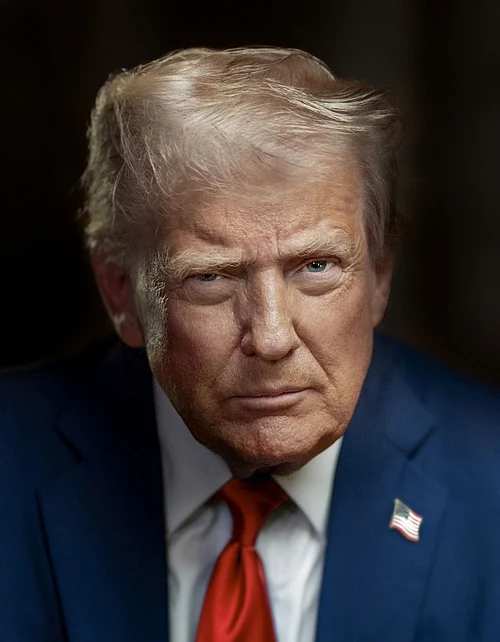
Tennessee has voted Republican in every presidential election since 2000. Trump won the state by 29.7 points in 2024, among his strongest performances anywhere. The state is no longer competitive at the presidential level and is rated R+15 by Cook.
For 2028, Tennessee's 11 electoral votes are safe Republican regardless of nominee. Sen. Marsha Blackburn was occasionally mentioned in 2024 vice presidential speculation; that speculation has now ended with her gubernatorial bid. No Tennessee politician currently appears in major 2028 presidential markets.




Tennessee Presidential Election History
Tennessee was a genuine swing state into the 1990s, even sending Democrat Al Gore to the vice presidency, though famously Gore failed to carry his home state in 2000, a loss that would have won him the presidency. Since then Tennessee has voted Republican in every presidential election, and the margins have widened dramatically.
Trump carried the state by 26 points in 2016, 23 in 2020, and nearly 31 in 2024, among his strongest showings anywhere. The transformation from competitive to deep-red happened faster than in any neighboring Southern state, driven by rural realignment. The 11 electoral votes are safely Republican, and for 2028 no forecast or market treats Tennessee as competitive.
Tennessee Political Props & Other Markets
State-specific prediction markets tied to Tennessee politics, like cabinet moves, resignations, and ballot questions.
Tennessee Political Polls
The polls below pull the latest 2026 survey data for Tennessee's races. In the open governor's race you will see Republican frontrunner Marsha Blackburn, who left her Senate seat to run and leads the GOP primary by 30-plus points, against the Democratic field led by Jerri Green. In the Senate race, Republican incumbent Bill Hagerty faces only token opposition.
Tennessee polling rarely moves the needle in a state this red, where Republicans win statewide by 20 to 30 points. The real 2026 story is the courts, not the polls, given the litigation over the new 9-0 congressional map. Where a race has no recent public polling, that section will say so rather than show stale data.
Tennessee governor polls
| Pollster | Dates | Sample | Result |
|---|---|---|---|
| TargetSmart | September 9–12, 2026 | 600 (LV) | Marsha Blackburn (R) 45% · Jerri Green (D) 36% · Other 12% · Undecided 7% |
| Targoz Market Research | August 15–26, 2026 | 1,149 (RV) | Marsha Blackburn (R) 46% · Jerri Green (D) 33% · Other 8% · Undecided 14% |
| Wick | July 29 – August 1, 2026 | 600 (LV) | Marsha Blackburn 51% · John Rose 32% · Monty Fritts 17% |
| Fabrizio, Lee & Associates (R) | July 26–28, 2026 | 800 (LV) | Marsha Blackburn 42% · John Rose 25% · Monty Fritts 22% · Undecided 11% |
| OnMessage Inc. | July 23–25, 2026 | 800 (LV) | Marsha Blackburn 35% · John Rose 31% · Monty Fritts 26% · Undecided 9% |
| Fabrizio, Lee & Associates (R) | June 28–30, 2026 | – (LV) | Marsha Blackburn 51% · John Rose 20% · Monty Fritts 12% · Undecided 17% |
Polling data adapted from 2026 Tennessee gubernatorial election under CC-BY-SA 4.0. Last refreshed 7 hours ago.
Tennessee U.S. Senate polls
| Pollster | Dates | Sample | Result |
|---|---|---|---|
| Targoz Market Research | August 15–26, 2026 | 1,157 (RV) | Bill Hagerty (R) 51% · Marquita Bradshaw (D) 31% · Other 6% · Undecided 12% |
Polling data adapted from 2026 United States Senate election in Tennessee under CC-BY-SA 4.0. Last refreshed 7 hours ago.
Frequently Asked Questions
Is Tennessee a red state or a blue state?
Tennessee is a deeply red state, with Democratic strength limited to Memphis, Nashville, and the Tri-Cities. Trump carried it by nearly 31 points in 2024, Republicans hold every statewide office, and Cook PVI rates it around R+14 to R+15.
Who is favored in the Tennessee governor race?
Republican Senator Marsha Blackburn, who left her Senate seat to run, is the heavy favorite. She leads the GOP primary by 30-plus points, and the Republican nominee is effectively the next governor in a state that has not elected a Democrat statewide since 2006.
What happened with Tennessee's House map?
After the Supreme Court's April 2026 Callais ruling weakened the Voting Rights Act, Tennessee became the first state to enact a Callais-driven redraw, splitting Steve Cohen's Memphis-based 9th District, the state's only Democratic seat, into three pieces to target a 9-0 Republican delegation. The Tennessee NAACP has sued.
Is Bill Hagerty's Senate seat competitive?
No. Hagerty faces no Republican primary challenger and only token Democratic opposition. Tennessee has not elected a Democratic senator since 1958, and Cook rates the race Solid Republican.
Odds are aggregated from public prediction markets including Polymarket and Kalshi and are updated multiple times daily. They reflect real-money market pricing, not polling or editorial forecasts, and are provided for informational purposes only. ElectionOdds.com does not accept wagers.