
2026 Election Tracker
Connecticut Election Odds - 2026 Live Betting Odds & Voting History
Connecticut 2026 election odds for Gov. Ned Lamont's third-term bid, his progressive primary fight against Josh Elliott, the GOP field, and five House races.
| Electoral votes | 7 |
|---|---|
| 2024 presidential result | Harris 56% / Trump 42% (D+14 margin) |
| Current governor | Ned Lamont (D), running for third term |
| U.S. senators | Richard Blumenthal (D, next 2028), Chris Murphy (D, next 2030) |
| 2026 races on the ballot | Governor, all 5 U.S. House seats |
| Cook PVI | D+7 |
Connecticut's ballot has one statewide race and no federal Senate contest. Governor Ned Lamont is running for a third term, Connecticut has no term limits, and Lamont is one of the most popular governors in the country with a 63% approval rating. But the same polling shows 44% of Connecticut voters say he shouldn't run again, and a progressive primary challenge from state Rep. Josh Elliott is testing whether Lamont's moderate Democratic profile remains viable in a state party that has shifted left. Five House seats, all Democratic, round out the federal ballot. National 2028 markets and balance-of-power coverage live on ElectionOdds.com.
Is Connecticut a Red State or a Blue State?
Connecticut is a solidly Democratic state with no real Republican statewide strength. Kamala Harris carried Connecticut by 14.6 points in 2024. Biden won it by 20.1 in 2020, Clinton by 13.6 in 2016, and Obama by 17.3 in 2012. The state has voted Democratic in every presidential election since 1992. Cook PVI rates Connecticut D+7. Connecticut had a Republican-leaning swing state identity through the 1980s but has been firmly Democratic for the entire 21st century.
The downballot picture is Democratic across the board. Democrats hold the governorship under Ned Lamont, who won reelection by 13.1 points in 2022. Democrats hold both U.S. Senate seats (Richard Blumenthal and Chris Murphy), all 5 U.S. House seats, and both chambers of the state legislature. Republicans have not won a U.S. Senate race in Connecticut since 1982 and have not held the governorship since 2011. The state's only competitive races at the federal level are in the 5th Congressional District in the western part of the state, which has occasionally elected moderate Republican members of Congress.
Connecticut's voting pattern is shaped by its small size and concentration of wealth. The state has the second-highest per-capita income of any state. Fairfield County in the southwest, anchored by Greenwich, Stamford, and the wealthy commuter towns within reach of New York City, votes Democratic in a pattern typical of high-income suburban areas nationally. Hartford and New Haven counties vote heavily Democratic, anchored by their cities. The eastern part of the state, the so-called "Quiet Corner," is the most Republican part of Connecticut but is not large enough to compete with the Democratic concentrations.
The state's politics have been shaped by its proximity to New York City and Boston, its high education levels, and its concentration of finance, insurance, and pharmaceutical industries. Connecticut's electoral profile resembles a smaller, slightly more competitive version of Massachusetts. The state had a notable Republican governor in M. Jodi Rell (2004-2011) but has not had a competitive gubernatorial race since 2014. Connecticut has 7 electoral votes through 2030.
Will Connecticut become competitive? No, not on any realistic horizon. The state's structural Democratic advantages are durable, and Republicans have not been able to recruit credible statewide candidates. The 2024 cycle's national Republican shift did not visibly improve their statewide position in Connecticut. The state will not be a presidential battleground in 2028 or beyond. For a full state-by-state comparison, see the red states vs. blue states map.
Connecticut Governor Betting Odds
Lamont, the cable television entrepreneur who first ran for office in a 2006 U.S. Senate primary challenge to Joe Lieberman, is now a two-term incumbent governor seeking a third term. He won 2018 by 3 points and 2022 by 13. He officially announced his re-election bid in November 2025, despite earlier expressing doubts about running again. Connecticut has no gubernatorial term limits, Lamont could continue running indefinitely if he chooses.
The Democratic primary features one challenger: state Rep. Josh Elliott (D-Hamden, House Progressive Caucus leader). Elliott is running to Lamont's left, criticizing the governor's vetoes of YIMBY housing reforms (HB 5002) and striking-worker jobless benefits (SB 8). His campaign frames the primary as "a fight for the soul of the party." Lamont has endorsements from both U.S. senators (Blumenthal and Murphy), the bulk of the Democratic establishment, and labor unions including the Connecticut State Building Trades.
The Republican primary is four-way: state Sen. Ryan Fazio (R-Greenwich, investment advisor, ranking member of the Energy Committee) is the establishment favorite; former Westport First Selectwoman Jennifer Tooker; former Lt. Gov. of New York Betsy McCaughey; former New Britain Mayor Erin Stewart. Connecticut has not elected a Republican to statewide office since Jodi Rell's 2006 gubernatorial re-election. Cook rates Likely Democratic. Primary August 11, 2026. Find all of the Governors elections here.
Governor
Connecticut Governor Election History
Connecticut's governorship has been Democratic for over a decade, but Republicans held it within recent memory. John Rowland, a Republican, won three terms before resigning in a 2004 corruption scandal, and his lieutenant governor M. Jodi Rell finished the term and won outright in 2006, becoming the last Republican to hold the office. Democrat Dannel Malloy won in 2010 and 2014, and Ned Lamont has held it since 2019.
Lamont, a wealthy cable entrepreneur who first ran in a 2006 Senate primary against Joe Lieberman, won the governorship by 3 points in 2018 and 13 in 2022, and is now seeking a third term in a state with no term limits. He faces a progressive primary challenge from state Rep. Josh Elliott and a four-way Republican field led by state Sen. Ryan Fazio. Cook rates the race Likely Democratic; Republicans have not won statewide since 2006.
Connecticut Senate Betting Odds
No Connecticut Senate seat is on the 2026 ballot. Sen. Richard Blumenthal (elected 2010, re-elected 2016 and 2022) is next up in 2028. Sen. Chris Murphy (elected 2012, re-elected 2018 and 2024) is next up in 2030. Both senators endorsed Gov. Lamont's re-election in March 2026.
Murphy's 2030 race is the long-range market with the most attention. He's been one of the more prominent national Democratic voices since the post-2024 cycle, and his name appears regularly in 2028 presidential conversations. A Murphy presidential bid would not require him to resign his Senate seat under Connecticut law. See all of the election odds for senate seats here.
Connecticut U.S. Senate Election History
Connecticut's Senate seats have been Democratic-held for years, though the state's history includes independent Lowell Weicker and Joe Lieberman, who won as an independent in 2006 after losing the Democratic primary to Ned Lamont. Richard Blumenthal has held one seat since 2010 and Chris Murphy the other since 2012, both winning re-election comfortably.
Neither seat is on the 2026 ballot, Blumenthal is up in 2028 and Murphy in 2030, and Republicans have not won a Connecticut Senate race since 1982. The forward-looking interest is in Murphy, a prominent national voice on guns and health care who appears regularly in 2028 presidential speculation and would not have to give up his seat to run.
Connecticut House Betting Odds
The Connecticut House delegation is the smallest all-Democratic delegation in the country: five seats, all Democrats. CT-1 (John Larson, Hartford-area), CT-2 (Joe Courtney, eastern Connecticut), CT-3 (Rosa DeLauro, New Haven-area), CT-4 (Jim Himes, Fairfield County), and CT-5 (Jahana Hayes, northwestern Connecticut). All five incumbents are running for re-election.
The Connecticut Republican Party last held a Connecticut House seat in 2008 (Chris Shays, CT-4). Former Hartford Mayor Luke Bronin, who briefly considered running for governor, is running for U.S. House. The most competitive Connecticut House race is typically CT-5 (Hayes won 2024 by 6 points) but no race in the state is currently rated competitive by national handicappers. No mid-decade redistricting in Connecticut. See all election odds for house seats here.
U.S. House districts
5 marketsConnecticut U.S. House Election History
Connecticut has the smallest all-Democratic House delegation in the country, five seats, all blue. The last Republican to hold a Connecticut House seat was Chris Shays, who lost the Fairfield County-based CT-4 in 2008, completing the Democratic sweep of New England's suburban districts.
All five incumbents, John Larson, Joe Courtney, Rosa DeLauro, Jim Himes, and Jahana Hayes, are running for re-election in 2026. The most competitive seat is typically Hayes's northwestern CT-5, which she held by 6 points in 2024, but no Connecticut House race is currently rated competitive, and the state is not part of the mid-decade redistricting wave.
Connecticut Presidential Election Betting Odds
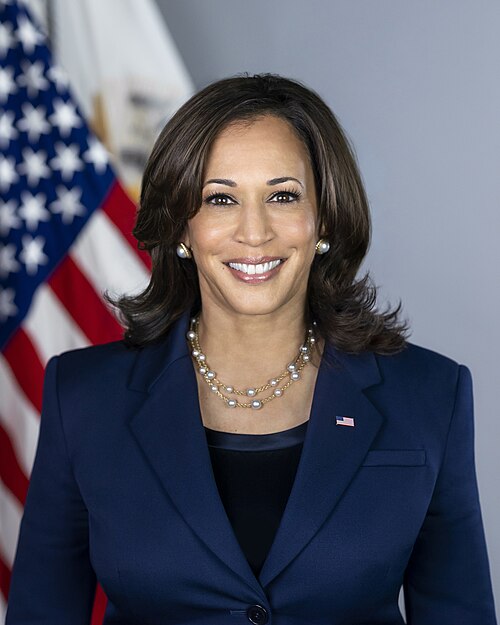
Connecticut's Democratic presidential streak, every cycle since 1992, is among the longest in the country. Harris won by 14 points in 2024, a 6-point shift toward Trump from Biden's 20-point margin in 2020. The Trump-era erosion of Connecticut's Democratic margin has been steady but has not put the state in genuine competitive territory. Cook PVI rates Connecticut D+7.
For 2028, the state is Likely to Solid Democratic. Sen. Chris Murphy has been mentioned in 2028 Democratic primary markets, he's a top-tier Senate Democrat on health care and gun policy, but has not signaled interest.






Connecticut Presidential Election History
Connecticut was a Republican-leaning swing state into the 1980s, backing Republican presidential nominees in most elections from 1968 through 1988, but it realigned firmly Democratic in 1992 and has voted that way ever since, one of the longer active Democratic streaks in the country.
The margins have been wide, from the low teens to Biden's 20-point win in 2020, though Harris's 14.6-point 2024 margin reflected the steady Trump-era erosion seen across the Northeast. Cook PVI rates the state D+7, and its 7 electoral votes are not competitive. For 2028, Connecticut is Likely to Solid Democratic, with Senator Chris Murphy's national profile its main connection to the presidential conversation.
Connecticut Political Props & Other Markets
State-specific prediction markets tied to Connecticut politics, like cabinet moves, resignations, and ballot questions.
Connecticut Political Polls
The polls below pull the latest 2026 survey data for Connecticut's races. The marquee contest is the governor's race, where popular Democratic incumbent Ned Lamont seeks a third term against a progressive primary challenge from Josh Elliott and, in the general, a four-way Republican field led by Ryan Fazio. There is no Senate race this cycle.
Connecticut rarely produces competitive federal polling, so the numbers to watch are Lamont's Democratic primary margin, a test of whether his moderate profile holds in a leftward-shifting party, and his strong overall approval. Where a race has no recent public polling, that section will say so rather than show stale data.
Connecticut governor polls
| Pollster | Dates | Sample | Result |
|---|---|---|---|
| 270toWin | August 27 – September 22, 2026 | Ned Lamont (D) 51.8% · Ryan Fazio (R) 38.3% · Other/Undecided 9.9% | |
| University of New Hampshire | September 17–21, 2026 | 540 (LV) | Ned Lamont (D) 55% · Ryan Fazio (R) 38% · Other 1% · Undecided 6% |
| RealClearPolitics | August 20 – September 17, 2026 | Ned Lamont (D) 51.8% · Ryan Fazio (R) 38.3% · Other/Undecided 9.9% | |
| co/efficient | September 16–17, 2026 | 979 (LV) | Ned Lamont (D) 48% · Ryan Fazio (R) 41% · Undecided 11% |
| Quinnipiac University Polling Institute | September 8–14, 2026 | 1,288 (LV) | Ned Lamont (D) 55% · Ryan Fazio (R) 38% · Other 2% · Undecided 5% |
| GreatBlue Research | September 1–8, 2026 | 1,000 (RV) | Ned Lamont (D) 48% · Ryan Fazio (R) 34% · Other 0% · Undecided 18% |
Polling data adapted from 2026 Connecticut gubernatorial election under CC-BY-SA 4.0. Last refreshed 6 hours ago.
Connecticut U.S. Senate polls
No Connecticut U.S. Senate polls are currently available from public sources. This section will populate automatically when pollsters release new surveys for this race.
Frequently Asked Questions
Is Connecticut a red state or a blue state?
Connecticut is a solidly Democratic state with no real Republican statewide strength. Harris carried it by about 15 points in 2024, Democrats hold every statewide and federal office, and Cook PVI rates it D+7.
Is Ned Lamont favored for a third term?
Yes. Lamont is one of the most popular governors in the country at 63% approval, won in 2022 by 13 points, and has the Democratic establishment behind him. He faces a progressive primary challenge from state Rep. Josh Elliott, and Cook rates the race Likely Democratic.
Is there a U.S. Senate race in Connecticut in 2026?
No. Both seats are held by Democrats and neither is up in 2026. Richard Blumenthal is next up in 2028 and Chris Murphy in 2030, so the governor's race and the five House seats are the focus.
Are any Connecticut House seats competitive?
Not currently. All five seats are Democratic, the smallest all-Democratic delegation in the country. The most competitive is typically Jahana Hayes's CT-5, which she held by 6 points in 2024, but no Connecticut House race is rated competitive by national handicappers.
Odds are aggregated from public prediction markets including Polymarket and Kalshi and are updated multiple times daily. They reflect real-money market pricing, not polling or editorial forecasts, and are provided for informational purposes only. ElectionOdds.com does not accept wagers.