
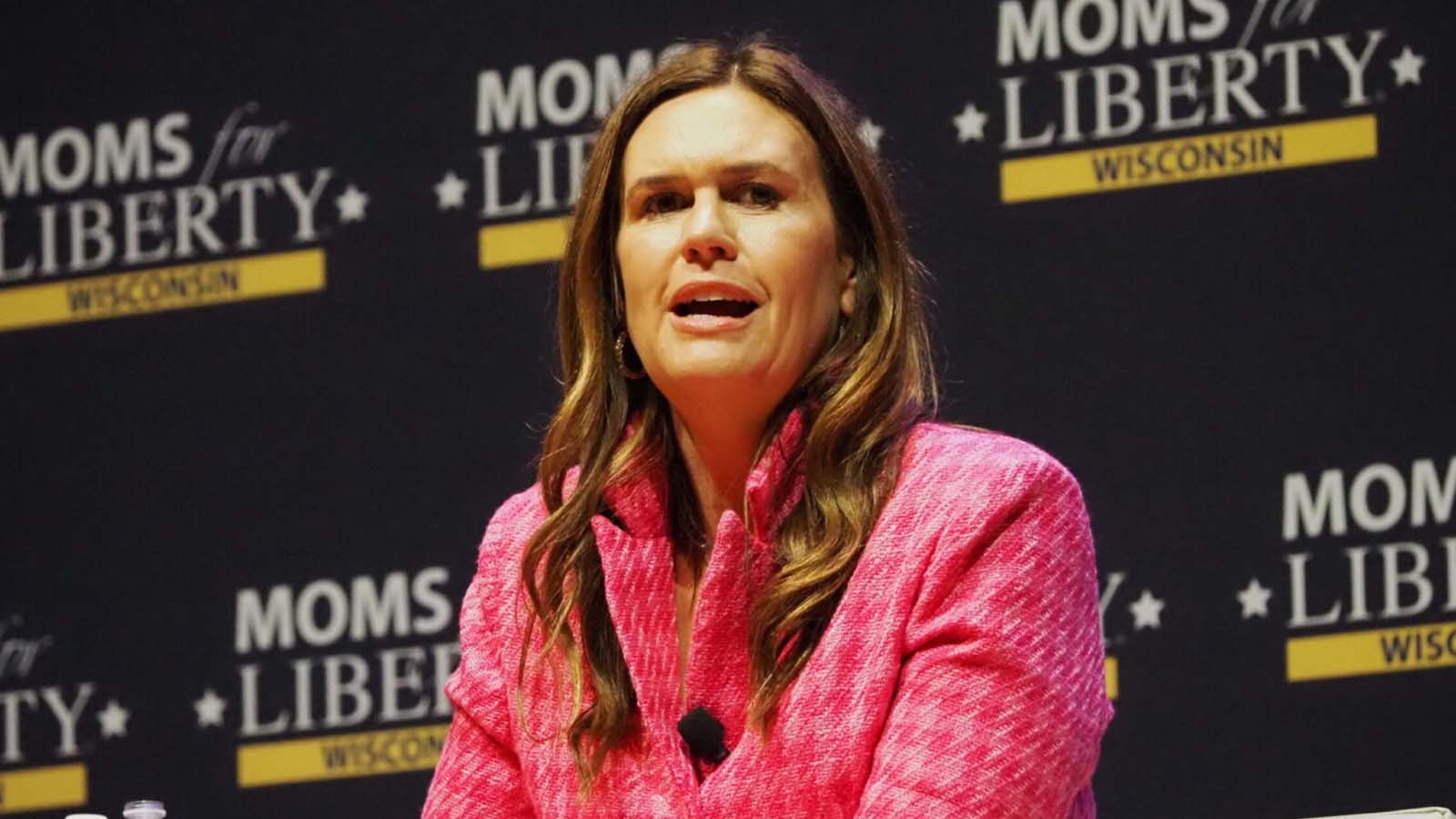
- Gov. Sarah Huckabee Sanders ran unopposed in the Republican primary on March 3 and faces Democrat Fredrick Love in November; Kalshi does not list the race among its competitive markets, reflecting deep-red Arkansas’s political reality.
- Sen. Tom Cotton defeated two nominal GOP challengers in the March 3 primary and will face Democratic farmer Hallie Shoffner in November in a race with no realistic path to a Democratic upset.
- Kalshi does not list Arkansas among its competitive Senate or governor’s general election markets — a clear signal that traders see both seats as safe Republican holds.
- Democrats have not won a Senate race in Arkansas since 2008 and have not won the governor’s office since 2010; Sanders won reelection by 28 points in 2022.
- Both races are considered safe Republican by all major forecasters, making Arkansas a non-event in terms of election odds for November — but Cotton’s national profile and Sanders’ political future make both worth watching.
LITTLE ROCK, Ark. — Arkansas held its primary elections on March 3, and the results were about as dramatic as the state’s political lean would suggest: no drama at all.
Gov. Sarah Huckabee Sanders sailed through the Republican primary without opposition, and Sen. Tom Cotton dispatched two low-profile challengers with ease. Both incumbents are now set for November general elections against Democratic nominees who face enormous structural disadvantages in one of the country’s most reliably Republican states.
Here is where the election odds in Arkansas stand — and why both races matter beyond the state’s borders.
Senate: Cotton Advances, Shoffner Faces Historic Headwinds
Sen. Tom Cotton won the Republican Senate primary on March 3 with minimal resistance, defeating Micah Ashby and Jeb Little to secure the GOP nomination for a third term.
Hallie Shoffner, a farmer from central Arkansas, won the Democratic primary with 78% of the vote and will serve as Cotton’s general election opponent.
The structural landscape for November is unambiguous. Democrats have not won a Senate race in Arkansas since 2008, when Mark Pryor was reelected to his second term.
Cotton himself ousted Pryor in 2014, flipping the seat in a blowout that signaled the state’s rapid transformation from a competitive Southern battleground to a reliably red stronghold.
In 2020, Cotton won reelection over Libertarian candidate Ricky Dale Harrington Jr. — a race in which no Democrat even filed. Trump carried Arkansas by more than 35 points in both 2020 and 2024.
Kalshi does not list the Arkansas Senate race among its active general election markets — a strong signal that prediction market traders regard it as a settled outcome. The Cook Political Report, Sabato’s Crystal Ball, and Inside Elections all classify the seat as solidly or safely Republican.
Tom Cotton
Tom Cotton, 48, was born in Dardanelle, Arkansas and holds both an undergraduate degree and a law degree from Harvard.
He served in the U.S. Army from 2004 to 2009, including tours in Iraq and Afghanistan with the 101st Airborne Division.
After returning home, he worked as a lawyer and farmer before winning a U.S. House seat in 2012, representing Arkansas’s 4th District.
Two years later, he unseated Pryor in one of the most closely watched Senate races of the 2014 cycle, then won reelection in 2020 in a race that drew no serious Democratic opposition.
In the Senate, Cotton has carved out a national profile as one of the chamber’s most hawkish voices on foreign policy and national security, and has been a reliable Trump ally.
That alignment has made him a draw for conservative donors far beyond Arkansas and fueled occasional speculation about his future aspirations. For now, he is focused on a third term that virtually every analyst treats as a formality.
Hallie Shoffner
Shoffner is a farmer who won the Democratic primary with 78% of the vote.
She enters the general election as a significant underdog in a state where the Democratic brand has largely collapsed outside of Pulaski County and a handful of urban precincts.
Her campaign has centered on agricultural issues and economic concerns that resonate in rural communities, though translating that message into statewide electoral viability is a steep challenge given Arkansas’s partisan composition.
She is joined on the November ballot by Libertarian Jeff Wadlin.
Governor: Sanders Heads Toward Second Term with No GOP Opposition
Gov. Sarah Huckabee Sanders ran unopposed in the Republican primary on March 3 and will face Democrat Fredrick Love and Libertarian Colt Shelby in the November general election.
The absence of a GOP primary challenger reflects just how firmly Sanders has consolidated Republican support in the state.
The historical backdrop favors Sanders overwhelmingly. She won her 2022 general election by 28 points over Democrat Chris Jones.
The AP called the race within one minute of polls closing. Sanders became the first woman ever elected governor of Arkansas, and the first child of a former governor to hold the office.
Kalshi does not list the Arkansas governor’s race among its active competitive markets, consistent with all major national forecasters who treat the seat as a safe Republican hold.
For bettors looking at the broader election odds landscape in 2026, Arkansas is simply not where the action is.
Sarah Huckabee Sanders
Sanders, 43, served as White House press secretary under President Donald Trump from 2017 to 2019 before returning to Arkansas to launch her gubernatorial campaign.
Her national profile gave her a fundraising and name-recognition advantage from the start, and Trump’s endorsement made her the clear frontrunner in the 2022 Republican primary.
As governor, she has pursued a conservative agenda that includes phasing out the state income tax, restricting gender-affirming care, and opposing federal education mandates.
Her administration has also championed a school voucher program that became a flashpoint during her first term.
Her first term has not been without turbulence. She underwent treatment for thyroid cancer shortly before taking office, and her administration faced scrutiny over a lectern purchased with state funds and over emergency declaration procedures.
Despite those controversies, her standing with Arkansas Republican voters remains strong.
Fredrick Love
Fredrick Love is a state senator from Little Rock who has served in the Arkansas legislature for more than 15 years.
He won the Democratic primary on March 3, defeating Supha Xayprasith-Mays, a Bentonville businesswoman who also ran for governor in 2022.
Love has made affordability — including housing costs, prescription drug prices, and grocery expenses — the core of his campaign.
He frames his candidacy around the argument that Arkansas working families have been left behind despite Republican dominance.
Turning that message into a competitive statewide result, however, is a challenge that has defeated every Democrat in recent election cycles.
The Bottom Line
Arkansas is not a state where general election suspense is expected in 2026.
Both Cotton and Sanders are prohibitive favorites in November, and Kalshi’s prediction markets treat both contests accordingly.
For those tracking the midterm election odds map, the Razorback State is considered settled ground.
What makes Arkansas worth watching has less to do with November outcomes and more to do with the national trajectories of its two most prominent Republicans.
Cotton is among the most visible foreign policy voices in the Senate and has long been discussed as a potential future presidential contender. Sanders, still in her first term, governs a state she has described as a testing ground for conservative policy that could spread nationally.
Both are running in safe territory — but both are playing a longer political game.