
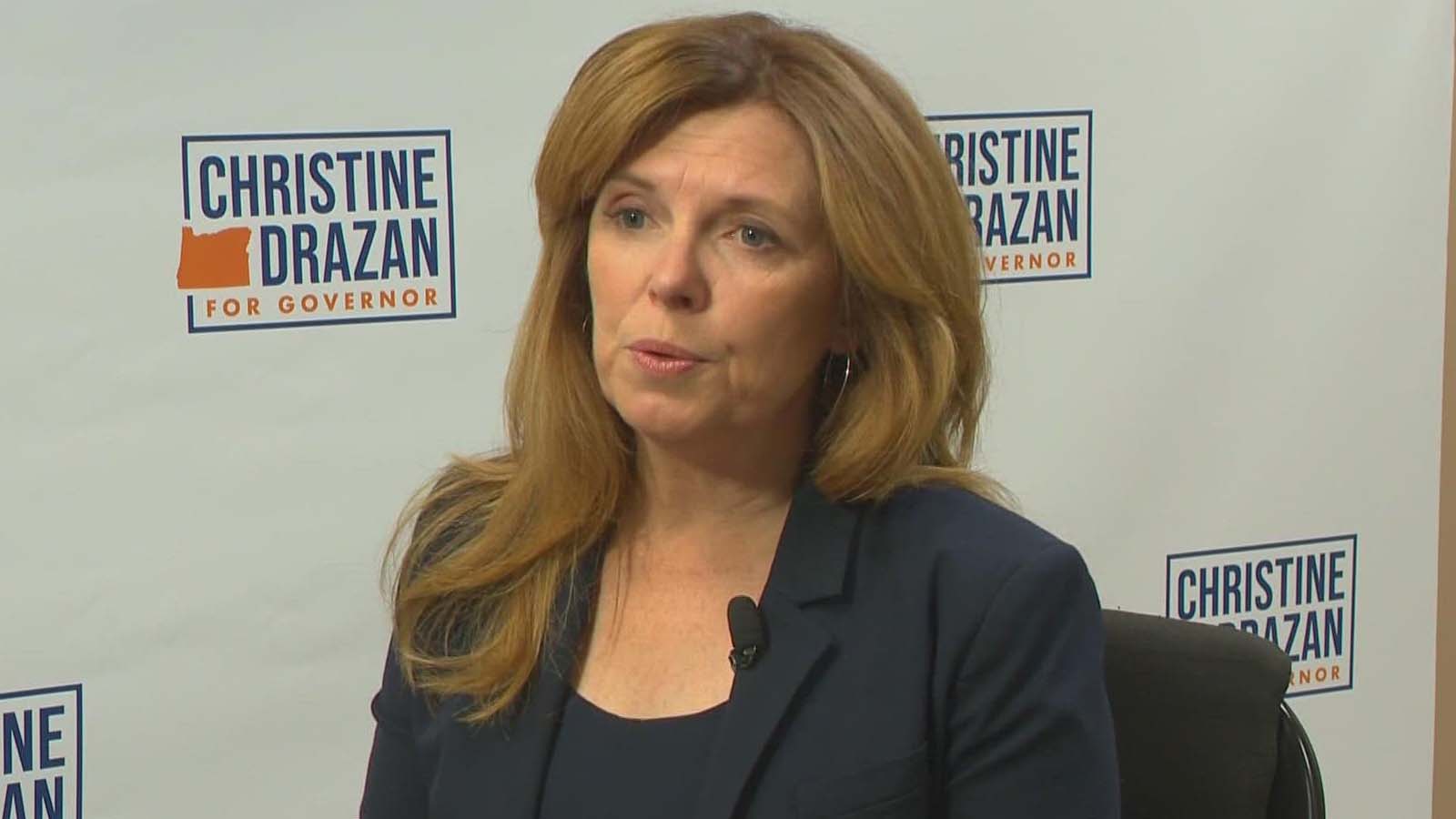
- Kalshi had Christine Drazan at 78% to win the Oregon Republican governor primary on Tuesday, setting up what could be a rematch of the razor-thin 2022 general election against Gov. Tina Kotek.
- The Oregon governor’s race is listed among Kalshi’s competitive general election markets, with Democrats favored but the state’s weak gubernatorial approval numbers leaving a genuine opening for Republicans.
- Sen. Jeff Merkley is seeking a fourth term against minimal Democratic primary opposition; Kalshi does not list the Oregon Senate race among its competitive general election markets, treating it as a safe Democratic hold.
- Jo Rae Perkins, who lost to Merkley by 18 points in 2020, and state Sen. David Brock Smith are the leading Republican Senate primary contenders, with Polymarket giving Smith a 64% chance at the nomination.
- Oregon offers a split picture for those following election odds: the Senate race is settled terrain for Democrats, while the governor’s contest is shaping up as one of the more watchable general elections on the West Coast.
PORTLAND, Ore. — Oregon voters cast their mail ballots Tuesday in a primary that features two high-stakes federal and statewide races heading into November. Gov. Tina Kotek is seeking a second term against a packed Republican field, while Sen. Jeff Merkley is cruising toward a fourth term with only minimal opposition standing in his way. The two contests offer a study in contrasts: one race is genuinely competitive, the other is all but settled before it starts.
Governor: Drazan Leads the GOP Primary, Kotek Favored but Vulnerable in November
On the Republican side, the most consequential question Tuesday was which candidate would emerge to face Kotek in November. Kalshi gave Christine Drazan a 78% chance of winning the GOP primary as of May 16, with state Rep. Ed Diehl as her main competition and former NBA player Chris Dudley trailing well behind despite raising more than $2 million, partly funded by Nike co-founder Phil Knight.
Kotek faced nine nominal Democratic challengers but was expected to have no serious difficulty winning renomination. The general election is the race that matters, and prediction markets reflect a genuine but limited window of Republican opportunity.
Oregon has not elected a Republican governor since 1982 — a streak of more than four decades that seems daunting on paper. But Kotek’s approval ratings have remained soft during her first term, as the state has grappled with ongoing homelessness, housing costs, and transportation funding battles. A gas tax increase tied to a ballot measure on Tuesday’s ballot added another layer of complexity to the political environment.
The governor’s race appears among Kalshi’s listed competitive general election markets, where Democrats are favored but the gap is not overwhelming — a reflection of both Oregon’s underlying lean and the structural weaknesses Kotek carries into November.
Tina Kotek
Kotek, 57, came to the governor’s office after serving nearly a decade as speaker of the Oregon House of Representatives — one of the longest tenures in that role in state history. She won the 2022 general election with 47% of the vote in a three-way race that included Republican Christine Drazan and independent Betsy Johnson, a moderate former Democratic state senator who siphoned votes from both sides. In a two-candidate matchup, Kotek’s margin over Drazan was only about 3 percentage points. Her reelection campaign has leaned heavily on opposition to President Donald Trump’s federal policies, including a National Guard deployment in Portland and cuts to federal assistance programs.
Christine Drazan
Drazan, a state senator and former minority leader of the Oregon House, is seeking a rematch after coming within three points of the governor’s office in 2022 — the closest any Republican gubernatorial nominee had come in Oregon in decades. She has been a vocal critic of Kotek’s record on homelessness, public safety, and transportation, and has pushed back on the governor’s framing of the race as a referendum on Trump, arguing that Oregonians are more focused on state-level failures.
Her challenge in the primary was holding off a late surge from Diehl, who performed better than expected in some market estimates but lacked the fundraising to match Drazan’s organizational strength.
The Rest of the GOP Field
Dudley ran as the Republican gubernatorial nominee in 2010 and came closer to winning than any Republican since — losing to Democrat John Kitzhaber by less than two percentage points in what remains the narrowest Oregon governor’s race in a generation.
His 2026 campaign attracted business community support and Knight’s money, but prediction markets soured on him after his ads appeared to target a general election audience rather than a Republican primary electorate.
Diehl, meanwhile, made a strong impression in the prediction markets despite raising less cash, with Kalshi briefly showing him competitive with Drazan in early April before the gap widened again. Marion County Commissioner Danielle Bethell rounded out the field of notable Republican candidates.
Senate: Merkley Heads for a Fourth Term in Settled Terrain
The Oregon Senate race offers far less drama than the governor’s contest. Merkley faced only one Democratic primary opponent — Paul Damian Wells, a retired electrical engineer — and was expected to win renomination without difficulty.
Kalshi does not list the Oregon Senate race among its active competitive general election markets, consistent with how national forecasters classify the seat.
Oregon has not elected a Republican to the U.S. Senate since 2002 and has trended steadily toward Democrats at the federal level for two decades. Democrats hold both Senate seats, all statewide executive offices, and supermajorities in both chambers of the Oregon Legislature.
That structural picture makes a Republican Senate upset in November both highly unlikely and a long shot at Oregon election odds sites, regardless of who wins today’s GOP primary.
Jeff Merkley
Merkley, 70, was first elected to the Senate in 2008, defeating Republican incumbent Gordon Smith. He was reelected in 2014 and again in 2020, when he defeated Republican nominee Jo Rae Perkins by 57% to 39% — an 18-point margin that illustrates the ceiling for Republicans in statewide Oregon contests.
In the Senate, Merkley has been a reliable progressive voice and the first senator to call for the end of the filibuster. He serves on the Senate Environment and Public Works, Foreign Relations, and Banking committees.
The Republican Senate Field
Seven Republicans entered the primary, with state Sen. David Brock Smith and Perkins emerging as the frontrunners. Polymarket gave Smith a 64% chance of winning the nomination, with Perkins at 31%.
Smith, who launched his campaign in early March and earned key endorsements including from the News-Register newspaper, was positioned as the establishment pick with broader general election appeal.
Perkins, a former chair of the Linn County Republican Party, ran as the GOP Senate nominee in both 2020 against Merkley and in 2022 against then-incumbent Sen. Ron Wyden, losing to Wyden 56% to 41%.
Her devoted activist base gives her primary staying power, but her back-to-back general election losses by wide margins make her a heavy underdog against Merkley in November regardless of what the primary delivers.
The Bottom Line
Oregon’s two marquee races head into November in very different shapes. The Senate race is settled — Merkley is a strong favorite in a state that hasn’t sent a Republican to Washington in that chamber for over two decades, and Kalshi’s markets reflect that reality.
The governor’s race is something else entirely: a competitive contest between a Democratic incumbent with real vulnerabilities and a Republican challenger who has already proven she can win nearly half the statewide vote.
For those tracking election odds in 2026 for the midterms, the Oregon governor’s race deserves a closer look than the state’s reputation as a Democratic stronghold might suggest.
Kotek is favored — but the primary results and the candidate who emerges for Republicans will go a long way toward determining just how competitive November turns out to be.
Both Oregon’s Senate and governor’s general elections are set for November 3, 2026.