
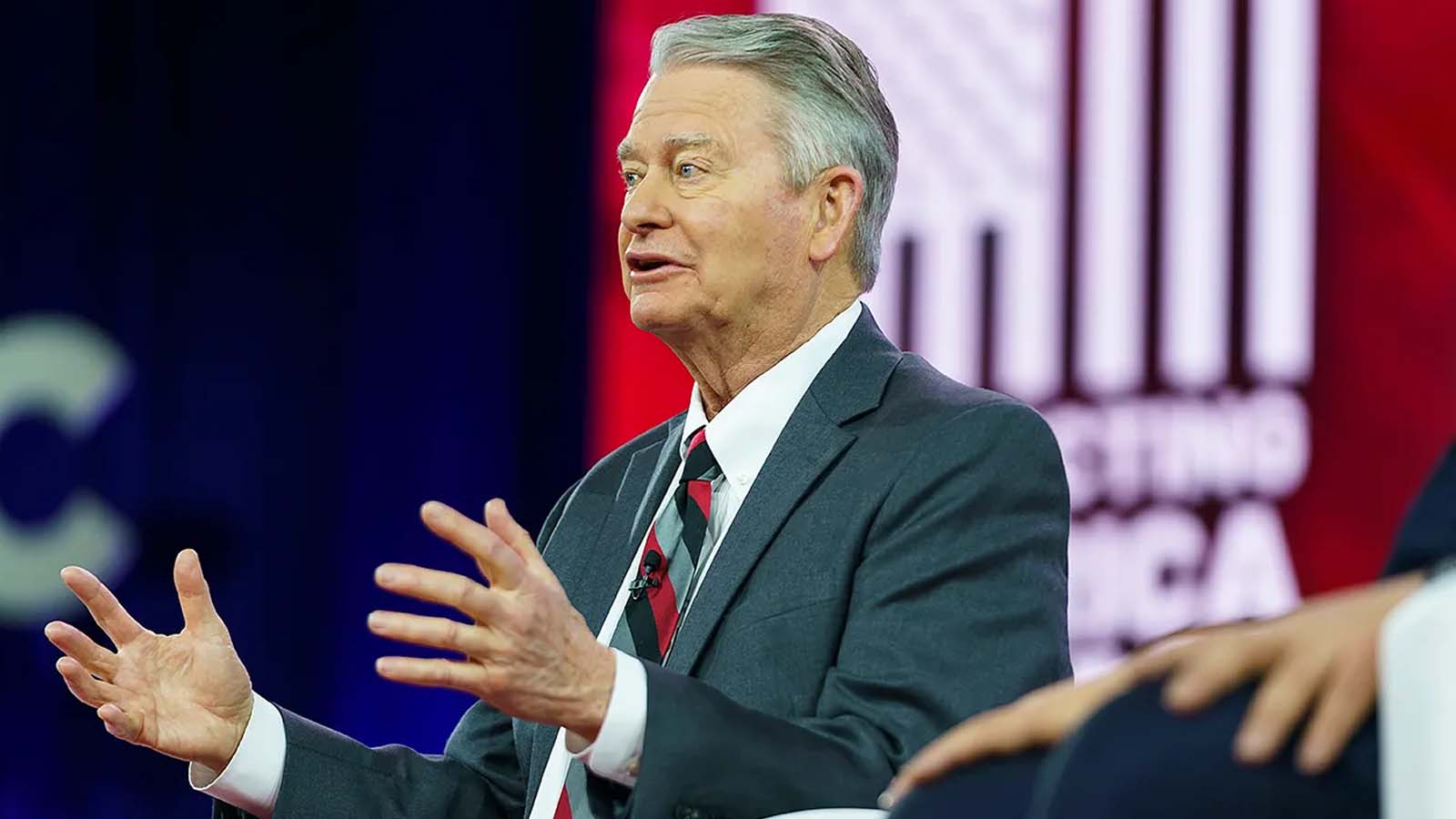
- Gov. Brad Little is seeking a third term and faces seven Republican primary challengers on May 19, but holds a massive fundraising lead — raising about $1.9 million compared to a combined total of roughly $700,000 for the rest of the GOP field.
- Sen. Jim Risch, 83, is running for a fourth Senate term and faces three Republican challengers; Kalshi’s prediction market gives him a 98% chance of winning the primary.
- Kalshi does not list either Idaho race among its competitive general election markets, treating both as safe Republican — Democrats have not won an Idaho Senate race since 1974 or the governor’s office since 1990.
- Risch won his 2020 reelection with 62.6% of the vote; Little won his 2022 reelection with 60.5% — both comfortable margins that underscore Idaho’s deep Republican lean.
- For those tracking election odds in 2026, Idaho is settled terrain — but the contested primaries in both races make today’s results worth watching heading into November.
BOISE, Idaho — Idaho holds its primary elections Tuesday, and for the two races attracting the most attention — Gov. Brad Little’s bid for a third term and Sen. Jim Risch’s push for a fourth — the outcomes are expected to confirm what the broader political calendar already assumes: both incumbents advance, and both cruise to November general elections in one of the most reliably Republican states in the country. But the contested primaries in each race are worth understanding, because the size of each win will shape how the fall campaigns unfold.
Governor: Little Faces a Crowded Primary Field but Holds Every Advantage
Little enters Tuesday’s primary as the overwhelming frontrunner in a Republican field of eight, including himself. The incumbent has raised roughly $1.9 million for his reelection campaign in 2026, more than all of his challengers combined. His closest Republican competitor, bar owner and businessman Mark Fitzpatrick, reported raising about $185,000 — just under one-tenth of what Little has brought in.
On the Democratic side, three candidates are vying for the nomination: attorney Terri Pickens, who leads the Democratic field in fundraising and ran unsuccessfully for lieutenant governor in 2022; Maxine Durand; and Chanelle Torrez. Independent John Stegner, a retired Idaho Supreme Court justice, reported raising $264,252 and will appear on the November general election ballot regardless of today’s primary results.
The general election picture is unambiguous. Idaho has not elected a Democrat as governor since 1990 — a streak of more than three decades that reflects one of the most durable partisan alignments in any American state. Little himself won his 2022 reelection with 60.5% of the vote and is considered a virtual lock to add a third term to his record. Idaho election odds sites do not list the governor’s race among its active competitive general election markets, a clear indicator of where traders see November heading.
Brad Little
Little, 72, is a rancher from Emmett who brings a deep Idaho resume to his third-term bid. He served in the Idaho Senate before becoming lieutenant governor in 2009, a post he held under Gov. Butch Otter for nearly a decade. He won the Republican primary for governor in 2018 despite a Trump endorsement going to his opponent — then-Lt. Gov. Janice McGeachin — and prevailed in the general election against Democrat Paulette Jordan. He won reelection in 2022, again turning back McGeachin in the primary before defeating Democrat Kristin Collum in November.
In office, Little has focused on tax reduction, education investment, and economic growth. His administration has pursued record reductions in personal income tax rates and significant increases in school funding. The governor’s message heading into 2026 is one of continuity: "We’re not slowing down."
The GOP Challenger Field
Fitzpatrick, the best-funded challenger in the Republican primary, has run a campaign built on criticism of Little’s leadership style, accusing the governor’s administration of operating without enough transparency. The remaining field — which includes a county commissioner, a mechanic, a perennial candidate, and several others — have minimal name recognition, poor election odds, and trail badly in fundraising.
The question for primary watchers is not whether Little wins, but by how much.
Senate: Risch Seeks a Fourth Term with History and Markets Both on His Side
Risch entered Tuesday’s primary as a heavy favorite. Kalshi’s prediction market gave him a 98% chance of winning the Republican primary against three challengers: Joe Evans, Denny LaVe, and Josh Roy.
The general election picture is similarly settled. Idaho’s Senate delegation has been entirely Republican since 1981, and the state has not sent a Democrat to the Senate since 1974 — a 52-year drought that no one in this cycle is forecasting to end.
Risch won his 2020 reelection with 62.6% of the vote in a race that drew no major Democratic opposition. Kalshi does not list the Idaho Senate race among its competitive general election markets, aligning with national forecasts.
Jim Risch
Risch, 83, is one of Idaho’s longest-serving political figures. Born in Milwaukee, Wisconsin, he earned degrees from the University of Idaho before entering politics in 1970. He briefly served as Idaho governor in 2006 and later won his U.S. Senate seat in 2008.
In the Senate, Risch has built a reputation as a hawkish foreign policy voice, currently serving as chairman of the Senate Foreign Relations Committee.
The Democratic Senate Field
Three Democrats — Nickolas Bonds, Brad Moore, and David Roth — are competing for the nomination to face Risch in November.
Roth ran against Sen. Mike Crapo in 2022 and lost by more than 30 points, a result that illustrates the challenge Democrats face statewide in Idaho.
The Bottom Line
Idaho is not a state where November suspense is expected in 2026. Both races are viewed as safe Republican holds, and little in the political landscape suggests otherwise.
The real story is the size of the primary victories. A dominant showing from Little and Risch reinforces existing expectations. Any underperformance could create talking points heading into the fall.
Both the Idaho Senate and governor’s general elections are set for November 3, 2026.