
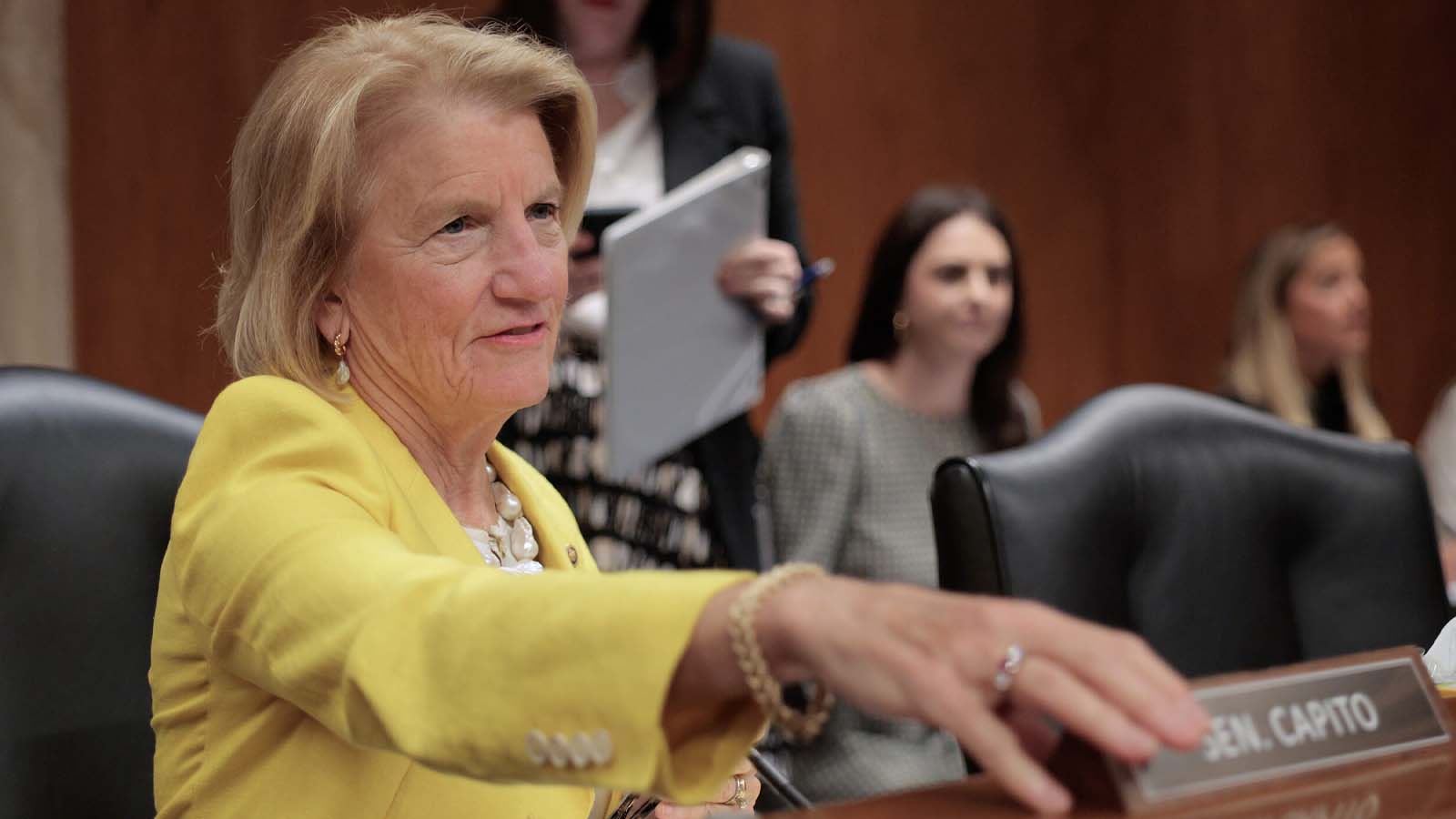
- Sen. Shelley Moore Capito won the West Virginia GOP Senate primary Tuesday with 66.5% of the vote, setting up a November general election against Democrat Rachel Fetty Anderson.
- Kalshi treats the West Virginia Senate seat as safely Republican — Capito won reelection in 2020 by a 70%-27% margin, and the state has shifted dramatically red in the Trump era.
- In WV-1, Rep. Carol Miller turned back a primary challenger and will face Democrat Vince George in November; both House seats are rated safe for Republicans.
- Rep. Riley Moore ran unopposed in the WV-2 Republican primary and faces a Democratic opponent in November, with Kalshi showing no meaningful market for the race given its deep-red lean.
- West Virginia has been one of the fastest-shifting states in the country toward Republicans, making all three races heavily tilted toward the GOP in November.
West Virginia 2026: What Tuesday’s Primaries Mean for Senate and House Odds
CHARLESTON, W.Va. — West Virginia held its primary elections Tuesday and produced clear, uncomplicated results across all three federal races. The incumbents won, the challengers lost, and the stage is set for what figures to be a quiet November in one of the country’s most reliably Republican states. But for those tracking West Virginia election odds and the broader battle for congressional control, there are a few things worth understanding about how each race is likely to unfold.
Senate: Capito Cruises Through, But the Real Story Is How Red West Virginia Has Become
Sen. Shelley Moore Capito won the Republican Senate primary Tuesday with 66.5% of the vote, defeating a field that included state Sen. Tom Willis and several other lesser-known challengers. The Associated Press called the race without drama, and Capito now advances to a November general election against Rachel Fetty Anderson, a former Morgantown city council member who won the Democratic primary.
On paper, the math for Anderson is daunting. West Virginia has undergone one of the most dramatic partisan transformations of any state in recent decades. Once a reliable Democratic stronghold — the state sent a Democrat to the Senate as recently as 2018, when Joe Manchin won reelection — it has swung sharply rightward in the Trump era. President Donald Trump carried the state by roughly 39 points in 2024, making it one of the deepest-red states on the map.
Capito herself won reelection in 2020 by a 70%-27% margin, a result that reflects just how lopsided statewide general elections have become. Kalshi does not list the West Virginia Senate race among its competitive general election markets — a meaningful signal that traders see no realistic path for a Democratic upset. National forecasters agree: both Cook Political Report and Sabato’s Crystal Ball classify the seat as safely Republican.
Shelley Moore Capito
Capito, 72, has been a fixture of West Virginia Republican politics for more than two decades. She served seven terms in the U.S. House before winning the Senate seat in 2014, becoming the first woman elected to the U.S. Senate from West Virginia. She is running for a third Senate term and chairs the Senate Republican Conference. Known as a pragmatic conservative, Capito has navigated the tension between her state’s working-class economic interests and the demands of a national Republican Party that has moved sharply rightward during her tenure. Trump endorsed her reelection bid, helping to neutralize what could have been a more serious primary challenge from her right flank.
Rachel Fetty Anderson
Anderson, the Democratic nominee, is a former Morgantown city council member running against the grain of her state’s political trajectory. She won the Democratic primary with 33.2% of the vote in a multi-candidate field. Her candidacy faces long odds in a state where the Democratic brand has largely collapsed outside of municipal politics. For bettors, the West Virginia Senate race offers little value as a competitive wager — the numbers simply are not there for Anderson to mount a credible general election campaign at the statewide level.
WV-1: Miller Wins Easily, George Is the Democratic Nominee
In West Virginia’s 1st Congressional District, Rep. Carol Miller turned back a primary challenge from Larry Jackson, winning with roughly 72% of the vote. The AP called the race Tuesday evening. Miller will face Democrat Vince George in the November general election, after George edged out Brit Aguirre in a tight Democratic primary — the AP called George’s win just before 11 p.m. with 53% of the vote against Aguirre’s 47%.
Miller, who has represented the southern West Virginia district since 2019, won her most recent general election with 66.4% of the vote in 2024. The 1st District covers the southern portion of the state, including Charleston and Huntington. Like the Senate race, this contest does not appear among Kalshi’s listed competitive House markets — both forecasters and traders treat it as a safe Republican hold.
George faces the same structural headwinds as every other Democrat running statewide or in federal races in West Virginia. Unless national conditions shift dramatically toward Democrats in the fall, the 1st District is unlikely to be a serious battleground.
WV-2: Moore Runs Unopposed, Faces Democrat in November
In the 2nd Congressional District, first-term Rep. Riley Moore ran unopposed in the Republican primary and will face a Democratic opponent in November. Ace Parsi led a multi-candidate Democratic primary as of early Wednesday morning, with results still being counted.
Moore, 45, was first elected to Congress in 2024 after serving as West Virginia’s state treasurer from 2021 to 2025. He is the grandson of former Gov. Arch Moore Jr. and began his career as a welder before earning degrees from George Mason University and the National Defense University. He sits on the House Appropriations Committee — a rare assignment for a freshman — and has positioned himself as a conservative voice on immigration and national security.
The 2nd District encompasses the industrial areas of northern West Virginia, and Moore won his 2024 general election comfortably. Kalshi does not list WV-2 among its tracked competitive House races, consistent with how national forecasters view the seat. Like WV-1 and the Senate race, this contest is expected to stay firmly in Republican hands through November.
The Bottom Line
West Virginia is not a state where general election drama is expected in 2026. All three federal races — the Senate seat and both House districts — are heading into November with Republican incumbents or nominees who are heavily favored. Kalshi’s markets and national forecasters are aligned on this point: the Mountain State is deep red, and there is no meaningful evidence that any of these contests will be competitive in the fall.
For bettors looking for value in the 2026 midterms, the West Virginia races are not the place to find it. The action — and the election odds that matter — are elsewhere on the map.