
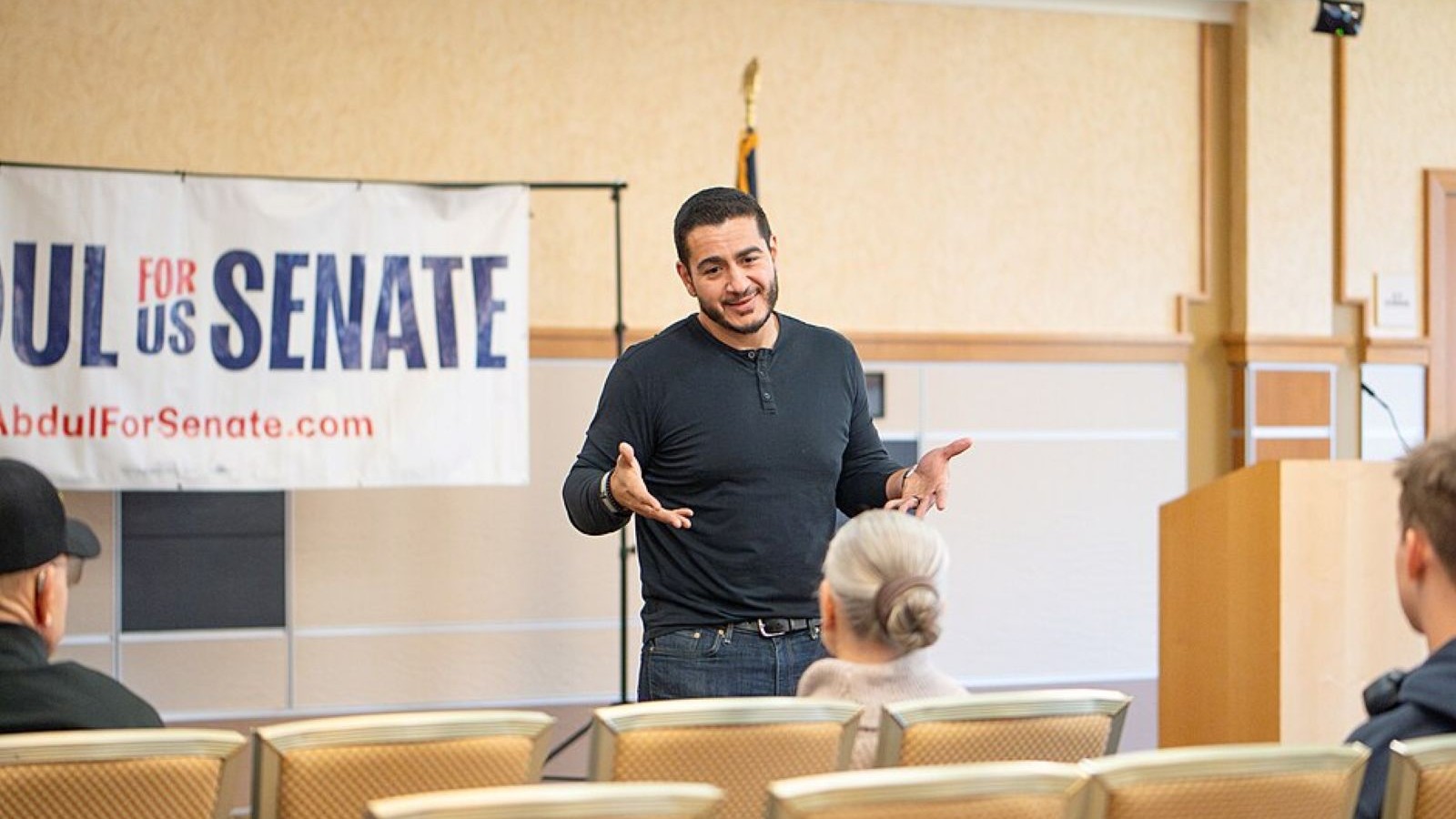
- Michigan holds its primary on August 4. Two big seats are open: the governor's office, because Gretchen Whitmer is term-limited, and the U.S. Senate seat, because Gary Peters is retiring.
- The one primary really worth betting is the Democratic Senate race. Rep. Haley Stevens, a moderate, is running against progressive Abdul El-Sayed, and the two wings of the party are at war over it.
- The market and the polls disagree. Polymarket still makes El-Sayed a slight favorite, near 56 percent, but recent polls put Stevens up about 7 points. That gap makes Stevens the value play.
- The governor primaries are nearly over. Polymarket has Democrat Jocelyn Benson at 99 percent and Republican John James near 91 percent, so both are close to locks.
- November is the real prize. Traders give Democrats about 70 percent to hold the Senate seat, and the governor's race leans Democratic after independent Mike Duggan dropped out in May.
LANSING, Mich. - Michigan votes Tuesday, and it is a rare primary with real stakes on both ends of the ballot. The state is filling two open seats this year. Whitmer cannot run again, so the governor's office is up for grabs. Peters is retiring, so his Senate seat is open too. For a bettor, though, most of the action sits in one race: the Democratic primary for Senate, where a moderate and a progressive are locked in the nastiest fight of Michigan's summer.
U.S. Senate: The Race Worth Betting
This is the one to watch. Rep. Haley Stevens, a centrist from the Detroit suburbs, is running against Abdul El-Sayed, a progressive backed by Bernie Sanders, Alexandria Ocasio-Cortez, and the United Auto Workers. The race got tighter in July, when state Sen. Mallory McMorrow dropped out and left a straight two-way fight. Her name is still on the ballot, but the contest is Stevens versus El-Sayed.
Here is where it gets interesting. On the Senate race odds, Polymarket still makes El-Sayed the favorite, around 56 percent. The polls say the opposite. A mid-July Detroit News poll had Stevens up 48 to 41. And Polymarket's own county markets have Stevens winning the big three, Oakland, Wayne, and Macomb. When the headline market and the polls split like this, one of them is usually slow to catch up. Here, the case that Stevens is underpriced is easy to make.
The Republican side has no suspense. Mike Rogers, who lost the 2024 Senate race by less than half a point, is running unopposed and has a Trump endorsement. He is the nominee. The reason the Democratic fight matters so much is November. Most polls show Stevens beating Rogers by a few points, while El-Sayed only ties him. Republicans would rather face El-Sayed, and Democrats know it.
Governor: Two Near-Locks and a Lean-Left Fall
The governor primaries are all but done before they start. On the Democratic side, Secretary of State Jocelyn Benson sits at 99 percent on Polymarket to win the nomination over Genesee County Sheriff Chris Swanson. Lt. Gov. Garlin Gilchrist, who might have made it a real race, dropped out early to run for secretary of state instead. On the Republican side, Rep. John James leads at about 91 percent over a crowded field that includes former Attorney General Mike Cox and state Sen. Aric Nesbitt. Short of a shock, the fall race is Benson against James.
That race changed in May, when Mike Duggan, Detroit's former mayor, ended his independent run. Duggan would have pulled votes from both parties and made the outcome hard to read. With him gone, the Cook Political Report moved the race from Toss-Up to Lean Democratic. Michigan is still a swing state, and the governor odds will tighten once the nominees are set, but for now the edge is blue.
U.S. House: A Few Real Fights
Most of Michigan's 13 House seats are safe, and the primaries there just name the November candidates. Three districts are worth tracking. The 7th, held by Republican Tom Barrett near Lansing, is a top Democratic target. The 8th, held by Democrat Kristen McDonald Rivet near Saginaw and Flint, is a top Republican target. And the 10th, in Macomb County, is open, because John James left it to run for governor. Republicans worry that losing their incumbent makes the seat easier to flip. Prediction markets rarely price House primaries, so on the House odds the real bets wait until the fall. Tuesday mostly sets the board.
What Else Is on the Ballot
A couple of big offices are not on Tuesday's ballot at all. Michigan picks its nominees for attorney general and secretary of state at party conventions later in the year, not in the primary, so those races sit out August. State legislative seats are up, and control of the Legislature is in play, which matters for what the new governor can actually pass. Voters will also settle a long list of local races. For a full view of every state contest, the Michigan election odds show where things stand.
The Bettor's Read
Michigan is the opposite of a sleepy primary. The clearest edge is the Democratic Senate race, where the market still likes El-Sayed but the polls and the county markets point to Stevens. If you think the board is lagging, she is the value. The governor primaries are pure chalk, so there is nothing to chase there until November. And the fall is where Michigan really counts. Democrats are about 70 percent to hold the Senate seat, a race that could decide control of the chamber, and they are favored but not safe for governor. As always, these are odds with the house's cut built in, not results, and a swing state has a way of staying close. For the latest election odds, Michigan is the most interesting primary on the August board.