
2026 Election Tracker
Indiana Election Odds - 2026 Live Betting Odds & Voting History
Indiana 2026 election odds for all 9 House seats after the state Senate rejected Trump's redistricting push, with Indiana's federal voting history by year.
| Electoral votes | 11 |
|---|---|
| 2024 presidential result | Trump 58.6% / Harris 39.5% (R+19 margin) |
| Current governor | Mike Braun (R), elected 2024, next 2028 |
| U.S. senators | Todd Young (R, next 2028), Jim Banks (R, next 2030) |
| 2026 races on the ballot | All 9 U.S. House seats |
| Cook PVI | R+11 |
Indiana's 2026 ballot is sparse on paper, no governor's race, no Senate race, just nine House seats in a state that already has a 7-2 Republican delegation. But Indiana has produced one of the most consequential political stories of the cycle. In December 2025, the Indiana Senate became the only Republican-controlled chamber in the country to reject President Trump's mid-decade redistricting push, voting 31-19 to defeat a map that would have flipped both Democratic House seats to Republicans. Twenty-one Republicans joined all 10 Democrats in voting no. Trump, Vice President Vance, Gov. Mike Braun, and Sen. Jim Banks then spent five months working to defeat those Republican senators in primaries. The May 5 primary results determined whether Indiana redistricts in 2027 or sooner, and how much of Trump's intraparty leverage actually translates into electoral outcomes. The incredible staff here at ElectionOdds.com has all the latest Indiana election props and odds below.
Is Indiana a Red State or a Blue State?
Indiana is a red state with one major Democratic outlier: Barack Obama's narrow 2008 win. Trump carried Indiana by 18.5 points in 2024, by 16 in 2020, and by 19 in 2016. Indiana has voted Republican in every presidential election since 1968 except for Obama's 2008 victory, when he won by 1 point. That was the first Democratic presidential win in Indiana since Lyndon Johnson's 1964 landslide. Cook PVI rates Indiana R+11. The Obama win is now widely understood as a product of unusual conditions (financial crisis, Hillary Clinton's primary battle against Obama drawing high voter registration in the state) that have not been replicated.
The downballot picture is overwhelmingly Republican. Republicans hold the governorship under Mike Braun, who took office in January 2025 after winning by 19.5 points in 2024. Republicans hold both U.S. Senate seats (Todd Young and Jim Banks, who replaced Braun), every statewide elected office, supermajorities in both chambers of the state legislature, and 7 of the state's 9 U.S. House seats. The two Democratic seats are Indianapolis-anchored and have been held by Democrats consistently since the 1970s.
Indiana's voting pattern reflects its small-city, manufacturing-heavy, and culturally conservative profile. Marion County (Indianapolis) and Lake County (Gary, in Northwest Indiana near Chicago) vote Democratic. Monroe County (Bloomington, home of Indiana University) and St. Joseph County (South Bend, home of Notre Dame) also vote Democratic. Everywhere else in the state votes Republican, often by enormous margins. The state's rural southern counties along the Ohio River are among the most Republican in the country.
Indiana was at the center of national political attention in late 2025 when President Trump publicly pressured the Indiana legislature to redraw its congressional map mid-decade to add Republican seats. Vice President JD Vance personally visited state Republican leaders to lobby for the effort. The Indiana Senate rejected the proposal on December 11, 2025 in a bipartisan 31-19 vote, with 21 Republican state senators joining Democrats in opposition. The vote was one of the most striking examples of state-level Republicans resisting Trump pressure on redistricting. Indiana has 11 electoral votes through 2030.
Will Indiana become competitive again? Not in the near term. The structural factors keeping Indiana red (rural realignment, the strong evangelical political culture, the deep Republican infrastructure built by Pence-era governors) are durable. The 2008 Obama win was an outlier, not a turning point. Democrats have effectively stopped competing for the state at the presidential level, and the 2024 results suggest the state will continue moving further right. For a full state-by-state comparison, see the red states vs. blue states map.
Indiana Governor Betting Odds
There is no governor race in 2026. The next Indiana gubernatorial election is in 2028. Mike Braun was elected governor in November 2024 with 54% of the vote, succeeding term-limited Republican Eric Holcomb. Braun previously served as U.S. Senator from 2019 to 2025 and was a key Trump ally during his first term. His Senate seat was filled by Jim Banks, who won the 2024 election to succeed him.
Braun has emerged as one of the more aggressive governors in Trump's coalition, pushing for redistricting, lobbying for state-level DOGE-style efficiency cuts, and openly calling for the removal of Senate President Pro Tempore Rodric Bray after the redistricting defeat. Find all of the Governors elections here.
Indiana Governor Election History
Indiana's governorship was competitive into the 2000s but has been a Republican lock for two decades. Democrats Evan Bayh, Frank O'Bannon, and Joe Kernan held the office from 1989 through 2005, but when Republican Mitch Daniels defeated Kernan in 2004, he began an unbroken Republican run, Daniels for two terms, then Mike Pence, Eric Holcomb, and now Mike Braun.
Kernan remains the last Democrat to hold the office, and no Democrat has won any Indiana statewide race since 2012. Braun, a former senator and prominent Trump ally, won the open 2024 race by about 19 points and has governed aggressively within the Trump coalition, including leading the failed 2025 push to redraw the congressional map. There is no governor's race in 2026; Braun is not up until 2028.
Indiana Senate Betting Odds
Neither Indiana Senate seat is on the 2026 ballot. Sen. Todd Young (elected 2016, re-elected 2022) is next up in 2028. Sen. Jim Banks (elected 2024 to succeed Braun) is next up in 2030.
Banks has been unusually active in 2026 for a senator not on the ballot, running PACs that spent $2.2 million attacking state Senate incumbents who voted against redistricting, and earning the public label of Trump's most effective state-level enforcer in Indiana. Banks is likely to face his first re-election in 2030; markets at this point are simply tracking his profile rise. See all of the election odds for senate seats here.
Indiana U.S. Senate Election History
Indiana's Senate seats have trended Republican but produced occasional Democratic wins in favorable years. Evan Bayh held a seat for two terms before retiring in 2011, and Democrat Joe Donnelly won in 2012 after Republican Richard Mourdock's campaign collapsed, only to lose to Mike Braun in 2018. Both seats have been Republican since.
Todd Young, elected in 2016 and re-elected in 2022, holds one seat and is up in 2028. Jim Banks won the other in 2024 to succeed Braun and is up in 2030. Neither is on the 2026 ballot, though Banks has been an unusually active force this cycle, funding PACs that targeted the Republican state senators who blocked Trump's redistricting push. The markets treat both seats as safely Republican.
Indiana House Betting Odds
Indiana has 9 House seats, currently split 7 Republicans to 2 Democrats. The two Democratic seats: IN-1 (Frank Mrvan, the Northwest Indiana/Gary-Hammond area) and IN-7 (Andre Carson, Indianapolis). Both have been Democratic for decades. In a normal year, that's the whole story. 2026 is not a normal year, but the redistricting story has now ended without a new map.
The redistricting timeline: On October 27, 2025, Gov. Braun called a special legislative session at Trump's request. Vice President Vance visited Indiana to lobby legislators in person. After weeks of delays, on December 5, 2025, the Indiana House passed a new map 57-41 designed to flip both Mrvan's and Carson's seats, creating a 9-0 Republican delegation. On December 11, 2025, the Indiana Senate rejected the map 31-19. Twenty-one Republicans joined all 10 Democrats. Senate President Pro Tempore Rodric Bray voted no. It was the first time any Republican-controlled state legislature rejected Trump's mid-decade redistricting push.
Trump, Braun, and Sen. Banks then targeted the dissenting Republican senators in the May 5, 2026 state primary. They endorsed primary challengers in seven of the eight races, spent $8.3 million in advertising on what would normally be obscure state legislative races, and on May 5 won at least five (possibly six) of the seven. Including senators not seeking re-election, at least six anti-redistricting senators are leaving the chamber. If redistricting supporters can flip two more general election results in November, they will have the 26 votes to pass a new map in 2027 or earlier. Braun told reporters on May 6 that it's too late to redistrict for 2026.
The 2026 elections will run under the existing 2021 map. Frank Mrvan and Andre Carson are both expected to win re-election in their current districts. The longer-term question, whether Indiana redraws for 2028 or earlier, depends on what happens to Sen. Bray's leadership position. Trump and Braun have both publicly called for Bray to step down. No statewide federal races on the ballot. Primary May 5, 2026 (already held). General election November 3, 2026. See all election odds for house seats here.
U.S. House districts
9 marketsIndiana U.S. House Election History
Indiana's nine-seat delegation has been 7-2 Republican for most of the decade, with the two Democratic seats, Frank Mrvan's Gary-anchored IN-1 and Andre Carson's Indianapolis-based IN-7, held by Democrats since the 1970s. Republican legislatures have drawn the maps, but had left those two urban seats intact.
That status quo survived an extraordinary 2025 fight. After Trump pressured Indiana to redraw mid-decade for a 9-0 delegation, the state House passed a new map but the state Senate rejected it 31-19, with 21 Republicans defecting, the first Republican-controlled legislature to refuse Trump's redistricting push. The May 2026 primary retaliation ousted several dissenters, leaving open whether Indiana redraws for 2028, but the 2026 election runs on the existing map, with Mrvan and Carson favored to hold their seats.
Indiana Presidential Election Betting Odds
Indiana has voted Republican in every presidential election since 2008, when Barack Obama narrowly carried it, the state's only Democratic presidential vote since 1964. Trump won Indiana by 19 points in 2024, by 16 in 2020, and by 19 in 2016. The state is not competitive at the presidential level and is rated R+11 by Cook.
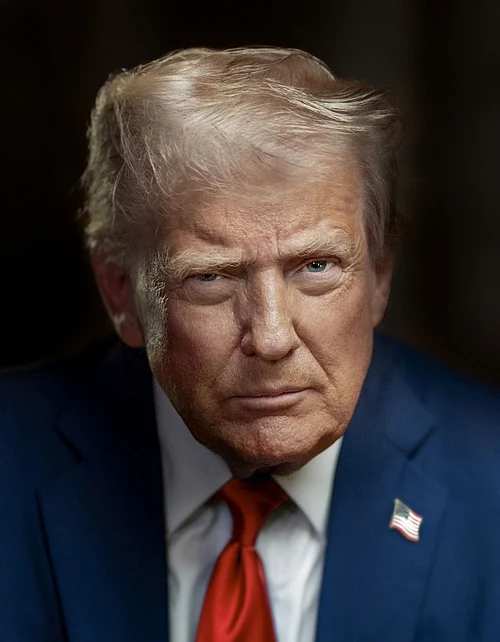
For 2028 markets, Indiana's electoral votes are safe Republican. Gov. Mike Braun appears in long-shot 2028 vice presidential markets given his prominence in the Trump coalition; Sen. Jim Banks has also been mentioned. Neither has signaled interest.




Indiana Presidential Election History
Indiana has been one of the more reliably Republican states in presidential politics, voting GOP in every election since 1968 with a single dramatic exception: Barack Obama's 1-point win in 2008, the first Democratic presidential victory there since Lyndon Johnson's 1964 landslide. That result is now understood as a product of unusual conditions, the financial crisis and a hard-fought Democratic primary that drove voter registration, rather than a lasting shift.
Trump carried Indiana by 19 points in 2016, 16 in 2020, and about 19 in 2024, restoring the state's comfortable Republican margins. The 11 electoral votes are not competitive, and for 2028 the markets treat Indiana as safely Republican, with its national relevance limited to the profiles of Governor Braun and Senator Banks in vice-presidential speculation.
Indiana Political Props & Other Markets
State-specific prediction markets tied to Indiana politics, like cabinet moves, resignations, and ballot questions.
Indiana Political Polls
The polls below pull the latest 2026 survey data for Indiana's House races, the state's only federal contests this cycle. The delegation is 7-2 Republican, with Democrats Frank Mrvan (IN-1) and Andre Carson (IN-7) both favored to hold their Indianapolis-area and Northwest Indiana seats under the existing map. There is no governor or Senate race this cycle.
Indiana's real 2026 story has been the intraparty redistricting fight rather than the general-election polling, which in a state this red rarely moves. Watch the November state legislative results, since they determine whether redistricting supporters get the votes to redraw for 2028. Where a race has no recent public polling, that section will say so rather than show stale data.
Indiana governor polls
No Indiana governor polls are currently available from public sources. This section will populate automatically when pollsters release new surveys for this race.
Indiana U.S. Senate polls
No Indiana U.S. Senate polls are currently available from public sources. This section will populate automatically when pollsters release new surveys for this race.
Frequently Asked Questions
Is Indiana a red state or a blue state?
Indiana is a red state. Trump carried it by about 19 points in 2024, Republicans hold every statewide office and both Senate seats, and Cook PVI rates it R+11. Its only Democratic presidential vote since 1964 was Obama's narrow 2008 win.
Are there any statewide races in Indiana in 2026?
No. There is no governor race (Mike Braun was elected in 2024) and no Senate race (Young is up in 2028, Banks in 2030). The only federal contests are the nine U.S. House seats.
Why was Indiana's redistricting fight a national story?
In December 2025 the Indiana Senate became the only Republican-controlled chamber in the country to reject Trump's mid-decade redistricting push, voting 31-19 with 21 Republicans joining Democrats. Trump and allies then spent $8.3 million targeting the dissenters in the May 2026 primary.
Will Indiana redraw its House map?
Not for 2026, which runs on the existing 2021 map with Democrats Frank Mrvan and Andre Carson favored to hold their seats. Whether Indiana redraws for 2028 depends on the November state legislative results and the fate of Senate leader Rodric Bray, whom Trump and Braun want removed.
Odds are aggregated from public prediction markets including Polymarket and Kalshi and are updated multiple times daily. They reflect real-money market pricing, not polling or editorial forecasts, and are provided for informational purposes only. ElectionOdds.com does not accept wagers.