2026 Election Tracker
Oklahoma Election Odds - 2026 Live Betting Odds & Voting History
Oklahoma 2026 election odds for the open governor race after Stitt, the open Senate seat Markwayne Mullin left for DHS, Kevin Hern's Trump-endorsed Senate run.
| Electoral votes | 7 |
|---|---|
| 2024 presidential result | Trump 66% / Harris 32% (R+34 margin) |
| Current governor | Kevin Stitt (R), term-limited |
| U.S. senators | Alan Armstrong (R, appointed March 24, 2026, cannot run; seat open), James Lankford (R, next 2028) |
| 2026 races on the ballot | Governor (open), U.S. Senate (open), all 5 U.S. House seats |
| Cook PVI | R+20 |
Welcome to the Oklahoma Election odds page. Oklahoma had a quieter 2026 ballot planned. Then, in March, Donald Trump nominated Senator Markwayne Mullin to lead the Department of Homeland Security after firing Kristi Noem. Mullin was confirmed March 23, 2026, resigned the same day, and Governor Kevin Stitt appointed energy executive Alan Armstrong as interim senator the next day, with the caveat that Armstrong cannot run for a full term. Trump immediately endorsed U.S. Rep. Kevin Hern for the now-open Senate seat. Beyond that, Stitt himself is term-limited, opening the governor's race. The state's 5 House seats are all safe Republican. June 16 primary, August 25 runoff. If you want to get more info about all 2026 Election Odds then check our ElectionOdds.com homepage.
Is Oklahoma a Red State or a Blue State?
Oklahoma is one of the reddest states in the country and the only state in which Trump won every county in three consecutive presidential elections. Trump carried Oklahoma by 33.5 points in 2024, by 33.1 in 2020, and by 36.4 in 2016. Trump's 2020 sweep of all 77 Oklahoma counties was a notable achievement: no other state went for him in every single county. The state has voted Republican in every presidential election since 1968 except for Lyndon Johnson's 1964 landslide. Cook PVI rates Oklahoma R+20.
The downballot picture is overwhelmingly Republican. Republicans hold the governorship under Kevin Stitt, who is term-limited in January 2027. Republicans hold both U.S. Senate seats (James Lankford and Markwayne Mullin), all 5 U.S. House seats, and supermajorities in both chambers of the state legislature. Oklahoma Democrats hold no statewide elected office and have not since 2010. The state's last Democratic governor (Brad Henry) left office in 2011, and its last Democratic U.S. senator (David Boren) left office in 1994.
Oklahoma's voting pattern is shaped by its rural character, oil and gas economy, and strong evangelical Protestant culture. Oklahoma County (Oklahoma City) and Cleveland County (Norman, home of the University of Oklahoma) are the most Democratic-leaning parts of the state, but both still tilt Republican in presidential elections. Tulsa County is competitive at the local level but votes Republican statewide. The rest of the state votes Republican by enormous margins, often 70 points or more in rural counties. The state's substantial Native American population (roughly 9%) does not produce a distinctive partisan pattern at the statewide level.
The state's politics have been shaped by its energy economy, its early statehood resistance to federal authority, and its position as the buckle of the Bible Belt's western extension. Oklahoma has not had a Democratic-controlled legislative chamber since 2007. The state has been one of the most consistent enforcers of conservative policy on abortion, education, and immigration during the Trump era. Oklahoma has 7 electoral votes through 2030.
Will Oklahoma become competitive? Not on any realistic horizon. The state's Republican lock is among the firmest in the country and is rooted in cultural, religious, and economic factors that show no signs of changing. Democratic competitiveness would require something closer to a national political realignment than a normal election cycle. For a full state-by-state comparison, see the red states vs. blue states map.
Oklahoma Governor Betting Odds
Here we are gonna talk about the odds to be the next governor. Stitt won the 2018 election as an outsider, was re-elected in 2022 by 14 points, and is now term-limited. Several Republican primary candidates are competing to succeed him, with the front of the field including:
AG Gentner Drummond, who has raised significantly more than any other 2026 statewide candidate dating back to 2023. Drummond is in his first term as AG, has been the most prominent Republican voice in state office, and is the early frontrunner. State Superintendent of Public Instruction Ryan Walters, whose four-year run as Oklahoma's top education official has been national-news contentious, pushing Bible curriculum mandates and feuding with school districts. Walters is the most ideologically aligned with the Trump-MAGA right. Former Oklahoma House Speaker Charles McCall brings legislative leadership experience but less statewide profile. Lt. Gov. Matt Pinnell is term-limited and ran for governor briefly before withdrawing. U.S. Rep. Kevin Hern considered running but is running for Senate instead. State Sen. Mike Mazzei is also in.
Democratic state Rep. Cyndi Munson is running but Democrats have not won an Oklahoma statewide election since 2006. Primary June 16, 2026, with potential runoff August 25. Find all of the Governors elections here.
Governor
Governor primary
Oklahoma Governor Election History
Oklahoma's governorship was competitive into the 2000s but has been firmly Republican since. Republican Frank Keating served two terms beginning in 1995, Democrat Brad Henry won two terms starting in 2003, and Henry remains the last Democrat elected governor of the state. Republicans Mary Fallin and then Kevin Stitt have held the office continuously since 2011.
Stitt, an outsider businessman elected in 2018 and re-elected by 14 points in 2022, is term-limited, opening the 2026 race. The Republican primary, effectively the decisive contest, features Attorney General Gentner Drummond as the well-funded early frontrunner against State Superintendent Ryan Walters and others. With no Democrat having won statewide since 2006, the GOP nominee is the heavy favorite.
Oklahoma Senate Betting Odds
Here's the timeline of how this seat opened up. Mullin was first elected to the U.S. House in 2012, then won a 2022 special election to fill the term of retiring Senator Jim Inhofe. He'd indicated he would seek a full term in 2026, until March 2026, when Trump nominated him to replace Kristi Noem at Homeland Security amid the immigration enforcement backlash. Mullin was confirmed by the Senate on March 23 and resigned the same night. Stitt, who had 30 days to appoint a replacement, named energy executive Alan Armstrong on March 24, chairman of the Williams Companies, a Tulsa-based pipeline operator. Armstrong signed the affidavit required by state law promising not to run in 2026.
The Republican primary to fill the open seat through the end of the term has consolidated quickly. U.S. Rep. Kevin Hern (OK-1, Tulsa) was the first major candidate in and immediately earned Trump's endorsement. Hern's previous interest in a gubernatorial bid evaporated when the Senate seat opened up. Other Republicans are running but Hern's Trump endorsement combined with his existing congressional infrastructure makes him the heavy favorite. The Democratic field is small and uncompetitive. Oklahoma has not elected a Democrat to the U.S. Senate since 1990. Cook rates Solid Republican. Primary June 16, 2026. See all of the election odds for senate seats here.
U.S. Senate
Oklahoma U.S. Senate Election History
Oklahoma's Senate seats have been Republican for three decades, last held by a Democrat when David Boren left in 1994. James Lankford has held one seat since 2015, and the other passed from longtime Senator Jim Inhofe to Markwayne Mullin, who won a 2022 special election to fill Inhofe's term.
That seat reopened abruptly in 2026 when Trump named Mullin to lead Homeland Security; Mullin resigned, and Governor Stitt appointed energy executive Alan Armstrong as a caretaker barred from running. Trump quickly endorsed Rep. Kevin Hern, making him the heavy favorite in the June primary for the open seat. Oklahoma has not elected a Democratic senator since 1990, and Cook rates the race Solid Republican.
Oklahoma House Betting Odds
All five Oklahoma House seats are held by Republicans, and that's expected to continue. OK-1 (Hern's seat, Tulsa) is the only open race because Hern is running for Senate. State officials like state Sen. Avery Frix and others are competing for the Republican nomination.
Oklahoma uses closed primaries, only Republican Party members can vote in Republican primaries. The Oklahoma Democratic Party did not request open primaries for the 2026 cycle, and as a result none of the state's primary elections are open. No mid-decade redistricting in Oklahoma. The state was not part of the post-Callais redistricting conversation given Republicans already hold all five seats. Primary June 16; runoff August 25 if needed. State Question 832, a proposed minimum wage increase to $15 (and tying future increases to U.S. Department of Labor data), is also on the June 16 ballot. See all of the most current House election odds.
U.S. House districts
9 marketsOklahoma U.S. House Election History
Oklahoma's five House seats have all been Republican for years, a reflection of the state's overwhelming GOP lean. The only Democratic-competitive territory is in parts of Oklahoma City, but even OK-5, briefly flipped by Democrat Kendra Horn in 2018, returned to Republican hands in 2020 and has stayed there.
For 2026, the only open seat is Kevin Hern's Tulsa-based OK-1, vacated for his Senate run, where Republicans including state Sen. Avery Frix are competing for a safe seat. Oklahoma uses closed primaries and was not part of the post-Callais redistricting wave, since Republicans already hold all five districts. A $15 minimum-wage measure, State Question 832, shares the June 16 primary ballot.
Oklahoma Presidential Election Betting Odds
Oklahoma is the most reliably Republican state in the country at the presidential level, Republican every cycle since 1968 except for LBJ's 1964 win, and Trump's 34-point margin in 2024 was among his strongest performances anywhere. Cook PVI rates Oklahoma R+20. For 2028, the 7 electoral votes are safe Republican.
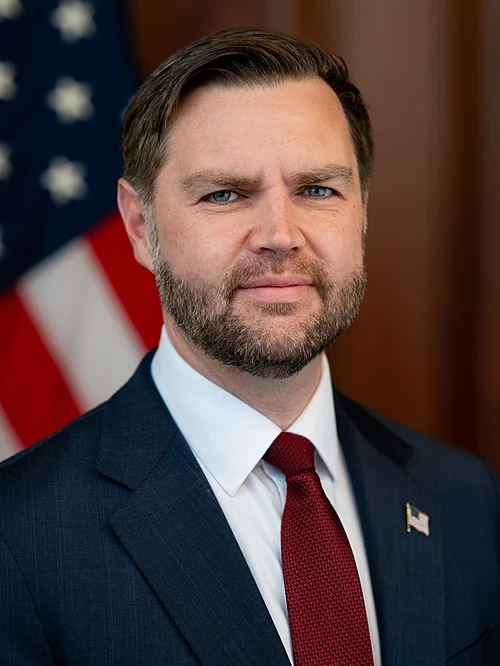
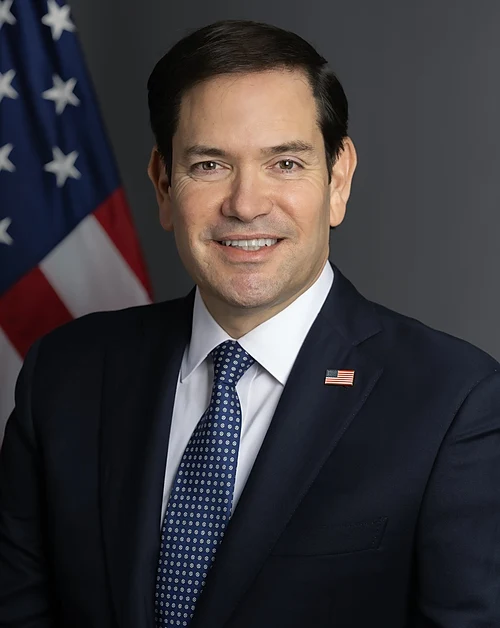
No Oklahoma politician currently appears in 2028 presidential markets. Sen. Markwayne Mullin's elevation to Homeland Security Secretary in March 2026 raised his profile but moved him out of any near-term federal-elected-office track.
Oklahoma Presidential Election History
Oklahoma is the most reliably Republican state in presidential politics. It has voted Republican in every election since 1968, the lone exception being Lyndon Johnson's 1964 landslide, and it holds a singular distinction: Trump carried all 77 counties in 2016, 2020, and 2024, the only state he swept entirely in three straight elections.
Trump's margins were enormous, 36 points in 2016 and about 34 in both 2020 and 2024, among his strongest anywhere. Cook PVI rates the state R+20, and its 7 electoral votes are never contested. For 2028, no Oklahoma figure carries presidential profile, and Markwayne Mullin's move to the DHS Cabinet post took him off the elected-office track.
Oklahoma Political Props & Other Markets
State-specific prediction markets tied to Oklahoma politics, like cabinet moves, resignations, and ballot questions.
Oklahoma Political Polls
The polls below pull the latest 2026 survey data for Oklahoma's open races. In the governor's race, the decisive contest is the Republican primary, where Attorney General Gentner Drummond leads on fundraising against State Superintendent Ryan Walters and others. In the special Senate race, Trump-endorsed Rep. Kevin Hern is the heavy favorite for the seat Markwayne Mullin vacated for the DHS post.
Oklahoma produces no competitive general-election polling given its R+20 lean, so the meaningful numbers are inside the Republican primaries, including whether the governor's race heads to an August 25 runoff. Where a race has no recent public polling, that section will say so rather than show stale data.
Oklahoma governor polls
| Pollster | Dates | Sample | Result |
|---|---|---|---|
| CHS & Associates (R) | August 2–4, 2026 | 600 (LV) | Gentner Drummond 44% · Mike Mazzei 44% · Undecided 12% |
| Pulse Decision Science (R) | August 2–4, 2026 | 600 (LV) | Gentner Drummond 38% · Mike Mazzei 44% · Undecided 18% |
| Pulse Decision Science (R) | June 21–23, 2026 | 606 (LV) | Gentner Drummond 38% · Mike Mazzei 44% · Undecided 18% |
| Cygnal (R) | June 18–19, 2026 | 600 (LV) | Gentner Drummond 44% · Mike Mazzei 42% · Undecided 14% |
| JMC Analytics (R) | June 2–3, 2026 | 550 (LV) | Gentner Drummond 21% · Chip Keating 12% · Mike Mazzei 26% · Jake Merrick 12% · Charles McCall 8% · Other 4% · Undecided 17% |
| Pulse Decision Science (R) | May 26–28, 2026 | 608 (LV) | Gentner Drummond 24% · Chip Keating 17% · Mike Mazzei 22% · Charles McCall 12% · Other 12% · Undecided 13% |
Polling data adapted from 2026 Oklahoma gubernatorial election under CC-BY-SA 4.0. Last refreshed 7 hours ago.
Oklahoma U.S. Senate polls
| Pollster | Dates | Sample | Result |
|---|---|---|---|
| CHS & Associates | August 3–6, 2026 | 500 (RV) | Kevin Hern (R) 49% · N'Kiyla Jasmine Thomas (D) 25% · Other 8% · Undecided 19% |
| CHS & Associates | August 3–6, 2026 | 500 (RV) | Kevin Hern (R) 48% · Jim Priest (D) 27% · Other 10% · Undecided 14% |
| JMC Analytics (R) | June 2–3, 2026 | 550 (LV) | William Sean Buckner 2% · Gary Ty England 8% · Nick Hankins 1% · Kevin Hern 41% · Brian Ragain 4% · Undecided 44% |
| Pulse Decision Science (R) | March 7–9, 2026 | 510 (LV) | Kevin Hern 52% · Kevin Stitt 40% · Undecided 8% |
Polling data adapted from 2026 United States Senate election in Oklahoma under CC-BY-SA 4.0. Last refreshed 7 hours ago.
Frequently Asked Questions
Is Oklahoma a red state or a blue state?
Oklahoma is one of the reddest states in the country, the only state Trump swept entirely, all 77 counties, in three straight elections. He carried it by about 34 points in 2024, Republicans hold every statewide office, and Cook PVI rates it R+20.
Why is there an open Senate race in Oklahoma?
Trump named Senator Markwayne Mullin to lead the Department of Homeland Security in March 2026. Mullin resigned, and Governor Stitt appointed energy executive Alan Armstrong as a caretaker who cannot run. Trump endorsed Rep. Kevin Hern for the open seat, making him the heavy favorite.
Who is favored in the Oklahoma governor race?
With Kevin Stitt term-limited, the Republican primary is the decisive race, and Attorney General Gentner Drummond is the well-funded early frontrunner over State Superintendent Ryan Walters and others. No Democrat has won statewide in Oklahoma since 2006.
Are any Oklahoma House seats competitive?
No. All five seats are safely Republican. The only open race is Kevin Hern's Tulsa-based OK-1, vacated for his Senate run. Oklahoma uses closed primaries and was not part of the mid-decade redistricting wave since Republicans already hold every seat.
Odds are aggregated from public prediction markets including Polymarket and Kalshi and are updated multiple times daily. They reflect real-money market pricing, not polling or editorial forecasts, and are provided for informational purposes only. ElectionOdds.com does not accept wagers.