
2026 Election Tracker
Kansas Election Odds - 2026 Live Betting Odds & Voting History
Kansas 2026 election odds for the open governor race after Laura Kelly's two terms, Roger Marshall's Senate reelection, and the competitive KS-3 House district.
| Electoral votes | 6 |
|---|---|
| 2024 presidential result | Trump 57% / Harris 41% (R+16 margin) |
| Current governor | Laura Kelly (D), term-limited |
| U.S. senators | Roger Marshall (R, on 2026 ballot), Jerry Moran (R, next 2028) |
| 2026 races on the ballot | Governor (open), U.S. Senate, all 4 U.S. House seats |
| Cook PVI | R+10 |
Kansas Democrats have one structural problem and one structural advantage. The problem: in a state Trump won by 16 points, with Republican supermajorities in both legislative chambers and Republican U.S. senators since 2012, statewide Democratic wins require everything to go right. The advantage: Laura Kelly won the governor's office twice anyway, and the Democratic firewall she built is now the only thing standing between Republican lawmakers and unchecked power. Kelly is term-limited. The 2026 election decides whether her successor preserves the firewall. Republican primary frontrunner Secretary of State Scott Schwab, former Gov. Jeff Colyer, Senate President Ty Masterson, and Insurance Commissioner Vicki Schmidt are competing for the August 4 nomination. Democratic state Sens. Ethan Corson and Cindy Holscher are the two main candidates on the Democratic side. Roger Marshall is running for a second Senate term against a fragmented Democratic field. Four House seats, including the most competitive Democratic-held seat in the country. The Kansas election is fast moving, but on ElectionOdds.com we have all the most current election odds for every race in Kansas.
Is Kansas a Red State or a Blue State?
Kansas is a red state at the presidential level but has a long tradition of electing moderate Democratic governors. Trump carried Kansas by 16.1 points in 2024, by 14.6 in 2020, and by 20.6 in 2016. The state has voted Republican in every presidential election since 1968 except for Lyndon Johnson's 1964 landslide. Cook PVI rates Kansas R+8. Kansas was actually the founding state of the Republican Party in the 1850s, and its political identity has been Republican for nearly 170 years.
The downballot picture is mostly Republican with one major Democratic exception. Democrat Laura Kelly holds the governorship after winning by 5 points in 2018 and 2.2 in 2022. She is one of only two Democratic governors of a state Trump carried by more than 15 points, alongside Kentucky's Andy Beshear. Republicans hold both U.S. Senate seats (Jerry Moran and Roger Marshall), all 4 U.S. House seats, and supermajorities in both chambers of the state legislature. Kelly is term-limited in January 2027, and the 2026 gubernatorial race will determine whether the Kansas moderate-Democrat tradition survives her departure.
Kansas's voting pattern is shaped by its agricultural economy, its history as the home of moderate Eisenhower Republicanism, and the recent transformation of the Kansas City suburbs. Johnson County, in the Kansas City metro, is the largest county in the state and votes Democratic at the federal level after spending most of the 20th century as a Republican stronghold. Wyandotte County (Kansas City, Kansas) and Douglas County (Lawrence, home of the University of Kansas) also vote Democratic. The rest of the state, particularly western Kansas and rural eastern Kansas, votes Republican by large margins.
The state's politics have been complicated by the famous 1990s and 2000s fights between moderate and conservative Republicans, often producing crossover wins for Democratic governors when the Republican primary produced a candidate too conservative for the state's general electorate. Kansas voters also rejected a constitutional amendment to allow abortion restrictions by an 18-point margin in August 2022, the largest pro-abortion-rights vote in any state referendum since the Dobbs ruling. The state has 6 electoral votes through 2030.
Will Kansas become competitive at the presidential level? Not in the near term. The state's Republican identity is durable, even as Johnson County has moved Democratic. The Kelly governorship is the exception that proves the rule: a personally talented moderate Democrat in a state with intra-Republican divisions that occasionally produce general-election openings for Democrats. The 2026 gubernatorial race will test whether the moderate-Democrat path remains open. For a full state-by-state comparison, see the red states vs. blue states map.
Kansas Governor Betting Odds
Kelly's path: she won in 2018 by 5 points over Kris Kobach (after Kobach narrowly beat sitting Gov. Jeff Colyer in the GOP primary), and re-elected in 2022 by 2 points over former AG Derek Schmidt. She has been a steady ideological brake on a Republican-supermajority legislature for two terms. Republicans have overridden her vetoes when they could; on most major Democratic priorities, her veto has held.
Republican primary (August 4, 2026): Four serious candidates. Secretary of State Scott Schwab built his profile pushing back against election conspiracy theories, the kind of profile that performs well in general elections but can struggle in Republican primaries. Former Gov. Jeff Colyer held the office for 11 months in 2018 after Sam Brownback resigned, lost the GOP primary to Kobach, briefly ran in 2022 before withdrawing over a prostate cancer diagnosis. State Senate President Ty Masterson, a small business owner who has been a state senator since 2009, the legislative leadership candidate. Insurance Commissioner Vicki Schmidt is the fourth statewide officeholder in the race.
Democratic primary: State Sen. Ethan Corson (Fairway), endorsed by Gov. Kelly, an attorney and former state party executive director with deep institutional ties. State Sen. Cindy Holscher (Overland Park) is the progressive option. Former state Transportation Secretary Julie Lorenz is also running. The general election analysis depends heavily on which Republican wins the August primary. Schwab is the moderate Republican most likely to win in November; Masterson or Colyer would give Democrats more room. Cook rates Likely Republican. Find all of the Governors elections here.
Governor
Governor primary
Kansas Governor Election History
Kansas is deeply Republican federally, but its governorship has alternated for half a century, with voters rewarding centrists of both parties. Republican Bill Graves gave way to Democrat Kathleen Sebelius in 2003, then Mark Parkinson, before Republican Sam Brownback won in 2010. Brownback's deep tax-cut experiment soured, and after his 2018 exit and Jeff Colyer's brief tenure, Democrat Laura Kelly won that November.
Kelly won twice, by 5 points in 2018 and 2.2 in 2022, often when Republicans nominated candidates seen as too conservative for the general electorate. She is now term-limited, making 2026 an open race that tests whether the moderate-Democrat tradition survives. Secretary of State Scott Schwab leads a four-way Republican primary, with Democrats Ethan Corson and Cindy Holscher competing for their nomination. Cook rates the race Likely Republican.
Kansas Senate Betting Odds
Marshall is seeking a second term after winning 2020 by 12 points over Democrat Barbara Bollier (the closest Kansas Senate race since 1996). His primary opponent (Chase LaPorte) is not seriously contesting the nomination. The general election will be against the winner of an 11-candidate Democratic primary that has no clear frontrunner, surgeon Kevin Latz, attorney Anne Parelkar, state Sen. Patrick Schmidt (the 2022 nominee for a U.S. House district), retired financial executive Sandy Spidel Neumann, and others.
A fragmented Democratic primary with no consolidating candidate is the structural advantage Marshall enters with. Kansas has not elected a Democrat to the U.S. Senate since 1932, the longest Republican Senate streak in the country. Cook rates Solid Republican. Primary August 4, 2026. See all of the election odds for senate seats here.
U.S. Senate
Kansas U.S. Senate Election History
Kansas has the longest Republican Senate streak in the country, having not elected a Democrat to the chamber since 1932. Jerry Moran has held one seat since 2011, and Roger Marshall won the other in 2020, defeating Democrat Barbara Bollier by 12 points in the closest Kansas Senate race since 1996.
Marshall's 2026 re-election bid faces only token primary opposition and a crowded, frontrunner-less 11-candidate Democratic field, exactly the kind of fragmentation that has long protected Kansas Republicans. Cook rates the race Solid Republican.
Kansas House Betting Odds
Sharice Davids holds the most competitive Democratic-leaning House seat in the country in a district Trump has carried four times, and she keeps winning it. Davids has held KS-3 (the Kansas City suburbs) since 2018, flipping it from Republican Kevin Yoder, and has won re-election four times in a district Trump has carried. Her 2024 margin was 11 points. KS-3 is the kind of swing-district Democratic incumbency Republican strategists have spent years trying to break and have not succeeded. Davids is on national Republican target lists every cycle. The Republican primary will produce her opponent in August.
The other three seats, KS-1 (Tracey Mann, western Kansas), KS-2 (Derek Schmidt, eastern Kansas), KS-4 (Ron Estes, Wichita), are safe Republican. No mid-decade redistricting in Kansas. Primary August 4, 2026. See all election odds for house seats here.
U.S. House districts
4 marketsKansas U.S. House Election History
Kansas's four-seat delegation is 3-1 Republican, and its lone Democratic seat is one of the most remarkable in the country. Sharice Davids flipped the Kansas City-area KS-3 from Republican Kevin Yoder in 2018 and has held it through four elections even as Trump carried the district at the top of the ticket.
Davids won by 11 points in 2024 and remains a perennial national Republican target, but the GOP has repeatedly failed to dislodge her. The other three seats, held by Tracey Mann, Derek Schmidt, and Ron Estes, are safely Republican, and Kansas did not pursue mid-decade redistricting.
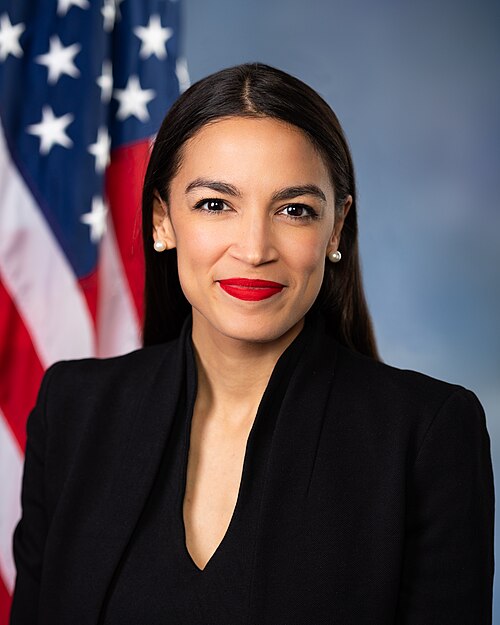
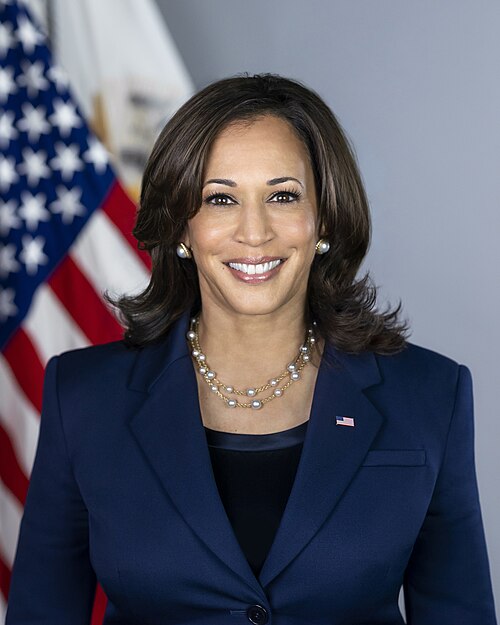
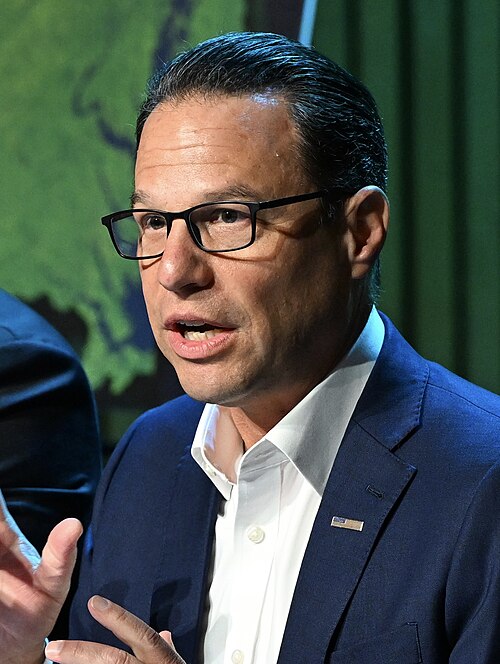
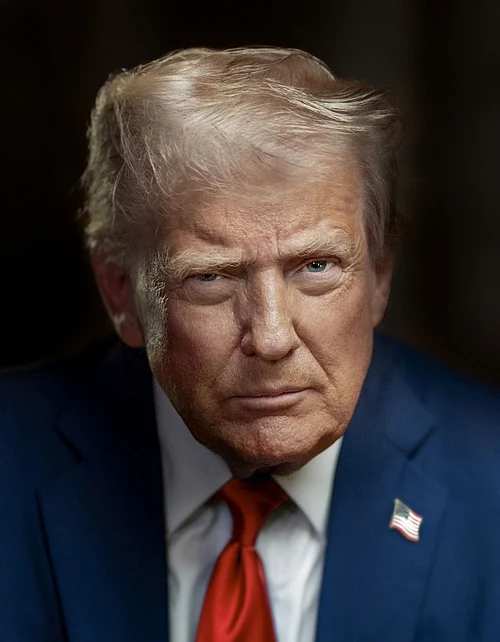
Kansas Presidential Election Betting Odds
Trump won Kansas by 16 points in 2024, basically matching his 2020 margin of 15. The state has voted Republican in every presidential election since 1968 except for LBJ's 1964 win. Cook PVI rates Kansas R+10. For 2028, the 6 electoral votes are safe Republican.
No Kansas politician currently appears in 2028 presidential markets. The state's most prominent recent national figure, Brownback, transitioned to ambassador roles and is not in active politics. Kansas remains structurally Republican at the federal level while delivering periodic surprises at the state level, Kelly's 2018 and 2022 wins, the 2022 abortion-rights ballot measure that won by 18 points.

Kansas Presidential Election History
Kansas was the founding state of the Republican Party in the 1850s and has been Republican at the presidential level for almost its entire history, voting GOP in every election since 1968 except Lyndon Johnson's 1964 landslide. Its identity runs from the moderate Eisenhower tradition to the present.
Trump's margins have been steady, around 15 to 21 points, including 16 in 2024. Cook PVI rates the state R+10, and its 6 electoral votes are safely Republican. The lone signal of independence is at the ballot box on state issues, most strikingly the 18-point rejection of an anti-abortion constitutional amendment in 2022, the largest such margin anywhere after Dobbs.
Kansas Political Props & Other Markets
State-specific prediction markets tied to Kansas politics, like cabinet moves, resignations, and ballot questions.
Kansas Political Polls
The polls below pull the latest 2026 survey data for Kansas's races, headlined by an open governor's contest. With Democrat Laura Kelly term-limited, the question is whether her moderate-Democrat firewall survives: Scott Schwab leads a four-way Republican primary, while Democrats Ethan Corson and Cindy Holscher compete for their nomination. Sen. Roger Marshall seeks a second term against a fragmented Democratic field, and Sharice Davids defends KS-3.
The general-election picture in the governor's race depends heavily on which Republican emerges in August, so watch the primary first. Davids's KS-3 is the one consistently competitive House seat. Where a race has no recent public polling, that section will say so rather than show stale data.
Kansas governor polls
| Pollster | Dates | Sample | Result |
|---|---|---|---|
| Wedgewood Polls | September 22–24, 2026 | 500 (LV) | Cindy Holscher (D) 48% · Ty Masterson (R) 52% |
| 270toWin | September 11–18, 2026 | Cindy Holscher (D) 43.5% · Ty Masterson (R) 51% · Other/ Undecided 5.5% | |
| RealClearPolitics | September 8–16, 2026 | Cindy Holscher (D) 43.5% · Ty Masterson (R) 51% · Other/ Undecided 5.5% | |
| Silver Bulletin | August 13 – September 16, 2026 | Cindy Holscher (D) 43.7% · Ty Masterson (R) 50.5% · Other/ Undecided 5.8% | |
| Emerson College | September 15–16, 2026 | 750 (LV) | Cindy Holscher (D) 44% · Ty Masterson (R) 51% · Undecided 6% |
| co/efficient (R) | September 8–10, 2026 | 915 (LV) | Cindy Holscher (D) 43% · Ty Masterson (R) 51% · Undecided 6% |
Polling data adapted from 2026 Kansas gubernatorial election under CC-BY-SA 4.0. Last refreshed 6 hours ago.
Kansas U.S. Senate polls
| Pollster | Dates | Sample | Result |
|---|---|---|---|
| 270toWin | September 8–24, 2026 | Roger Marshall (R) 46.7% · Adam Hamilton (D) 46.3% · Other/ Undecided 7% | |
| Wedgewood Polls | September 22–24, 2026 | 500 (LV) | Roger Marshall (R) 48% · Adam Hamilton (D) 50% · Other 2% |
| Emerson College | September 15–16, 2026 | 750 (LV) | Roger Marshall (R) 43% · Adam Hamilton (D) 45% · Other 4% · Undecided 8% |
| co/efficient (R) | September 8–10, 2026 | 915 (LV) | Roger Marshall (R) 49% · Adam Hamilton (D) 44% · Other 2% · Undecided 5% |
| Global Strategy Group (D) | August 12–16, 2026 | 800 (LV) | Roger Marshall (R) 43% · Adam Hamilton (D) 44% · Other 5% · Undecided 8% |
| Public Policy Polling (D) | August 7–8, 2026 | 569 (LV) | Roger Marshall (R) 46% · Adam Hamilton (D) 45% |
Polling data adapted from 2026 United States Senate election in Kansas under CC-BY-SA 4.0. Last refreshed 6 hours ago.
Frequently Asked Questions
Is Kansas a red state or a blue state?
Kansas is a red state at the presidential level, Trump carried it by about 16 points in 2024, but it has a long tradition of electing moderate Democratic governors. Cook PVI rates it R+8 to R+10, and it was the founding state of the Republican Party.
Who is running for Kansas governor in 2026?
With Democrat Laura Kelly term-limited, Secretary of State Scott Schwab leads a four-way Republican primary that also includes Jeff Colyer, Ty Masterson, and Vicki Schmidt, while Democrats Ethan Corson (Kelly-endorsed) and Cindy Holscher are the main contenders. Cook rates the open race Likely Republican.
Is Roger Marshall's Senate seat competitive?
Not seriously. Marshall faces a fragmented 11-candidate Democratic primary with no frontrunner, and Kansas has not elected a Democratic senator since 1932, the longest such streak in the country. Cook rates the race Solid Republican.
Which Kansas House seat is competitive?
KS-3, the Kansas City suburbs seat held by Democrat Sharice Davids since 2018. She has won it four times, by 11 points in 2024, even as Trump carries the district, making it one of the most competitive Democratic-held seats in the country. The other three seats are safely Republican.
Odds are aggregated from public prediction markets including Polymarket and Kalshi and are updated multiple times daily. They reflect real-money market pricing, not polling or editorial forecasts, and are provided for informational purposes only. ElectionOdds.com does not accept wagers.