
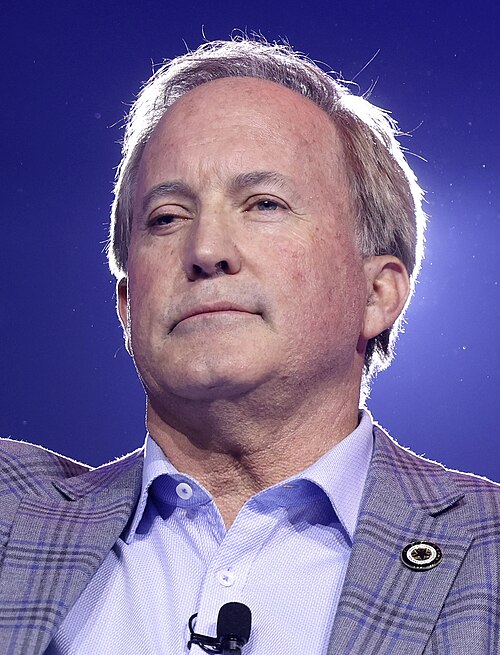
- Texas Attorney General Ken Paxton defeated Sen. John Cornyn 64% to 36% in Tuesday's Republican Senate runoff. Cornyn conceded on election night.
- Polymarket priced Paxton as a 96% favorite heading into the runoff. Kalshi traders agreed. What markets missed was the margin — the Paxton 9%+ contract on Polymarket sat at 83%, and the actual gap came in near 28 points.
- State Sen. Mayes Middleton beat Rep. Chip Roy roughly 56-44 in the Republican attorney general runoff. Polymarket had Middleton at 80% and Kalshi at 89% going in.
- State Sen. Nathan Johnson defeated former Galveston Mayor Joe Jaworski with about 60% in the Democratic AG runoff. Kalshi priced him at 99%.
- In the House, Rep. Christian Menefee beat 11-term Rep. Al Green in the TX-18 Democratic runoff, and former Rep. Colin Allred won the TX-33 Democratic runoff over Rep. Julie Johnson.
- Trump's May 19 endorsement of Paxton — exactly one week before the vote — was the cycle's clearest example of the president flipping a Senate primary. It is the second straight week a Trump-backed challenger ended an incumbent's career, after Ed Gallrein knocked out Rep. Thomas Massie in Kentucky on May 19.
AUSTIN, Texas — The most expensive Senate primary in Texas history ended Tuesday night with a four-term incumbent losing by 28 points to a state attorney general who spent the last three years under indictment, impeached, and publicly accused of adultery in his own wife's divorce filing.
Prediction markets called it. They just didn't call it big enough.
Ken Paxton defeated Sen. John Cornyn 64% to 36% in the Republican Senate runoff, a blowout that turned what had been polling as a tight three-to-five-point race into one of the worst losses ever suffered by a sitting Texas senator in a party primary. Cornyn conceded on election night.
The result confirmed what our preview of the race laid out Sunday: markets had priced Paxton at 95%-plus on both Polymarket and Kalshi while the University of Houston Hobby School poll showed Paxton up just three points within the margin of error. The gap between markets and polling was unusually wide. The markets were correct on direction. Polling, even at the upper bound of its margin of error, underestimated the floor that had collapsed beneath Cornyn.
Senate: The Endorsement That Did It
The runoff turned on a single piece of news. After months of public neutrality — Trump had teased an endorsement after the March 3 primary but never delivered one — the president endorsed Paxton on May 19, exactly one week before the vote.
The market response was immediate. Polymarket's Republican Senate primary winner contract closed at 96% for Paxton. The Senate Election Matchup market priced a Paxton-Talarico general election at 96% as well, leaving essentially no probability on a Cornyn revival.
What markets did not price was the scale of the win. The "Paxton wins by 9%+" contract on Polymarket sat at roughly 83% going in. The actual margin was closer to 28 points. Traders correctly identified the direction. They underestimated how far the floor had collapsed beneath Cornyn.
Cornyn had spent more than $60 million attacking Paxton over his impeachment, his FBI investigation, and his wife's 2024 divorce filing. None of it moved enough Republican primary voters once Trump weighed in. Paxton won by leaning on the MAGA base, where his favorability has consistently outperformed Cornyn's.
Paxton now faces Democratic state Rep. James Talarico in November. Talarico, who defeated Rep. Jasmine Crockett in the March 3 Democratic primary, has out-raised every Senate Democrat in the country this cycle. Democrats have not won a Texas Senate race since 1988, but pre-runoff polling found 24% of Cornyn primary voters open to crossing over to Talarico rather than backing Paxton.
The Texas Senate Election Winner market on Polymarket priced Republicans at 56% Monday — well off the usual 80-plus that a generic Republican would command in a Texas Senate race. That gap is the cost of nominating Paxton.
Attorney General: A Self-Funded Win and a 99% Democrat
State Sen. Mayes Middleton, a Galveston oilman and former chair of the Texas House Freedom Caucus, defeated Rep. Chip Roy in the Republican attorney general runoff with roughly 56% of the vote.
Polymarket had Middleton at 80% heading into the day. Kalshi had him at 89%. Middleton finished first in the March 3 primary at 39% to Roy's 32% and spent more than $11 million of his own money in the runoff phase attacking Roy for past criticism of Trump.
Neither Trump nor any major statewide Republican formally endorsed in the GOP runoff. Roy had Sen. Ted Cruz and several House Freedom Caucus members behind him. It was not enough.
State Sen. Nathan Johnson of Dallas won the Democratic runoff with about 60% over former Galveston Mayor Joe Jaworski. Kalshi priced Johnson at 99% going in — one of the most lopsided non-trivial political markets of the cycle. He had finished first on March 3 with 48%, narrowly missing an outright primary win.
Texas has not elected a Democrat statewide since 1994.
House: Menefee Knocks Out Green, Allred Comes Back
The May 26 runoffs resolved two of the highest-profile primary fights on the new Texas congressional map.
In TX-18, the Houston seat where redistricting consolidated two Democratic incumbents into the same district, freshman Rep. Christian Menefee defeated 11-term Rep. Al Green in the Democratic runoff. Menefee, 38, took early voting in Harris County by more than 70%. Green, 78, ends a 21-year run in Congress.
In TX-33, former Rep. Colin Allred — who left the House to challenge Sen. Ted Cruz in 2024 and lost — defeated Rep. Julie Johnson in the Democratic runoff to claim the nomination in the newly drawn North Texas seat. Both seats are heavily Democratic and the runoff winners are favored to win in November.
What This Means for the Cycle
Tuesday was the second consecutive week a Trump endorsement ended an incumbent's career. Ed Gallrein knocked out Rep. Thomas Massie in the Kentucky 4th on May 19 in what was, briefly, the most expensive House primary in U.S. history. Cornyn's defeat now sits beside Massie's as a pair of late-May proof points that the president's late endorsements are landing harder than at any point in the cycle.
For markets, the takeaway is narrower. Texas confirmed that a Trump endorsement at the right moment can move a single-digit polling lead into a structural blowout. It did not confirm that markets know how to price the scale of those swings — the margin contracts were materially off, even when the winner contracts were right.
The next Trump-endorsement test arrives June 16 in Georgia, where Trump-backed Lt. Gov. Burt Jones faces self-funded businessman Rick Jackson in the Republican gubernatorial runoff and Trump has not yet weighed in on the Senate runoff between Rep. Mike Collins and former football coach Derek Dooley.
For live odds on every Texas race and the rest of the 2026 midterms, see the Election Odds homepage. The Texas Senate, attorney general, and House markets are all listed on the Texas page.
The Texas general election is November 3, 2026.