
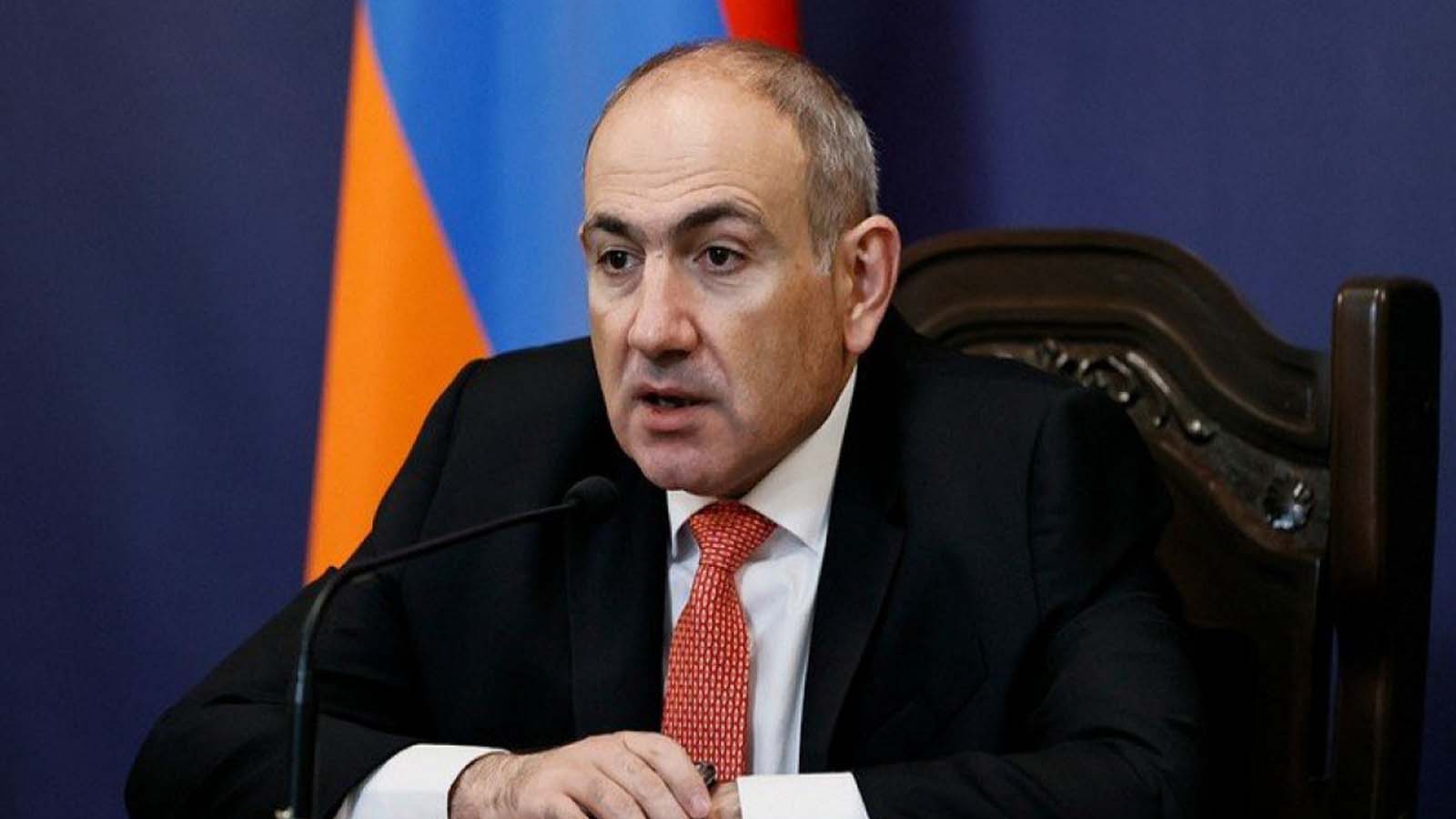
- Armenia holds its parliamentary election on June 7. Polymarket gives Prime Minister Nikol Pashinyan’s ruling Civil Contract party a 92% chance of winning the most seats. Kalshi does not have a market for this race.
- The most recent IRI poll shows Civil Contract winning 32% of respondents — a jump from 24% in March. But 23% are still undecided and 21% refused to answer, keeping the race from being a complete certainty.
- A separate late-May survey found that Civil Contract could win nearly 65% of decided voters — a number that would point toward a landslide and possibly a constitutional supermajority.
- Russia recalled its ambassador to Armenia this week over the country’s accelerating path toward the European Union — a development that has only reinforced Western support for Pashinyan’s government.
- The election odds strongly favor Civil Contract, but the race carries bigger stakes than the market numbers might suggest. The result will shape Armenia’s geopolitical direction for the next five years.
YEREVAN — Armenia holds one of its most consequential elections in years on June 7. Prediction markets are about as confident as they get for a contested parliamentary election.
Polymarket gives Prime Minister Nikol Pashinyan’s ruling Civil Contract party a 92% chance of winning the most seats in the National Assembly. Kalshi does not have a market for this race.
That number reflects the underlying political reality: Pashinyan is unpopular, but his opposition is weaker and more divided. The real question on election night is not if Civil Contract wins, but how big the win is — and whether it gets a constitutional supermajority.
Where the Odds Stand
Polymarket’s live market with world election odds, as of June 5, has Civil Contract at 92%. The Armenia Alliance, led by former President Robert Kocharyan, is the next most-traded outcome at 19%. But those numbers reflect separate contract markets; the overall consensus is that Civil Contract wins.
More than $378,000 has traded on the market, giving it relatively strong liquidity for a non-U.S. election. Traders have been pricing in Pashinyan’s advantage for months, and recent polling has only pushed the odds further in his direction.
For anyone tracking the election odds on international races, Armenia’s market is one of the more notable non-American contests of the summer on Polymarket.
What the Polls Show
An International Republican Institute poll released in late May found 32% of respondents backing Civil Contract — up from 24% in March. Strong Armenia, backed by Russian-Armenian billionaire Samvel Karapetyan, was a distant second at 6%.
Still, 23% of respondents were undecided and 21% refused to answer. That is a large pool of voters without a clear alignment, and it makes the margin of victory hard to predict with confidence.
A separate late-May survey cited by Euronews found that Civil Contract could capture nearly 65% of decided voters. If that translates into the final result, the party would be on pace for a dominant majority.
Trust numbers are stark. The IRI poll found 29% of voters trusted Pashinyan, compared to 8% for Karapetyan, 4% for former President Kocharyan, and 3% for businessman Gagik Tsarukyan.
Why This Election Matters Beyond the Margins
This is the first parliamentary election since the fall of Nagorno-Karabakh in late 2023. Nearly the entire ethnic Armenian population of the region — roughly 100,000 people — fled to Armenia after Azerbaijani forces retook control. The loss remains a raw wound in Armenian politics.
Pashinyan has turned toward the West. In August 2025, he sat alongside Azerbaijani President Ilham Aliyev at the White House, where President Donald Trump hosted a peace framework signing. Trump later gave Pashinyan his “complete and total endorsement.”
Russia has responded with escalating pressure. This week, Moscow recalled its ambassador to Armenia “for consultations,” citing Yerevan’s accelerating moves toward the European Union. Russia has also threatened to suspend Armenia from the Eurasian Economic Union and cut key trade ties.
That geopolitical context has concentrated the race into a clear referendum: a vote for Civil Contract is a vote for Europe and the West. A strong opposition showing — especially from Kocharyan or Karapetyan, who both advocate closer ties with Moscow — would pull Armenia in the opposite direction.
The Main Players
Nikol Pashinyan — Civil Contract: Pashinyan, 51, rose to power through the 2018 Velvet Revolution, a peaceful street protest movement that ended decades of entrenched post-Soviet rule. He won a snap election in 2021 with 54% of the vote after surviving the fallout from the 2020 Nagorno-Karabakh war. This election is, in effect, a third consecutive mandate he is seeking.
Robert Kocharyan — Armenia Alliance: The former president (1998-2008) leads the main opposition bloc, which includes the Armenian Revolutionary Federation. Kocharyan is a pro-Russia figure who has consistently criticized Pashinyan’s Western turn and the handling of the Karabakh crisis.
Samvel Karapetyan — Strong Armenia: The Russian-Armenian billionaire energy mogul entered politics as a direct challenge to Pashinyan. His Strong Armenia alliance polls second but well below Civil Contract.
Gagik Tsarukyan — Prosperous Armenia: The longtime eccentric businessman and power broker has a loyal base but polls in single digits. He is among the least trusted figures in Armenian politics.
The Supermajority Question
Armenia’s 105-seat National Assembly requires a party to hold a constitutional majority to push through amendments without coalition partners. Civil Contract held a commanding majority after 2021 and is campaigning for a similar result.
A supermajority would allow Pashinyan to advance constitutional changes potentially tied to the ongoing peace process with Azerbaijan. It is also the threshold that would make him, in practical terms, untouchable by opposition obstruction for the next five years.
Armenia uses a proportional representation system with a bonus for the largest party in a fragmented field. That structure tends to amplify the winner’s margin. If Civil Contract hits 65% of decided voters, as the late-May polling projects, a supermajority is plausible.
The Bottom Line
Polymarket at 92% for Civil Contract is about as lopsided as prediction markets get for a contested parliamentary election. The election odds reflect the polling, the trust gap, and the fragmented opposition.
But the number that will define this election is not the winner — it’s the margin. Does Civil Contract win comfortably or dominate? Does Kocharyan or Karapetyan surpass the 5% threshold to enter parliament at all? Does Russia’s pressure in the final days before voting move any Armenian voters?
This is a small country making an enormous geopolitical choice. The betting markets are clear on who wins. What happens next is a much bigger question.
Armenia’s parliamentary election is June 7, 2026.