
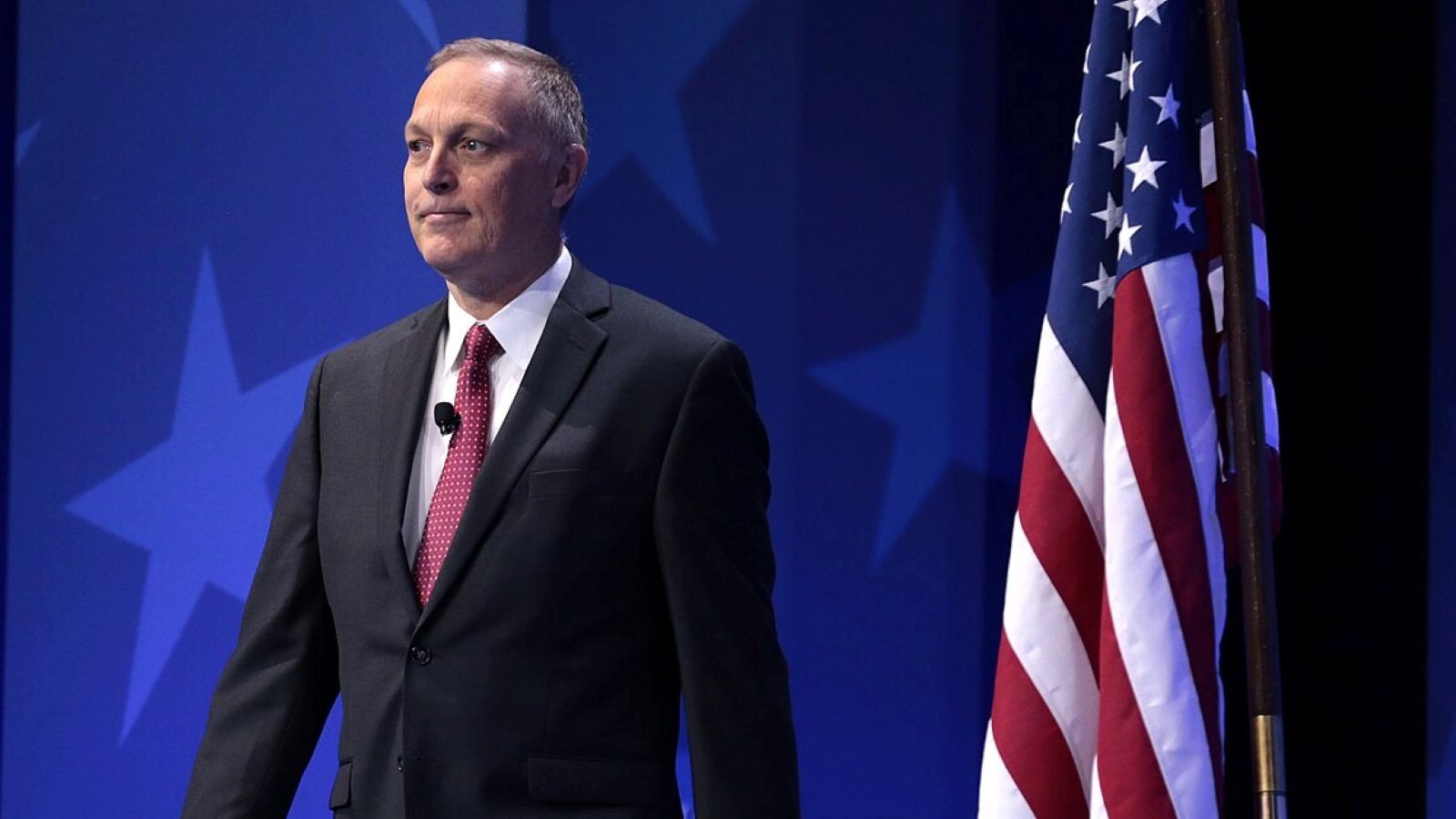
- Arizona votes Tuesday, July 21, and the marquee race is close to settled on the board. Polymarket has Rep. Andy Biggs at 97% to win the Republican governor primary, with Rep. David Schweikert stranded at 2%.
- With the winner a foregone conclusion, the live action has shifted to Kalshi's market on Biggs's margin of victory. The moneyline is dead, so the value has moved to the number.
- The general election is the real bet. Kalshi gives incumbent Gov. Katie Hobbs about 76% to hold the seat and Polymarket about 78%, leaving the eventual Republican a live dog in the low-to-mid 20s.
- The math reflects a purple state. Hobbs won in 2022 by seven-tenths of a point, but Trump carried Arizona by 5.5 in 2024 and Republicans hold a registration edge.
- The undercard matters too: open House primaries in AZ-05 (Trump-backed Mark Lamb favored) and battleground AZ-01, plus contested GOP primaries for secretary of state and attorney general.
PHOENIX - Arizona votes Tuesday, and for a marquee governor's race, the headline market is almost boring: the Republican primary is a foregone conclusion. The state set its primary for July 21, moved up from the old August date, and when the count comes in, Polymarket has Rep. Andy Biggs at 97 cents on the dollar to win the nomination, with Rep. David Schweikert marooned at 2%. There is no value left in the winner market. For bettors, the interesting money on Arizona sits elsewhere: in how big Biggs wins on Tuesday, and in a November general that both major exchanges still rate as genuinely live.
The Primary Is Chalk
Biggs has been the odds-on favorite for months, and the number only hardened as the field cleared. When Karrin Taylor Robson, who poured more than $20 million into her 2022 run, dropped out in February, Biggs absorbed both the consolidation and Trump's endorsement, and the market never looked back. Polling backs the price: recent surveys put him near 48% to Schweikert's 18%, with roughly a third of Republicans still undecided. At 97%, backing Biggs to win is laying heavy juice for pennies of return, the textbook definition of a market with no edge left. Schweikert, a veteran congressman surrendering a competitive House seat to run, is a 2% afterthought.
Where the Action Is, the Margin
With the winner effectively locked, the sharp money has moved to a different question entirely: the margin. Kalshi lists a market on Biggs's margin of victory in the primary, and that is where the real handicapping happens now, not whether he wins, but whether he clears the field by 20, 30 or 40 points. It is the political-futures version of laying a big number on a prohibitive favorite. The moneyline is dead, so the value migrates to the spread, and anyone with a read on how those undecideds break is trading that line rather than the outcome.
The General Is the Real Bet
The market that actually matters opens the second the primary closes. In November, incumbent Gov. Katie Hobbs is favored but far from safe. As of the latest read, Kalshi gave her roughly a 76% chance to hold the seat and Polymarket about 78%, which leaves the eventual Republican, almost certainly Biggs, as a live dog in the low-to-mid 20s. The Arizona governor odds capture a purple state pulling in two directions. Hobbs won in 2022 by seven-tenths of a point, the closest governor's race in modern Arizona history, and she is sitting on a war chest north of $7 million to Biggs's roughly $1 million; one spring poll gave Hobbs a double-digit lead over Biggs. But Trump carried Arizona by 5.5 points in 2024, Republicans hold a voter-registration edge, and midterm turnout is a wild card. For a bettor, that is the appeal: a state decided by inches, where a low-20s dog is not dead money.
The Down-Ballot Board
Tuesday's undercard carries its own action. Biggs and Schweikert are both vacating House seats, and the open primaries to replace them are the real contests. In deep-red AZ-05, Trump-endorsed former sheriff Mark Lamb is the man to beat in a district where winning the Republican primary is tantamount to winning the seat. Schweikert's AZ-01, by contrast, is a genuine November battleground, so its primaries on both sides are worth a look. Further down the statewide ballot, Republicans hold contested primaries for secretary of state, where Alex Kolodin faces Gina Swoboda, and attorney general, where state Senate President Warren Petersen takes on Rodney Glassman, while Hobbs and the other Democratic incumbents run unopposed or close to it. One twist unique to this cycle: under Proposition 131, each nominee for governor picks a lieutenant governor running mate after the primary, a new variable the market has barely begun to price.
The Bettor's Read
Put it together and the angle is clear. The primary offers no value on the outcome; if you want a position Tuesday night, it is on the margin, not the winner. The general is where the money and the uncertainty live, with Hobbs a soft favorite and Biggs a live underdog in a state that settles these things on the margins, which is why the governor race odds here reward more attention than the primary ever will. The read to have is on turnout and on whether Arizona's independents, more than a third of the electorate, break the way they did in 2022. As always, these are implied probabilities carrying each book's hold, not called results, and a 76% favorite in a purple state still loses one time in four.
What to Watch
Three things move the board from here: Tuesday's margin, the running-mate picks that follow under the new lieutenant-governor rules, and the first post-primary head-to-head polling that will reset the general-election line. For the latest election odds, Arizona is about to flip from a settled primary to one of the most closely priced governor's races on the November board.