
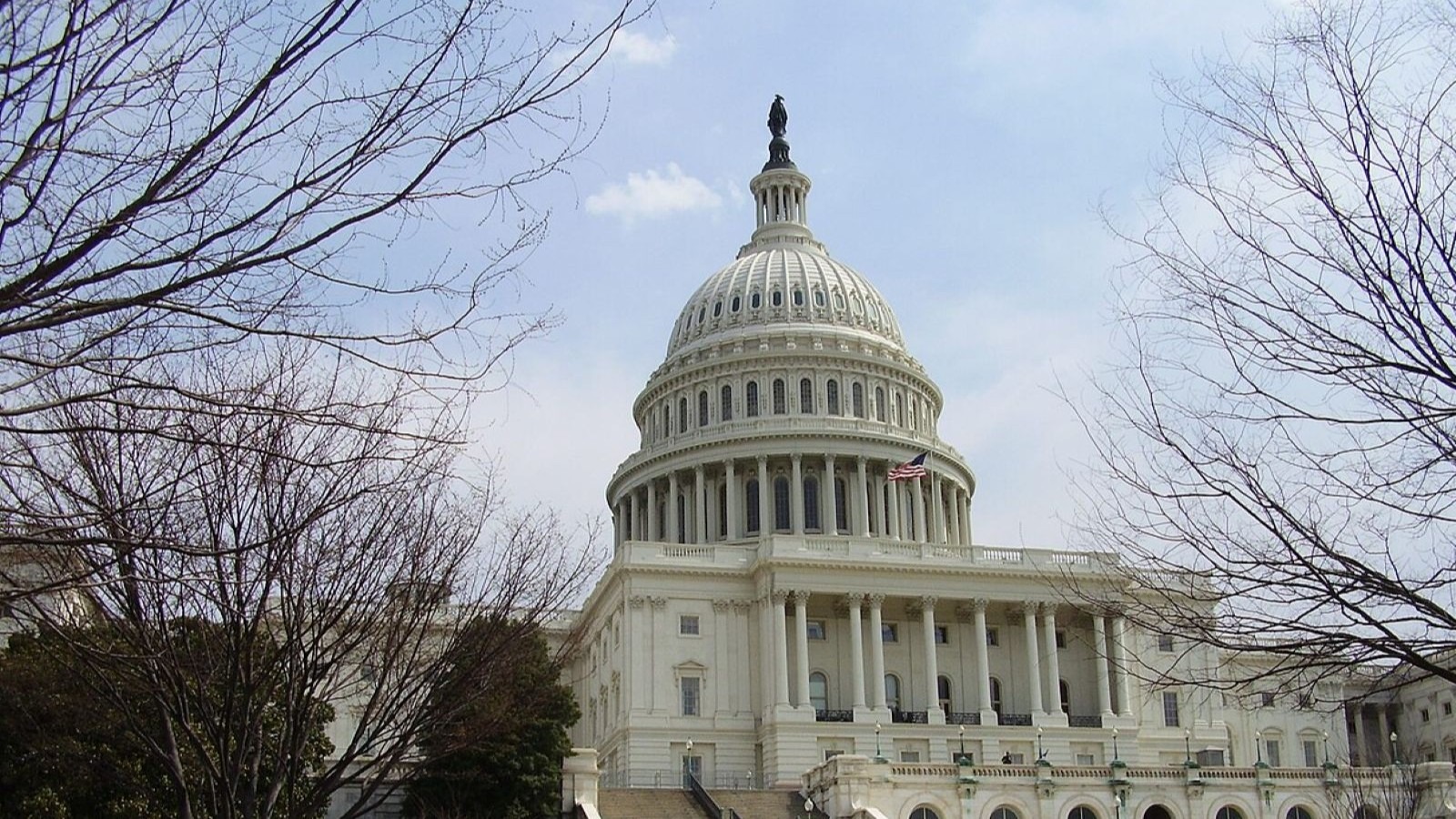
- Comments on the CFTC proposal close July 27, six days after the subcommittee took testimony from five witnesses.
- The proposal would classify elections and awards as contests rather than gaming, placing them outside public-interest review.
- It would channel sports contracts toward final scores and season metrics while flagging injury and officiating contracts.
- The American Gaming Association put Kalshi’s trading volume at $111 billion through the first half of 2026.
- The comment window on the rule that decides which sports contracts can keep trading closes July 27.
WASHINGTON – A House Agriculture subcommittee took testimony Tuesday on sports event contracts, six days before comments close on the Commodity Futures Trading Commission proposal that would decide which of those contracts can keep trading. Kalshi traded $111 billion in the first half of the year, the American Gaming Association told the panel, against $23.7 billion for all of last year.
No Vote, and a Rule Already on the Clock
The Subcommittee on Commodity Markets, Digital Assets, and Rural Development convened at 10 a.m. Tuesday in Room 1300 of the Longworth House Office Building. Its notice titled the session “Examining Customer Protections and Market Integrity in Sports Event Prediction Markets.” Rep. Dusty Johnson chairs the panel and Rep. Don Davis is the ranking member.
The subcommittee posted written statements from all five witnesses, none of whom it had named when it announced the House hearing on sports prediction markets last week. They are Robert A. Schwartz of Morgan, Lewis & Bockius, David Z. Bean, chairman of the Indian Gaming Association, Christopher Cylke of the American Gaming Association, Carl Kennedy of Katten Muchin Rosenman, and Asaf Meir, chief executive of Solidus Labs.
No vote was scheduled, and the document the witnesses argued over is already published and running on a deadline. The commission’s proposed rule on prediction markets and public interest determinations, carrying RIN 3038-AF65 and amending 17 CFR Part 40, appeared in the Federal Register on June 12. Comments must be received by July 27.
What the Proposal Would Let Stand, and What It Would Not
The proposal would channel permissible sports contracts toward aggregate outcomes. Final scores, tournament advancement and season-long performance metrics qualify, provided they settle on objective data the league verifies and the sport carries its own integrity infrastructure.
It identifies a separate set of designs it would likely find contrary to the public interest. Those are games of pure chance, player-injury contracts, officiating-only contracts, first-action and discrete-action contracts tied to a specific participant, physical altercation contracts and pre-collegiate sports.
For the injury, officiating, discrete-action and altercation designs, the commission’s stated reason is that settlement rests with one or a very small number of identifiable people. Pre-collegiate sports draw a different objection, that youth leagues lack the governing bodies, integrity infrastructure and reliable data flows the college and professional levels have. On officiating calls, the proposal notes that referees and similar insiders are typically bound by duties that would bar them from trading, while other participants have no comparable basis for a view.
Meir made the same structural point from the surveillance side. He distinguished a contract on which team wins from one on whether a specific player leaves with an injury, where an individual can not only know the outcome in advance but also control it.
The Special Rule at the center of the fight is discretionary by its terms. Touching an enumerated activity does not make a contract “contrary to the public interest per se,” the proposal states. The commission “may” determine that it is. The rewrite would drop the current regulation’s “shall not list” phrasing for the statute’s “may determine” language.
Elections and Awards Fall Outside the Gaming Definition
The same proposal would put gaming behind three tests: people typically take the activity up for recreation or to entertain others, rules govern it, and its measurable outcomes turn on the participants’ luck, skill or athletic ability. It then classifies elections and awards as contests rather than gaming. The commission ties that reading to a 2024 U.S. District Court for the District of Columbia ruling that vacated its order against Kalshi’s congressional-control contracts.
Contracts on political elections and legislative action would sit outside the enumerated-activity filter entirely. So would contracts on the consumer price index, gross domestic product, unemployment, the federal funds rate and foreign exchange rates. That leaves election odds clear of the public-interest screen the proposal would apply to the sports contracts the hearing was called to examine.
The Gaming Industry Wants Congress to Override the Rule
Cylke’s statement broke Kalshi’s volume down by category. More than 80 percent of it was sports, he wrote, including an estimated $2.5 billion in World Cup volume over the past month.
He told the panel that 45 percent of digital sports betting ads reaching consumers in the first five and a half months of the year came from prediction market operators, and that Kalshi has disclosed that roughly 4 percent of its volume comes from users under 21. The association estimates states and tribes have lost more than $1.2 billion in gaming tax revenue, and a bipartisan coalition of 41 state attorneys general has filed comments with the commission.
The association’s objection is aimed at the review mechanism rather than the concept. The proposal would still let the great majority of sports contracts trade, from game winners and final scores to season-long statistics, unless the commission affirmatively ruled one contrary to the public interest inside the review window.
That “recognizes the problem while preserving the loophole,” Cylke wrote in his statement to the subcommittee. A rule that names sports as gaming and then clears most sports contracts through uncontested self-certification would federalize sports wagering without a congressional mandate, he wrote.
Bean’s statement for the Indian Gaming Association urged the committee to advance H.R. 7840, the Event Contract Enforcement Act. He said the bill would codify the commission’s existing regulations and reaffirm tribal and state authority over online sports betting.
He put reported prediction market volume near $60 billion in 2025 and estimated it would top $325 billion in 2026. Tribal gaming generated more than 682,000 jobs last year, his testimony said, and tribes spend more than $450 million annually on regulation. The great majority of the 575 federally recognized tribal governments and at least 20 states prohibit online gambling.
The Derivatives Bar Says the Framework Already Answers It
Kennedy argued that asking whether sports contracts are permissible as a class is the wrong question, because the Commodity Exchange Act sets up a framework rather than a list. A designated contract market must satisfy 23 core principles, and he said the weight of the proposal’s review falls on the third, which bars an exchange from listing contracts readily susceptible to manipulation. It lists new products by self-certifying under Rule 40.2, with the Special Rule operating as a backstop afterward.
He put 2025 volume across CFTC-registered prediction markets above $25 billion, roughly 0.08 percent of the $31 trillion notional futures market the agency oversees. The daily average of contracts listed on one large venue rose from about 1,600 in April 2025 to about 162,000 in April 2026.
Schwartz, a former general counsel of the commission, made the jurisdictional version of the argument. Congress channeled this policy dispute to the CFTC rather than to the courts or the states, he wrote, and the agency already has authority to bar an exchange from listing a gaming contract that violates the public interest.
If Congress objects to contracts on sports or politics, Schwartz said, it should amend the statute directly. He noted Congress did exactly that for onions in 1958 and motion-picture box-office receipts in 2010.
The 90-Day Clock Is the Mechanism in Dispute
A prediction market self-certifies a contract and may list it the next business day, a step the proposal leaves in place. The commission would have 10 days from listing to open a review, and that review is discretionary rather than automatic.
Once opened, staff would issue a statement of concerns by day 15, the venue would respond by day 30, staff would recommend by day 60, and the venue would reply by day 70. If the commission issues no order by day 90, the contract continues to trade and the review is deemed concluded.
The American Gaming Association asked Congress to bar that default-approval structure before a final rule issues. If adopted, the amendments would take effect 60 days after a final rule is published.
