
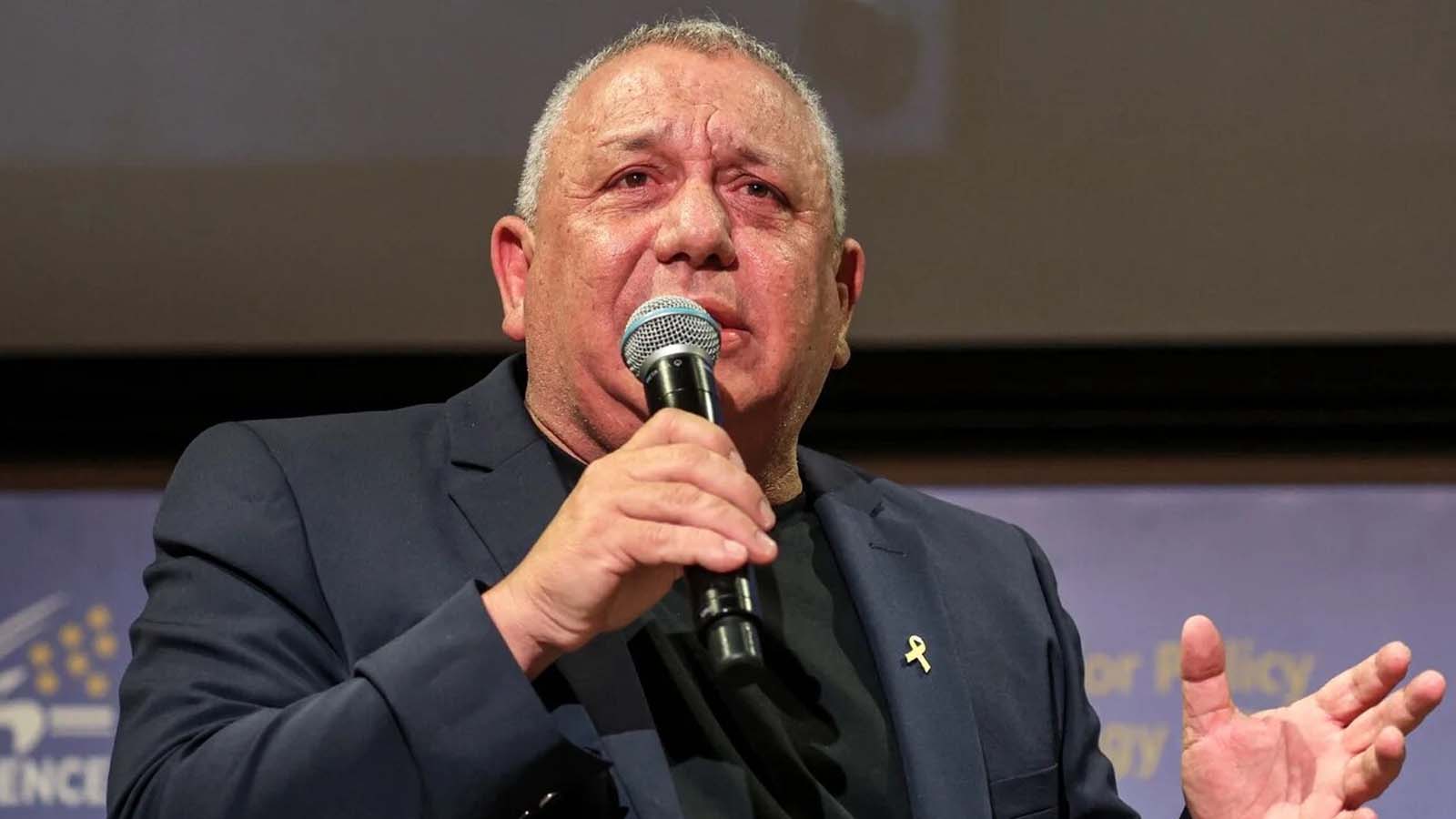
- Eisenkot is priced at 62% to become prime minister, down from 67% on Nov. 6, while Netanyahu is up to 23%.
- Nineteen of Eisenkot’s 67 recommendations came from Arab-led lists, leaving his own four parties at 48, 13 short of 61.
- A majority without Arab parties needs United Torah Judaism and Shas’s non-opposition, and Shas dismissed reports it would stand aside.
- Eisenkot’s clock runs 28 days from Nov. 8, plus up to 14 more, and a failed attempt would likely hand Netanyahu the next try.
JERUSALEM – Gadi Eisenkot slid to 62% in Israel prime minister odds from 67% on Nov. 6, two days after he walked out of President Isaac Herzog’s residence holding the mandate. Benjamin Netanyahu rose to 23% from 21% as election-market traders weigh Herzog’s 67 recommendations for Eisenkot against the 61 seats a government needs.
Eisenkot Peaked At 71% Sunday, Then Fell 13 Points In 23 Hours
The mandate did not hold the price in election odds trading. Hourly readings show Eisenkot at 71% at 10 a.m. ET Sunday, the hour of the scheduled 5 p.m. handover ceremony in Jerusalem, then 65% an hour later and 58% at 9 a.m. Monday.
Netanyahu moved the other way, from 17% at 9 a.m. Sunday to 27% at 9 a.m. Monday. A position opened at Sunday’s peak had lost about nine points by Tuesday morning.
| Reading (ET) | Eisenkot Odds | Netanyahu Odds | Liberman Odds |
|---|---|---|---|
| Nov. 6, 10 a.m. | 67% | 21% | 7% |
| Nov. 8, 2 p.m. | 64% | 19% | 7% |
| Nov. 10, about 6 a.m. | 62% | 23% | 6% |
Source: election-market contracts on Israel’s next prime minister, hourly readings.
The Israel election odds market is concentrated, with four names carrying about 94%. Naftali Bennett, who leads B’Yachad, is at 3%, and no other candidate is above 1%.
The 67 Recommendations Include 19 Arab-Party Seats
Herzog heard from every Knesset faction before choosing. The tally was 67 for Eisenkot and 46 for Netanyahu, according to the Times of Israel, with the seven United Torah Judaism members backing neither man.
The four parties behind Eisenkot, Yashar, the Democrats, Yisrael Beytenu and B’Yachad, add up to 48 seats. The other 19 recommendations came from the Joint List and from Ra’am, both Arab-led, and hawks inside the bloc have said in public they will not lean on either, the Times of Israel reported.
A recommendation tells Herzog whom a party prefers and does not commit it to a coalition. The 67 is therefore a ceiling that includes the 19 seats Eisenkot’s own hawks oppose relying on, and the bloc itself is 13 seats short of the 61 a government needs.
Shas Calls The Stand-Aside Reports Fake News
The route that avoids the Arab parties needs the two ultra-Orthodox factions. Add United Torah Judaism’s seven to the bloc’s 48 and the total is 55; the Times of Israel’s math reaches 61 only if Shas’s six members decline to vote against the government.
Channel 12 cited a source on Shas’s Council of Torah Sages who said the party would let an Eisenkot government stand if United Torah Judaism’s spiritual leader signed off. Shas answered with a statement calling the reports fake news and placing itself in the right-wing bloc, which leaves the route six seats short.
Enlistment is the price of that route. All four bloc parties ran against the draft exemption the ultra-Orthodox community holds, and Eisenkot said again Friday that any partner must accept compulsory service, whether military, national or civil. United Torah Judaism’s chief voiced openness to discussing Liberman’s proposal, the Times of Israel reported.
Avigdor Liberman, who leads Yisrael Beytenu, said Friday he would swallow what he called “painful compromises” on enlistment if that produced a coalition with neither Netanyahu nor the Arab parties in it. Yashar and the Democrats have shown less give on the enlistment law, and B’Yachad had not responded as of Saturday night, the Times of Israel reported.
Liberman’s 6% Is A Compromise-Candidate Price
Liberman is at 6%, double Bennett’s 3%. His contract reached 12.5% in an hourly reading at 1 a.m. ET Saturday, after his Friday statement on enlistment, and was back near 7% by 7 a.m. Channel 13, as relayed by the Times of Israel, said Yisrael Beytenu and the ultra-Orthodox parties had talked quietly through a backchannel for months, and that Netanyahu is leaning on United Torah Judaism to stay out of any coalition that includes Liberman.
Read as a compromise-candidate price, the 6% pays for the case where Eisenkot’s mandatory-service condition stalls the Haredi talks and the bloc turns to the one leader who has said he will compromise on enlistment to form a government without the Arab parties. It stays small because that case begins with Eisenkot failing first.
Netanyahu’s 23% Needs Eisenkot To Fail First
Should Eisenkot come up short, the next try would likely go to Netanyahu, according to the Times of Israel. That is the route behind his 23%, and the market hands him about three-fifths of the 38 points it leaves off Eisenkot.
That share looks high against the visible paths. Netanyahu’s 46 recommendations are 15 short of 61, and in a Saturday video he called for a “national unity government” that would have to seat every one of his former coalition partners, which the Times of Israel judged a likely nonstarter. Eisenkot, for his part, keeps ruling out any coalition with Netanyahu.
The case for 23% is the mandate itself, since a failed attempt hands Netanyahu the next try and a bloc that agrees on removing him but not on enlistment could fail. On this read Netanyahu’s price is the one most exposed to being too high. Eisenkot’s 62% fairly prices the only leader holding a mandate without a confirmed 61, and Liberman’s 6% is the most likely to be too low if the enlistment talks stall.
Eisenkot’s 28 Days Run To Dec. 6
Counting from the Nov. 8 handover, Eisenkot’s 28 days end Dec. 6, and a full 14-day extension would run to Dec. 20. If no government stands by then, Netanyahu is the likely next holder of the mandate.
