
- Staff named election outcomes arising from a single ballot among the series that could qualify for class certification.
- CFTC staff told exchanges July 24 to stop self-certifying broad template event contracts under Regulation 40.2(a).
- A class filing must reference the exchange’s own prior certified contract, not a template or a rival’s filing.
- Staff can recommend the Commission stay a listing or require an exchange to resubmit contracts individually.
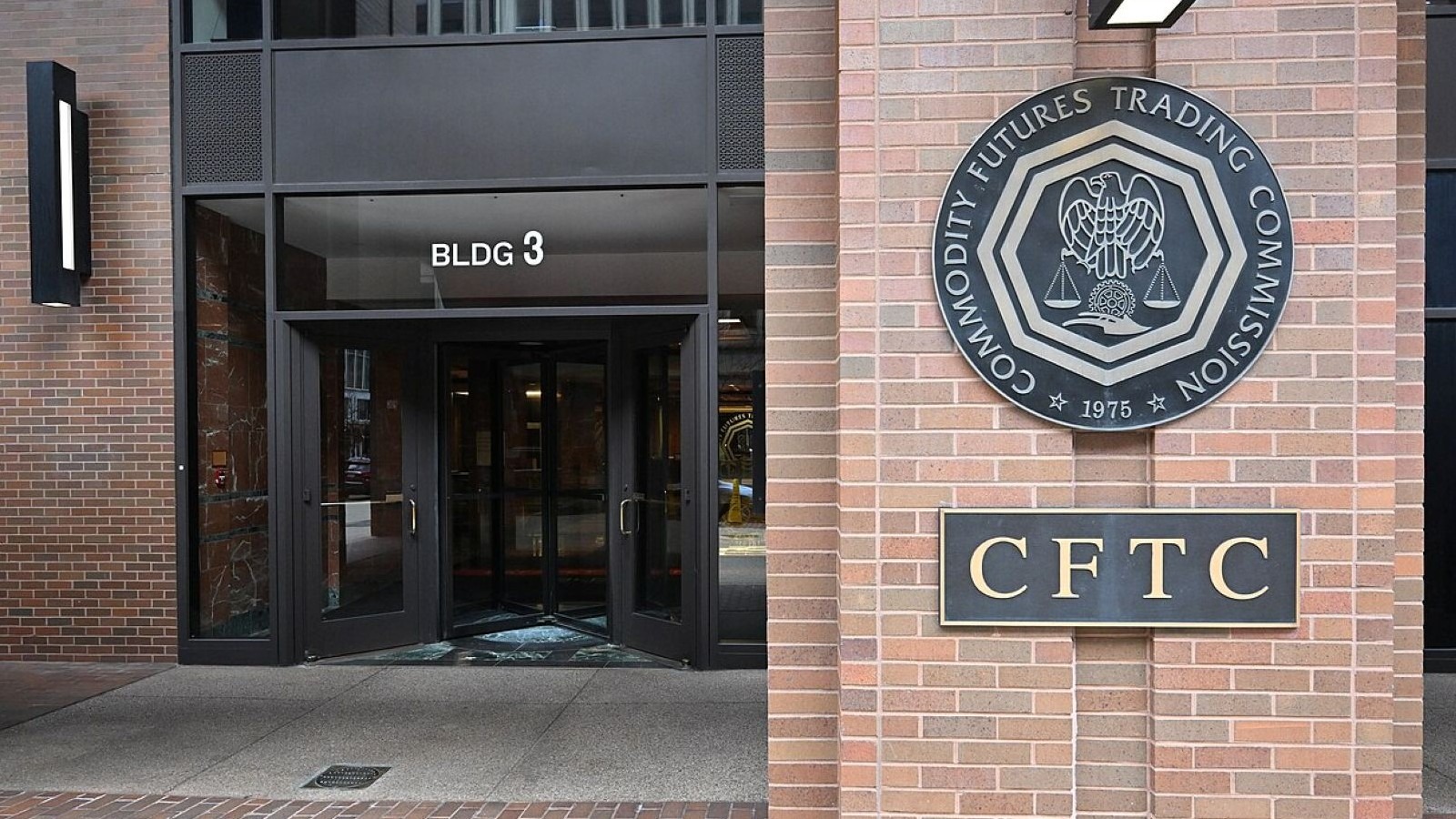
WASHINGTON – Commodity Futures Trading Commission staff told designated contract markets on July 24 to stop bundling election contracts and other event contracts into broad template certifications, and said a series can be certified as a class only if every contract in it shares an identical pricing source and methodology. Staff named election outcomes arising from a single ballot among the examples that could qualify.
Election Outcomes From One Ballot Can Qualify
The document is CFTC Staff Letter No. 26-22, addressed to designated contract markets and signed by Duncan Hennes, acting director of the Division of Market Oversight. It defines a Broad Template Certification as one bundling contract permutations with differing settlement sources or methodologies under a single certification, and says exchanges should not submit them under Regulation 40.2(a).
A series belongs under Regulation 40.2(d) or 40.3 instead. Every contract in the class must share an identical pricing source, formula, procedure and methodology for calculating reference prices and payment obligations.
Division staff offered four examples of series that could qualify, and said the list is not exhaustive. One is games in a tournament decided by identical rules, such as a women’s singles tennis tournament. Another is election outcomes arising from a single ballot. The last two are nominees in one awards show chosen by the same process, such as Oscars Best Picture and Best Director, and daily rainfall totals from the same official weather station.
The unit staff named for elections is the single ballot, the shape of a standalone contest such as one of this year’s special elections.
The World Cup Example, And The One That Fails
Staff drew the line with soccer. An exchange may certify a series covering all matches in the 2026 FIFA World Cup by referencing an earlier certification for “Will Mexico beat South Africa in the 2026 FIFA World Cup?”
It may not reference that same certification for a series on the 2026 MLS Leagues Cup. The 2026 FIFA World Cup permits draws in its first round and the Leagues Cup does not, which staff said produces different settlement methodologies.
Staff Says Its March Warning Went Unheeded
Division of Market Oversight staff raised the same concern on March 12 in CFTC Staff Letter No. 26-08, which warned that “overly broad or generalized contract specifications may impact a DCM’s ability to provide a complete explanation and analysis of compliance in the DCM’s product submission to the Commission.”
Many exchanges kept filing broad templates anyway, the July advisory said, without supplying the terms and conditions of each proposed permutation. Staff cited contracts certified on unspecified economic events whose terms carried vague lists of potential underlyings, including unidentified economic metrics, recurrent data releases, international agreements and central bank decisions.
Class Filings Must Name A Specific Prior Contract
A class certification must reference a prior, specific contract the exchange itself certified under Regulation 40.2(a) or had approved under 40.3. It cannot point to another broad template, and it cannot point to a rival exchange’s filing. The submission should identify that contract by its official product name and official receipt date.
Staff did not address a series spanning more than one ballot, the shape of the contests behind election odds by state.
The requirement exists so exchanges evaluate manipulation risk separately for each settlement source, as Designated Contract Market Core Principle 3 requires. Cash-settled contracts may create an incentive to distort the data a settlement price is drawn from, and staff said that analysis cannot be adequately performed unless the settlement sources are identified before listing.
Staff Can Seek A Stay Or Force Individual Refiling
Where the division finds a certification inadequate, it may recommend the Commission stay the listing under Regulation 40.2(c), or require the exchange to withdraw the certification and resubmit each contract, or certain contracts, for review. “DCMs should not assume that certifying multiple contracts in a single filing insulates any one contract from individual review,” the advisory said.
The class route itself dates to 2011, when the Commission added Regulation 40.2(d) to streamline certification for swaps built on identical pricing sources. Interest rate swaps made up about 77.5% of outstanding over-the-counter swap notional value at the time, the advisory said. Event contracts qualify because the Commodity Exchange Act counts an occurrence, the extent of an occurrence, or a contingency as an excluded commodity.
Consolidated Filings Remain Available
Nothing in the guidance stops an exchange from using the Commission’s consolidated submission functionality to file one set of documents covering separate but related certifications, provided each contract is certified individually or as a class.
Event contracts are certified with the Commission under the Commodity Exchange Act rather than licensed by a state, so the filing route is what decides which US election odds markets an exchange can list.
The advisory creates no binding rule, does not amend existing regulations, offers no no-action position and represents only the views of the Division of Market Oversight, which do not necessarily reflect those of the Commission. Staff encouraged exchanges to consult the division before filing contracts that raise novel questions about whether class treatment fits.
