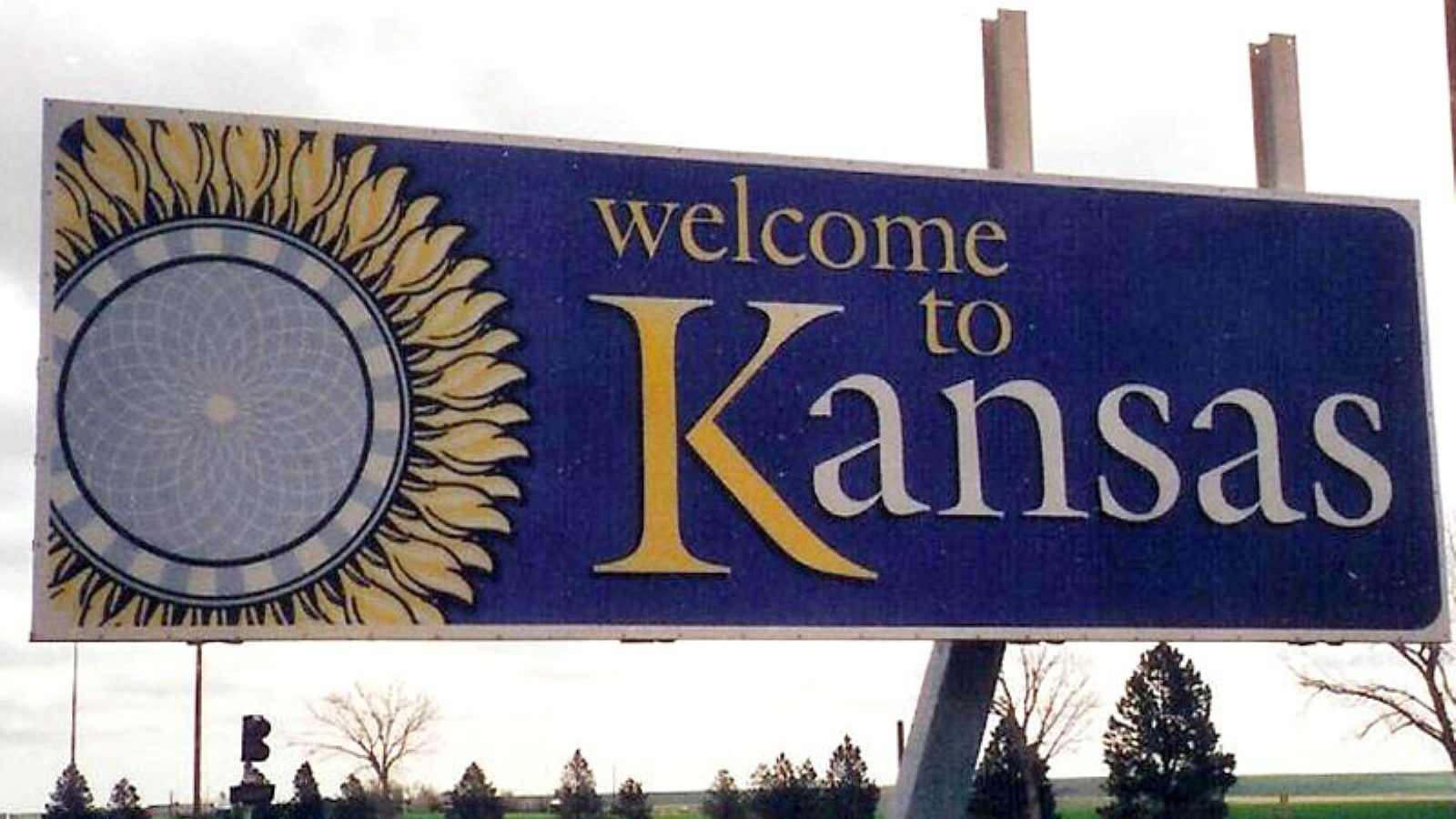
- Kansas holds its primary on August 4, and the marquee prize is an open governor's seat. Two-term Democrat Laura Kelly is term-limited, and hers is the only state Donald Trump carried by double digits among the five Democratic-held governorships up this year.
- On the Republican side, Senate President Ty Masterson is a commanding favorite at about 84 percent, powered by a Trump endorsement and a crowded field that splits the rest of the vote.
- The Democratic race is the one with suspense. State Sen. Cindy Holscher leads the market near 74 percent over Ethan Corson, who holds Kelly's endorsement but trails in both polls and prices.
- For November, the markets lean Republican, pricing the eventual GOP nominee around 67 to 72 percent to flip the seat, though Kansas has elected Democratic governors twice in a row.
- Almost everything else is settled. Sen. Roger Marshall is a lock for renomination and reelection, and three of the four House seats are safe, leaving Sharice Davids's Kansas City district as the lone competitive federal race.
TOPEKA, Kan. - Kansas holds its primary on Tuesday, and for a bettor there is really only one race worth studying. The state is picking a new governor for the first time in eight years, with term-limited Democrat Laura Kelly stepping aside, and the open seat has pulled a full field onto both ballots. Nearly everything else, from a Senate seat to three of the four House districts, is the kind of foregone conclusion prediction markets price at pennies. So the money, and the intrigue, sit with the race for the governor's mansion.
Governor: The Only Race With Real Suspense
Start with the Republicans, where the drama is mostly gone. Senate President Ty Masterson has turned a crowded seven-way field into a runaway, trading around 84 percent to win the nomination on the governor race odds. A late-May endorsement from President Trump, followed by the backing of the Kansans for Life PAC, let him lock down the party base while his rivals split what was left. Insurance Commissioner Vicki Schmidt, Secretary of State Scott Schwab and self-funding businessman Philip Sarnecki are all on the ballot, but none has cracked the mid-teens in the market, and former Gov. Jeff Colyer skipped the race entirely. Short of a shock, Masterson is the nominee.
The Democratic primary is where the real betting lives. State Sen. Cindy Holscher sits near 74 percent, ahead of fellow Johnson County state senator Ethan Corson at roughly 24 percent. The twist is that Corson is the establishment pick. He carries Kelly's endorsement and outraised Holscher through 2025, even dropping close to a million dollars on ads across the Wichita and Kansas City markets, and it has not moved the number. A June survey of likely Democratic voters put Holscher well ahead of the field, and a late entry by Overland Park Mayor Curt Skoog, whom party leaders have panned, threatens to split the same suburban vote Corson needs. For anyone hunting value on this ballot, the gap between Corson's endorsements and his price is the most interesting line in the state.
The general election is a different question. Kansas is deep red at the federal level, and forecasters rate the race Lean Republican, citing how hard a third consecutive Democratic term would be. The markets agree, giving the eventual GOP nominee roughly two-to-one odds to take the seat back. That is a genuine edge, not a lock. Kelly proved twice that the right Democrat can win statewide here, most recently by about two points in 2022, so a Holscher or a Corson would carry a live, if uphill, path against Masterson in the fall.
U.S. Senate: Marshall Cruises
There is not much to bet on here. First-term Republican Roger Marshall is running for reelection, and Kansas has not sent a Democrat to the Senate since 1932, a streak that colors the entire U.S. Senate odds board. Marshall faces only a token primary challenge and is a near-lock for both renomination and a second term. The Democratic side is busier without being more competitive: eleven candidates are fighting for the nomination, with Adam Hamilton, pastor of one of the country's largest churches, leading the early polling and the fundraising. Marshall is not especially popular, and a 2024 exit poll put his favorable rating below 40 percent, but soft approval and a deep-red map are not the same thing. The market treats the seat as safe Republican, and the fundamentals back it.
U.S. House: Three Safe Seats and a Swing District
Three of the four House races are settled in all but name. Republicans Tracey Mann in the 1st, Derek Schmidt in the 2nd and Ron Estes in the 4th are heavy favorites to win their primaries and coast in November, and the House odds reflect districts that are not in play. The exception, as ever in Kansas, is the 3rd. Democrat Sharice Davids, the delegation's only member of her party and a former MMA fighter who flipped the Kansas City-area seat in 2018, is seeking a fifth term. She won by about eleven points in 2024 and is a strong favorite to survive both a challenge from her left in the primary and whichever Republican emerges to face her. The wild card is redistricting: with Trump pushing GOP legislatures to redraw maps, Kansas Republicans have floated carving up Davids's district, which would turn a safe seat into a real fight. For now it is not rated a battleground, but it is the one federal race in the state worth a second look.
Other Races on the Ballot
Down the ballot, the contest to watch is a rematch. Republican Attorney General Kris Kobach, a perennial lightning rod in Kansas politics, is running for a second term against Democrat Chris Mann, who lost to him by under two points in 2022, the closest statewide result of that cycle. Two more statewide offices are open because their holders jumped into the governor's race: Secretary of State, where Republican state Rep. Pat Proctor faces a Democratic field, and Insurance Commissioner, where House Speaker Dan Hawkins meets Democratic Senate Minority Leader Dinah Sykes. State Treasurer Steven Johnson, a Republican, is defending his seat. It is not all candidates, either. Kansans will also weigh a constitutional amendment on whether to elect the state's Supreme Court justices directly, a long-running Republican goal that would reshape the courts. Prediction markets barely touch any of these, which is its own signal about where the competition is not.
The Bettor's Read
Strip it down and the Kansas ballot offers one real market and a lot of chalk. The Republican governor primary is all but priced, with Masterson near 84 percent, and the Senate and most House races are settled enough that the contracts are not worth the vig. The single live bet on primary night is the Democratic race for governor, where Holscher's lead over the better-funded, better-endorsed Corson is exactly the kind of gap that rewards a confident read. After August 4, the action moves to the fall, where one local report noted betting sites give Republicans about a 72 percent shot at the governorship, with the standard reminder from political scientists that these markets are not polls. As with any thin state-level market, the prices swing on light volume, so refresh the election odds before you act.