
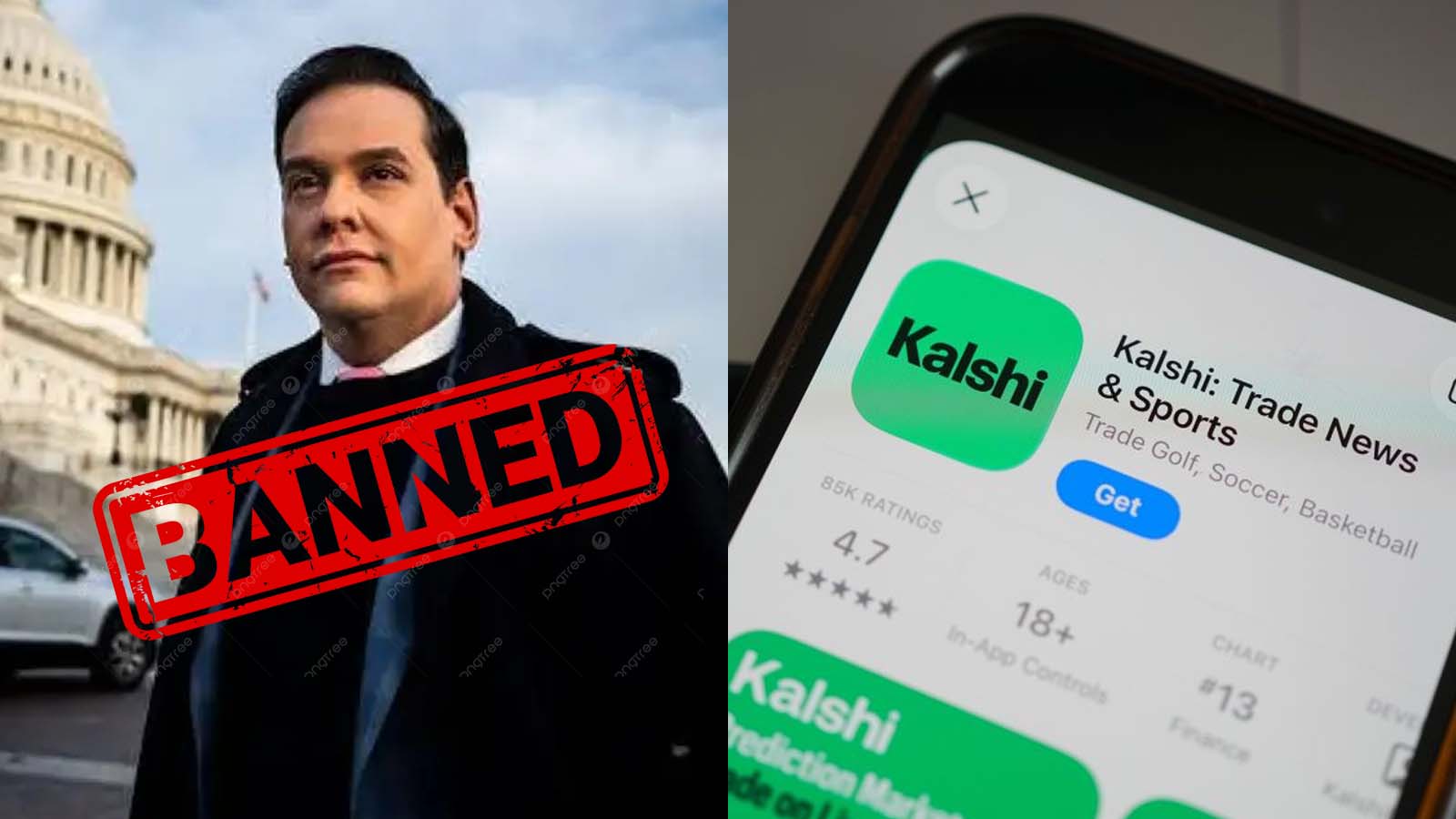
- A disciplinary notice posted Monday bans George Santos from Kalshi for life and fines him $71,356 over his State of the Union trades.
- The exchange found Santos profited $17,839.57 on markets he was barred from trading between Feb. 2 and Feb. 25.
- A July CFTC order already required Santos to repay $17,569.98, pay $17,500 and stop trading for three years.
- Kalshi’s ban reaches only its own platform, while the CFTC’s separate trading ban runs until 2029.
NEW YORK – Kalshi barred former U.S. Rep. George Santos from its exchange for life and imposed a $71,356 penalty after its compliance department found reasonable cause to believe he manipulated markets tied to his own attendance at the State of the Union address, according to a disciplinary notice the exchange posted Monday.
The Trades Behind The Ban
Santos placed a series of large trades between Feb. 2 and Feb. 25 in markets whose contracts settled on whether he would attend the 2026 State of the Union, according to the exchange’s notice of settlement of disciplinary action. Kalshi Rule 5.17(z) bars any member from trading a contract whose outcome the member can influence, and the notice states that “as a person capable of influencing the outcome of the underlying event, Santos was prohibited from trading in this market.”
He traded anyway, the compliance department found, then made a series of public statements about his attendance plans intended to move the price of the Yes and No contracts he meant to buy. “Some of these included false or misleading statements,” the notice says, and the department concluded the statements did in fact move the prices. Santos, whose contracts are a recurring feature of the political markets priced across election odds boards, cleared $17,839.57 on the activity.
Santos dismissed the action in posts on his X account, calling the company unserious and the ban frivolous.
Six Rules And A $71,356 Penalty
The notice cites six rule violations: the trading-on-influence ban, the exchange’s prohibition on market manipulation under Sections 6(c) and 9(a)(2) of the Commodity Exchange Act, its ban on trading with material nonpublic information, two fraud-and-deceit provisions, and Rule 3.6(a), which required Santos to cooperate with the investigation and which the notice says he violated.
The $71,356 penalty runs roughly four times the profit the exchange says Santos booked, and the suspension bars him from direct or indirect access to Kalshi, closing the workaround of trading through another person’s account. The ban took effect Aug. 28. The action follows Polymarket and Kalshi’s first insider-trading reckoning in May, and lands weeks after Kalshi partnered with Comply to monitor employee trades, part of a surveillance buildout that produced this case.
What An Exchange Can Reach
Kalshi is a federally designated contract market obligated to police its own order book, and the Santos notice shows both the ceiling and the floor of that authority. The exchange can exile a trader from its platform forever and assess a penalty under its rulebook, but its ban binds no one else: a state gaming regulator can put a person on an exclusion list that every licensed operator in the state must honor, while Kalshi’s sanction ends where its platform does.
The reach came instead from the Commodity Futures Trading Commission, which ordered Santos in July to disgorge $17,569.98, pay a $17,500 civil penalty and accept a three-year trading ban over the same conduct. The agency’s order, built on a narrower Feb. 12-25 trading window, described trades in a contract titled “Who will attend the State of the Union?” and public misrepresentations timed to Santos’ positions.
Taken together, the two actions leave Santos owing more than $106,000 against a profit of less than $18,000, roughly six times what the trades made him. The CFTC’s trading ban expires in July 2029. Kalshi’s carries no end date.
