
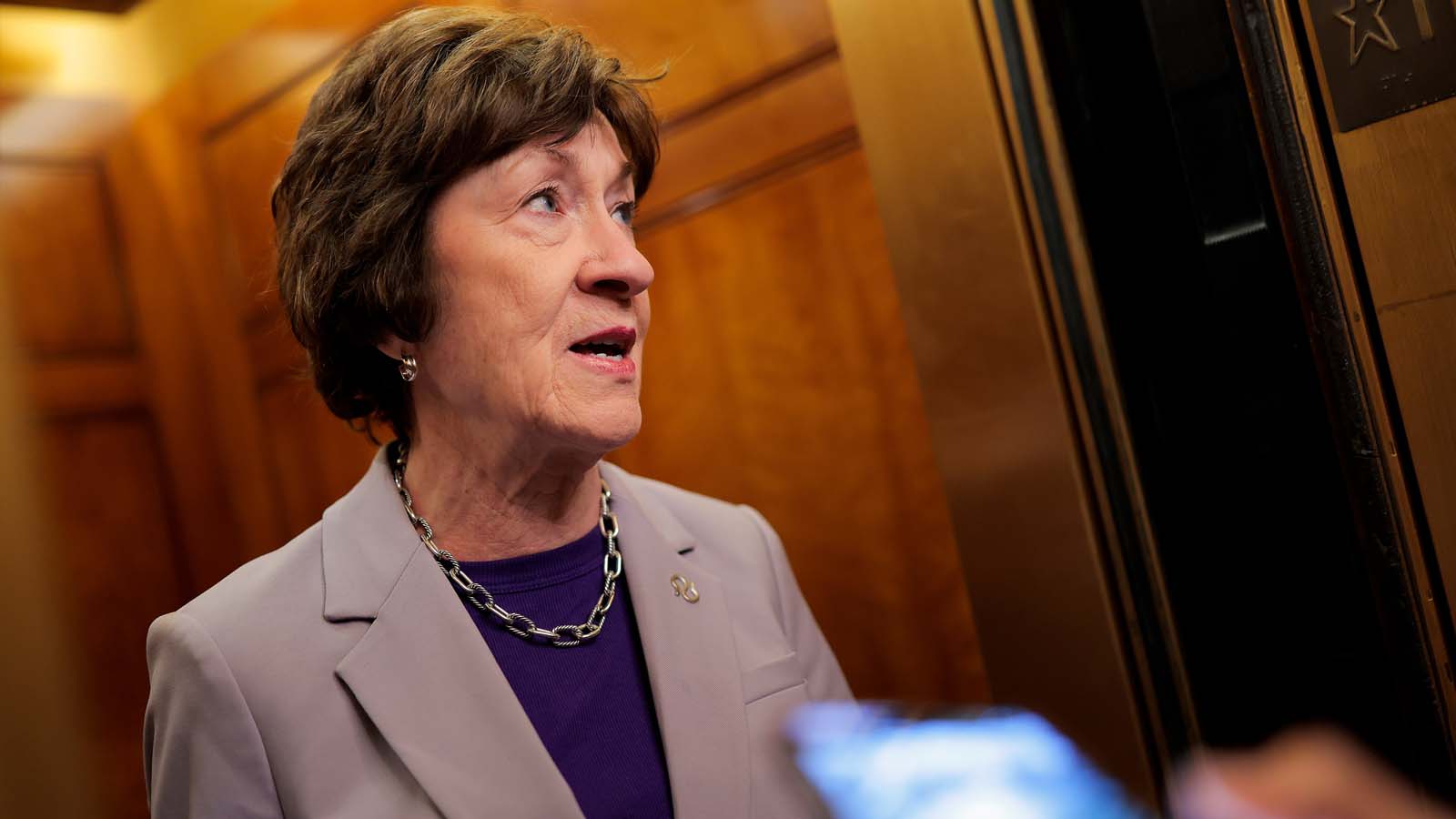
- Maine holds its primary on June 9. Three major federal and statewide races are on the ballot: the U.S. Senate seat held by incumbent Republican Susan Collins, an open governor’s race, and an open congressional seat in ME-2.
- Kalshi gives Democrats a 66% chance of winning the Senate race in November. Oyster farmer and former Marine Graham Platner is the heavy Democratic primary favorite. Collins is uncontested in the Republican primary.
- The Democratic governor’s primary is a ranked-choice five-way race with no clear frontrunner. Former Maine CDC Director Dr. Nirav Shah led in polling at 51% to win the nomination on Kalshi. Democrats are favored to hold the governorship.
- ME-2 is one of the most competitive House races in the country. Former Gov. Paul LePage, with Trump’s backing, is set to run against the Democratic nominee in a district Trump carried by about 10 points in 2024.
- Maine uses ranked-choice voting for its federal primaries. The election odds across all three contests make this the most loaded primary week in New England.
AUGUSTA, Maine — Maine holds its primary Tuesday, June 9. Three races will set the stage for November contests that could help determine control of the Senate, the governor’s office, and one of the tightest congressional districts in the country.
The election odds in Maine indicate that all three contests are genuinely competitive. None is predictable. And all three will be decided using Maine’s ranked-choice voting system in the primaries, which means election night results may not be final.
Senate: Platner Is the Betting Favorite, Collins Has Defied the Polls Before
Sen. Susan Collins is running unopposed in the Republican primary, seeking a sixth term at age 74. She has held the seat since 1997 and is one of the few remaining Senate Republicans who has repeatedly won a state that leans Democratic at the presidential level.
On the Democratic side, Graham Platner — a 41-year-old oyster farmer, former Marine, and political newcomer from Nobleboro — is the heavy primary favorite. Kalshi gives Platner a 60-plus percent chance of winning the Democratic nomination. He is the only candidate to have polled consistently ahead of Collins in general election matchups.
For the general election, Kalshi currently gives Democrats a 66% chance of winning the seat. Polymarket is at 73%. A late-May Emerson College poll had Platner leading Collins 48% to 41% among likely voters, with 11% undecided.
Those Senate election odds should come with a strong caveat. In 2020, Collins trailed Democratic nominee Sara Gideon in nearly every public poll by an average of several points. She won anyway, 51% to 42%, in what became one of the most stunning upsets of that cycle. Collins has consistently outperformed her polling in Maine.
Platner’s campaign hit a bump in recent weeks when critics raised questions about a tattoo they said resembled a symbol associated with far-right groups, and over old Reddit posts. The controversy briefly pushed his Kalshi odds down from 72% to 66% on Democratic chances, though they have since stabilized.
Governor: A Five-Way Democratic Primary with No Sure Winner
Gov. Janet Mills is term-limited and cannot run for a third consecutive term, opening the governorship for the first time in eight years. Five Democrats are competing in the ranked-choice primary.
Dr. Nirav Shah, the former director of the Maine Centers for Disease Control and Prevention who led the state’s COVID-19 response, has led in most polling and sits at 51% to win the Democratic nomination on Kalshi. Former state Senate President Troy Jackson trails at 26% on Kalshi, followed by Secretary of State Shenna Bellows, former House Speaker Hannah Pingree, and businessman Angus King III.
A May Pan Atlantic Research poll had Shah at 29%, King III at 24%, Jackson at 12%, Bellows at 10%, and Pingree at 9%. A UNH survey released in late May showed Shah and Jackson tied at 28%, with 11% undecided. With ranked-choice voting, voters’ second-choice preferences could alter the apparent election-night winner.
On the Republican side, former Assistant U.S. Secretary of State Bobby Charles leads a seven-way primary at 37% in the most recent polls. Jonathan Bush is second at 18-20%. Gubernatorial odds rate Democrats as favorites to win the governorship in November, regardless of which candidates emerge.
ME-2: LePage vs. the Democratic Nominee in a Brutal Battleground
The 2nd Congressional District is the most reliably competitive House seat in New England. Democratic Rep. Jared Golden — who held the seat through four consecutive narrow wins — announced in November that he would not run for another term.
Former Republican Gov. Paul LePage, who received Trump’s endorsement in December 2025, is the clear Republican nominee. He holds commanding leads in all available polls and faces only nominal opposition from Army veteran James Clark. LePage served two terms as governor from 2011 to 2019 and lost his 2022 comeback bid to Mills by 5 points.
On the Democratic side, state Sen. Joe Baldacci of Bangor leads the five-way ranked-choice primary after securing the DCCC’s endorsement in May. His main competition is Jordan Wood, a former congressional chief of staff.
The district is a tough general election environment for Democrats. Trump carried ME-2 by about 10 points in 2024, and by approximately 7 points in 2020. It is one of only three congressional districts in the country that has split its electoral vote from the statewide presidential result in back-to-back elections.
The House of Representatives election odds at Kalshi list ME-2 as a competitive general election market. Republicans hold a meaningful but not overwhelming advantage — LePage is a known quantity who carries both strengths (deep regional ties, name recognition) and weaknesses (his reputation for divisiveness during two contentious terms in the Blaine House).
ME-1: The Safe Seat That Stays Quiet
Democratic Rep. Chellie Pingree holds Maine’s 1st District, covering Portland and the southern coast. Kalshi does not list ME-1 among its competitive House markets. She is expected to win reelection without difficulty.
The Bottom Line
Maine carries more election odds weight than almost any small state on the 2026 map. The Senate race is arguably the most important Democratic pickup opportunity in the country. The governor’s race is genuinely open. And ME-2, absent an incumbent, becomes a different kind of contest.
Tuesday’s primary will set the nominees. But with ranked-choice voting in play, all three of Maine’s marquee races may not produce confirmed nominees on election night.
For bettors, the Senate race is the most interesting bet on the board. Kalshi gives Democrats a 66% edge, but Collins has made a career of beating longer odds than that.
Maine’s primary is June 9, 2026. The general election is November 3, 2026.