
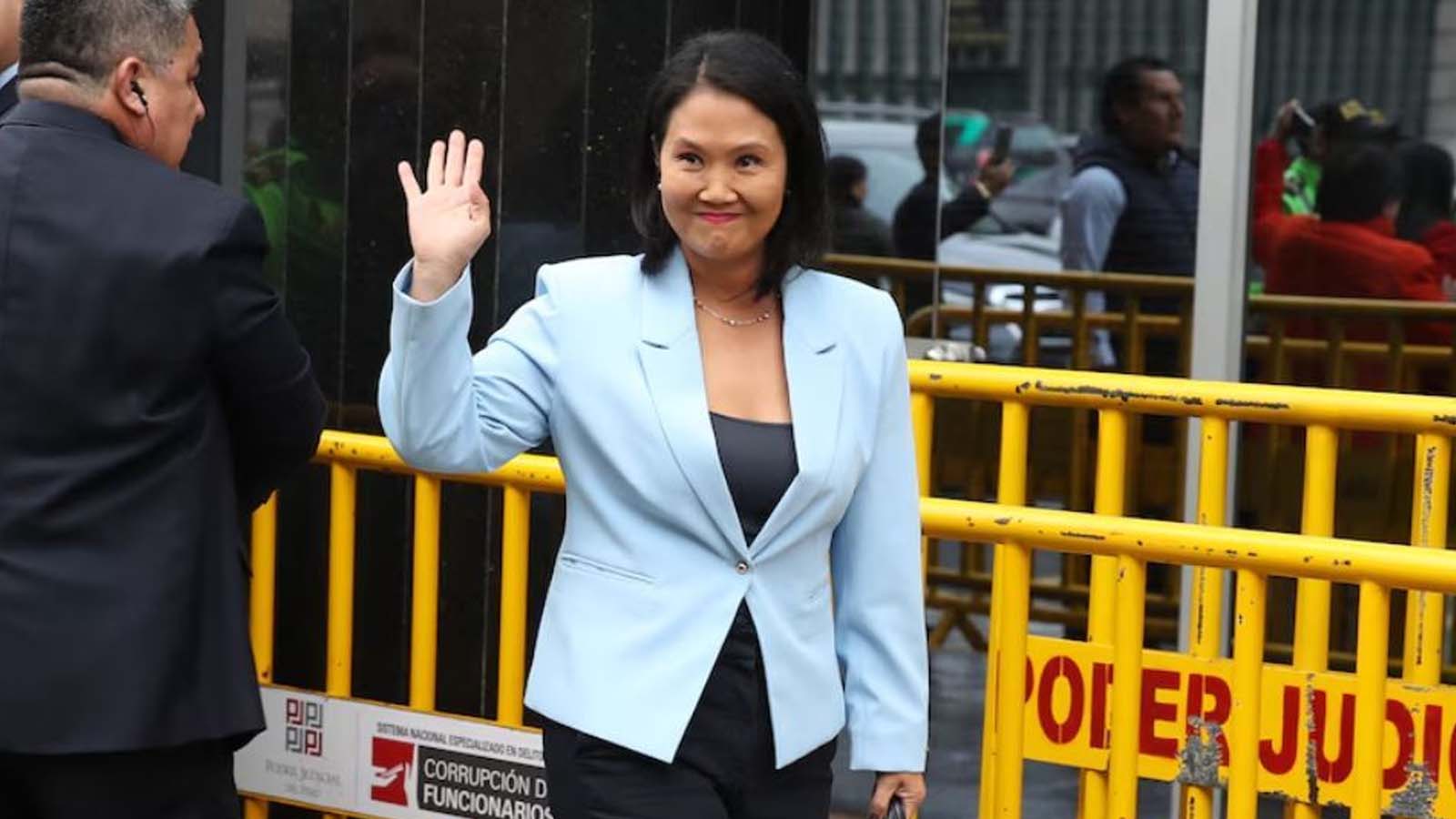
- Keiko Fujimori is the betting favorite to win Peru’s June 7 presidential runoff at 73% on Kalshi and 75% on Polymarket, after finishing first in the April 12 first round with 17.19% of the vote in a field of 35 candidates.
- Fujimori’s odds surged by 12 percentage points on Kalshi on May 20 after opponent Roberto Sánchez was hit with a criminal indictment — a development that shifted market sentiment sharply in her favor.
- The latest polling shows Fujimori with a narrow lead over Sánchez, but roughly 27% of voters say they plan to cast blank or null ballots — a uniquely large bloc that makes the race genuinely unpredictable.
- This is Fujimori’s fourth consecutive presidential runoff. She lost in 2011, 2016, and 2021 — the last time by a margin of fewer than 45,000 votes.
- The winner of the June 7 runoff will be inaugurated on July 28 and will become Peru’s tenth president in a decade — a country still trying to find stable ground after years of impeachments, resignations, and constitutional crises. The election odds reflect the uncertainty that defines Peruvian politics.
LIMA — Peru’s presidential runoff is four days away. The betting markets are clear about who they expect to win. The polls are somewhat less certain.
Keiko Fujimori, the conservative leader of the Popular Force party, sits at 73% on Kalshi and 75% on Polymarket to become Peru’s next president. Her opponent, leftist congressman Roberto Sánchez, is priced at 25-26% on both platforms.
But this is Peru. And election odds in Peru have a way of defying prediction markets, pollsters, and anyone else who thinks they know how this ends.
How We Got Here: A Chaotic First Round
The first round of voting took place on April 12-13, 2026, across a field of 35 candidates. No one came close to the 50% threshold needed to win outright. Fujimori finished first with 17.19% of the vote. What happened next was chaos.
Peru’s electoral authority, ONPE, failed to distribute ballots on time to at least 15 voting locations in Lima. Voting had to be extended to April 13. Third-place finisher Rafael López Aliaga alleged widespread fraud and called for the results to be annulled. Protests followed.
The count dragged on for over a month. Sánchez and López Aliaga were separated by about 20,000 votes with hundreds of thousands of ballots still under review. The official runoff certification did not arrive until May 17 — just three weeks before voting day.
The Indictment That Moved the Markets
The single biggest market event of the runoff campaign came on May 20, the same day Peru’s electoral board confirmed the official first-round results. Sánchez was hit with a criminal indictment, with a court hearing set for May 27.
Kalshi’s market repriced immediately. Fujimori’s implied probability jumped 12 percentage points in a single session, rising from 66% to 78%. That was the sharpest single-day move in the market since the race launched.
Since then, the odds have pulled back slightly as Sánchez continued campaigning and the indictment did not immediately derail his poll numbers. Kalshi now prices Fujimori at about 73%, down from the 78% peak but still comfortably ahead.
What the Polls Say
The most recent published polls from May 29-31 showed Fujimori with a 3- to 4-point lead. An Ipsos survey conducted May 29-30 had Fujimori at 38% and Sánchez at 35%. A Datum Internacional poll conducted May 26-30 put the margin at 39.8% to 35.9%.
A CPI survey for RPP showed a tighter race, with Fujimori at 32.5% and Sánchez at 29.1% in direct head-to-head terms, with a margin of error that both firms described as a statistical near-tie.
The most striking number across all three surveys is the undecided and blank-ballot bloc. Ipsos put it at 27%. IEP measured it at 26%. CPI had a combined 34% of voters without a clear alignment. That is an unusually large proportion this close to election day, and it’s what keeps this race from being a sure thing.
The Geographic Divide
Ipsos shows Fujimori winning Lima with 52.2% of the vote. Sánchez leads in rural Peru with 53.9%. The country is essentially split along the same urban-rural, coast-highlands fault line that has defined every competitive Peruvian election for at least two decades.
Lima is the biggest prize. About a third of Peru’s electorate lives in the capital region. Fujimori’s strength there is her most important structural advantage.
Who They Are
Keiko Fujimori, 51, is the daughter of Alberto Fujimori, who served as Peru’s president from 1990 to 2000 and whose legacy remains deeply polarizing. The elder Fujimori dismantled democratic institutions and was later convicted of human rights abuses. She served as a congresswoman from 2006 to 2011 and has now reached the presidential runoff four consecutive times: in 2011, 2016, 2021, and 2026.
She lost the 2021 runoff to Pedro Castillo by fewer than 45,000 votes out of more than 18 million cast — a margin of 0.25 percentage points. Castillo was subsequently impeached and imprisoned.
Roberto Sánchez, a congressman and former minister of foreign trade and tourism under Castillo, represents Peru’s left-leaning Together for Peru party. His association with Castillo — who remains imprisoned on rebellion and corruption charges — is both a source of grassroots support in rural areas and a major liability with urban and centrist voters.
What History Says About Fujimori in Runoffs
Fujimori has been in three previous runoffs and lost all three. In 2011, she lost to Ollanta Humala. In 2016, she entered the runoff against Pedro Pablo Kuczynski with a commanding first-round lead of 38% but lost the runoff. In 2021, she held a late-campaign lead in polls before losing by a razor-thin margin to Castillo.
The pattern is consistent: Fujimori is strong in the first round and leads in much of the polling, but something always slips away in the final days. Whether that trend holds in 2026 is the central question for bettors at 73% odds.
The Bottom Line
Kalshi and Polymarket both price Fujimori as the clear favorite at 73-75%. The polls support that view, though with margins inside the margin of error and a massive undecided bloc.
The election odds here carry real risk. This is a country that has had nine presidents in ten years. It is a country where Fujimori lost three runoffs she was expected to win or was competitive in. And it is a country where nearly a third of the electorate may not vote for either candidate on Sunday.
The winner will be inaugurated on July 28. Peru’s next five years depend on what happens on June 7.
Peru’s presidential runoff is June 7, 2026. The inauguration is scheduled for July 28, 2026.