
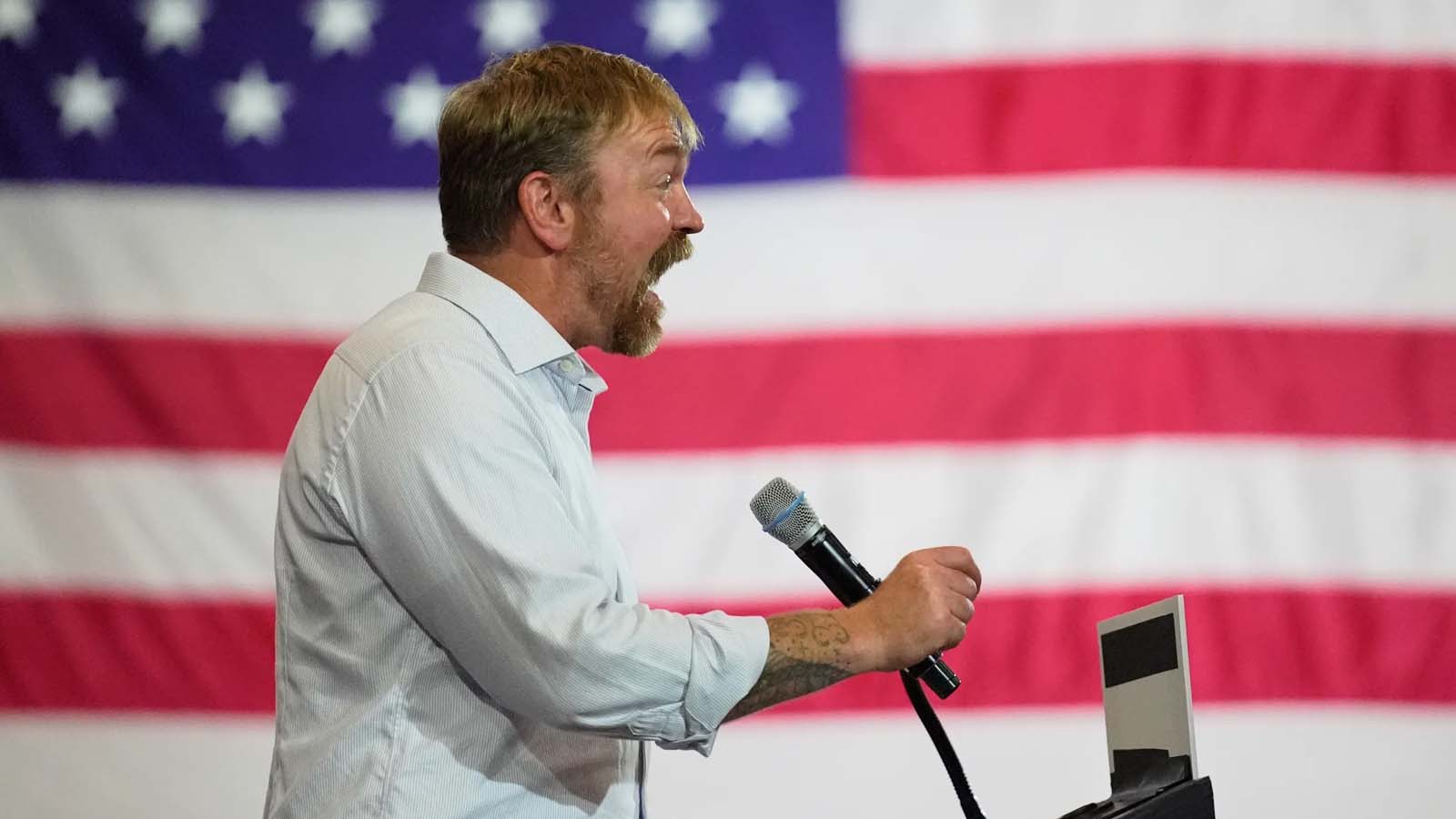
- Graham Platner won the Maine Democratic Senate primary on Tuesday, setting up a November showdown with Republican Sen. Susan Collins. The AP projected him the winner. Kalshi gives Democrats a 66% edge in the general election.
- Both the Democratic and Republican governor primaries are headed to ranked-choice tallying. No candidate reached 50% in either field. Nirav Shah led Democrats with about 27% of first-choice votes.
- Shah’s Democratic lead could be at risk. Three rivals — Pingree, Jackson, and Bellows — formed an alliance and asked their voters to rank one another, which could pool enough second-choice votes to overtake Shah.
- In ME-2, former Gov. Paul LePage advanced unopposed as the Republican nominee. The Democratic primary also headed to ranked-choice counting, with Joe Baldacci leading on first choices.
- Maine’s ranked-choice system means the governor and ME-2 primary results may not be known for several days. The Senate race is decided — and the election odds there are the clearest story of the night.
AUGUSTA, Maine — Maine held its primary on Tuesday, June 9. One race produced a clear winner. Three others did not.
Graham Platner, a combat veteran and oyster farmer from Sullivan, won the Democratic Senate primary and will face Republican Sen. Susan Collins in November. But the governor’s race on both sides, plus the Democratic primary for the 2nd Congressional District, all entered ranked-choice tallying with no candidate above 50%.
Those results could take days to finalize. Maine’s ranked-choice voting system eliminates the lowest-finishing candidates one by one and reallocates their votes until someone crosses the majority threshold.
Senate: Platner Wins, Markets Hold Steady
Platner’s win was the most anticipated outcome of the night. He had led every public poll for months and entered the primary as the clear market favorite based on election odds in Maine. The AP projected him the winner.
Platner is a former Marine and Army veteran who farms oysters on the Maine coast. He built an unconventional campaign around small-dollar donations and progressive energy, earning early backing from Sen. Bernie Sanders.
His primary cleared with two nominal opponents — one of them a write-in — after Gov. Janet Mills suspended her campaign but left her name on the ballot. Former state Speaker Hannah Pingree had also dropped out earlier.
Collins ran unopposed in the Republican primary. She is seeking a sixth term and is widely viewed as the most vulnerable Republican senator on the map. Kalshi gives Democrats a 66% chance of winning the seat in November, with Polymarket slightly higher at 73%.
Platner’s win does not change those general Senate election odds. He was already the expected nominee. The question now is whether his campaign can sustain the energy that built his primary lead through a bruising six-month general election against one of the Senate’s most skilled incumbents.
In his victory speech, Platner quickly turned his attention to Collins. He said she “has never met a war she didn’t like” and that while his friends died in combat, “you and your friends profited.” The tone made clear this race will be personal.
Governor (Democratic): Shah Leads on First Choices, but Three Rivals Formed an Alliance
With roughly half the vote in as of 11:20 p.m. Tuesday, Nirav Shah led the Democratic governor primary with about 27% of first-choice votes. Former House Speaker Hannah Pingree had 23%, former Senate President Troy Jackson had 22%, and Secretary of State Shenna Bellows had 21%. Angus King III was in fifth.
No one is close to 50%. That means ranked-choice counting kicks in and the result could take several days.
The race’s biggest strategic storyline is the three-way cross-endorsement alliance between Jackson, Pingree, and Bellows. All three asked their voters to rank the other two ahead of Shah and King III on their ballots. That pooling of second-choice votes is specifically designed to eliminate Shah.
Shah entered the primary as the Kalshi favorite at 51% to win the nomination. His first-choice lead is real. But if the alliance holds, a majority of ranked-choice votes could eventually flow to Pingree or Jackson, flipping the result. Kalshi priced Jackson at 26% to win the nomination heading into the vote.
Shah built his profile as the public face of Maine’s COVID-19 response. He is a physician and epidemiologist who held daily televised briefings during the pandemic. His candidacy drew cross-party support from voters who trusted him through that crisis.
Governor (Republican): Charles Leads, RCV Tallying Ahead
On the Republican side, Bobby Charles — a former Bush administration State Department official — was leading the first-choice count. Jonathan Bush, Jonathan Mason, and several others filled out the field.
No Republican hit 50% either. Ranked-choice tallying will determine the GOP nominee as well. The winner will enter November as the underdog — Maine has shifted toward Democrats in recent governor’s races. Due to that, Democrats hold the advantage based on gubernatorial election odds.
ME-2: LePage Is Set. Democrats Are Still Counting.
Former Gov. Paul LePage advanced automatically as the only Republican in the 2nd District primary. He will face the winner of a four-way Democratic primary that is also heading to ranked-choice tallying.
State Sen. Joe Baldacci of Bangor led on first choices with about 27%. Former Secretary of State Matt Dunlap and former U.S. Senate candidate Jordan Wood were the other main competitors, with social worker Paige Loud in the field as well.
Trump won ME-2 by about 10 points in 2024, making it tough terrain for Democrats. LePage’s loss in the 2022 general governor’s race — by about 13 points to Mills — is a reminder that he carries real baggage. Kalshi lists ME-2 among its competitive House election odds markets.
The Bottom Line
The Senate story is settled. Platner won, the election odds didn’t move much, and November is now a clean two-person race between a political newcomer and a six-term incumbent.
The governor story is not settled at all. Shah’s lead in first-choice votes is real. So is the three-way alliance trying to block him. Ranked-choice tallying will take days, and the outcome is genuinely uncertain.
Maine’s primary was a reminder of why ranked-choice voting produces some of the most unpredictable primary nights in American politics. Tuesday didn’t end all of these races. It just started the counting.
All Maine general elections are set for November 3, 2026. Ranked-choice tallying for the governor and ME-2 primaries is expected to take several days.