
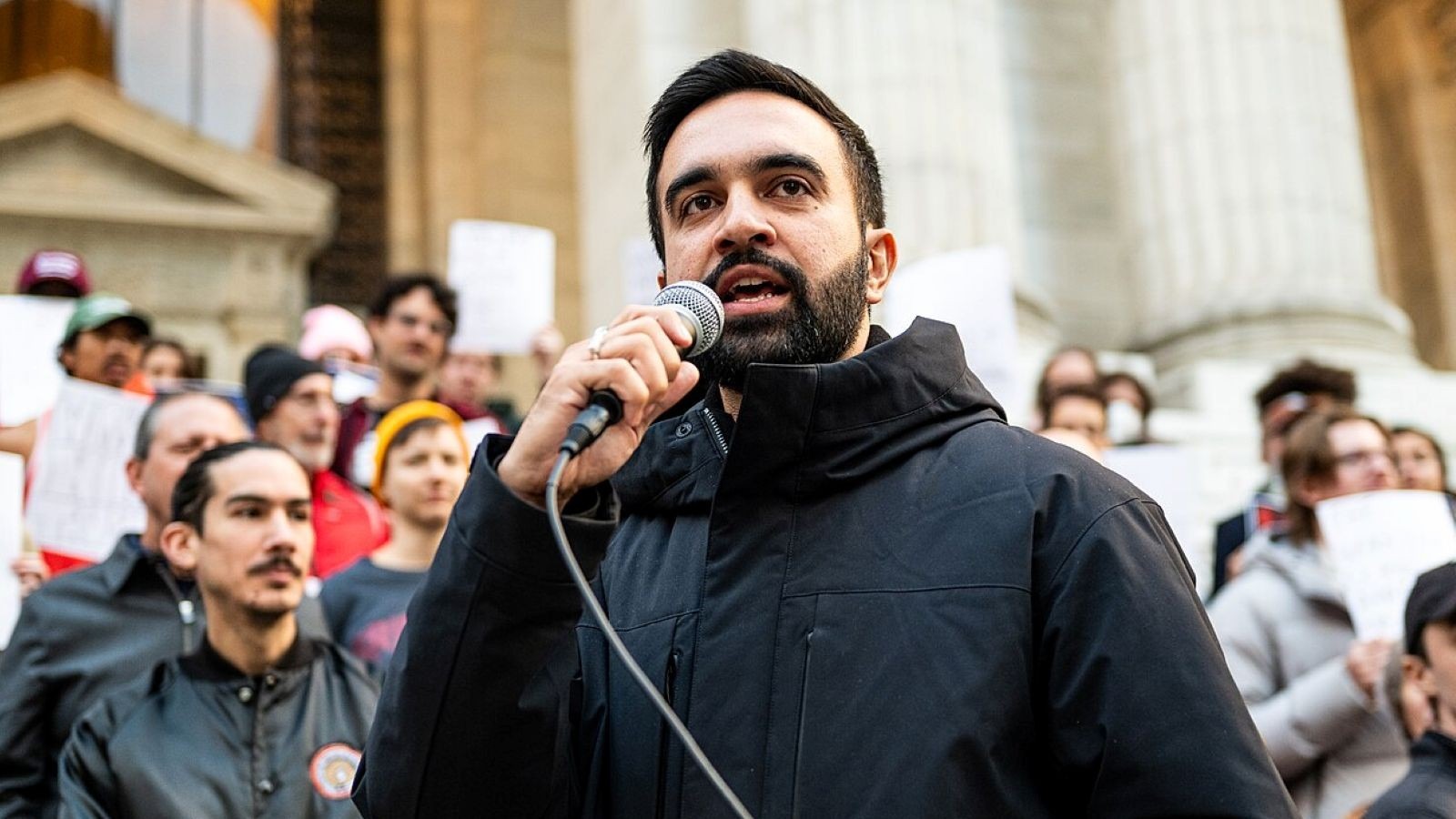
- Kalshi's TIME Person of the Year 2026 market prices each name as its own yes-or-no. Donald Trump leads at 27 percent, but only just, with New York Mayor Zohran Mamdani at 20 percent and Pope Leo XIV at 18 percent. More than $400,000 has traded.
- This is a blown lead. Trump spent the spring in the high 20s and low 30s and touched roughly 33 percent, then slid as low as 21 percent before settling back to a narrow 27.
- The two big exchanges disagree on the favorite. Kalshi still has Trump on top; on Polymarket, where the market is far thinner, Mamdani has nudged ahead at about 22 percent.
- It resolves on an editorial call, not a vote, and the rules reward whoever is named or pictured on the cover. Last year the market favored "AI," but TIME picked a group of people instead.
- Trump has won the title twice, in 2016 and 2024, which is the base-rate case for backing him. TIME's taste for a fresh face is the case against.
For most of the year, betting the TIME Person of the Year looked like a one-name market. Donald Trump, a sitting president who swallows the news cycle whole, opened as the clear favorite and held the top spot through the spring. He is still there, but barely. On Kalshi, the deepest market on the question, Trump has drifted down to about 27 percent, with New York Mayor Zohran Mamdani at 20 and Pope Leo XIV at 18 close behind. On Polymarket, the frontrunner has actually changed hands. What was a runaway has turned into a scrum, and that makes it one of the livelier cultural bets on the board right now.
How the Market Works
Kalshi's version, which has taken in more than $400,000, is not a single wager but a stack of separate yes-or-no contracts, one for each candidate. Each pays out if that person is named TIME's Person of the Year for 2026, with the magazine itself as the judge. The wrinkle worth reading before you bet is the group clause. If TIME honors a movement or a concept instead of an individual, a listed name can still cash, but only if that person is explicitly named or shown on the cover. The market opened in December and settles on New Year's Day 2027, which leaves months for the price to keep moving.
The Blown Lead
Trump's slide is the real story. Through the spring he traded in the high 20s and low 30s, peaking near 33 percent in late March, the kind of number that makes a favorite look safe. It did not hold. By early summer he had bled down to as low as 21 percent on Kalshi, briefly wiping out his edge and flattening the top of the board into a three-way tie with Mamdani and the Pope. He has since clawed back to 27, but a frontrunner sitting under 30 with two rivals breathing on him is a lead that has already been coughed up once. That churn shows up across Donald Trump's odds more broadly, where he is still the single most-traded name in politics. For a bettor the volatility cuts both ways: the rebound says the market respects his case, and the dip says it does not take much to knock him off the perch.
Mamdani's Climb
The name doing the climbing is Zohran Mamdani. Nine months ago he was a little-known state assemblyman. Today he runs New York City and, by one measure, leads this market outright. Mamdani became the youngest person to run New York in a century after toppling Andrew Cuomo last November, and his affordability-first brand of democratic socialism has handed him a national profile most first-year mayors never get near. Kalshi has him at 20 percent, a hair behind Trump. Polymarket goes further and puts him in front. That is precisely the kind of story TIME tends to reward, a fresh face who defined a moment, which is why traders keep bidding him up.
The Exchange Split
Two exchanges carry this race, and Polymarket and Kalshi do not agree on the favorite. Kalshi, with real money and real depth, still ranks Trump first. Polymarket, whose Person of the Year market is thin enough that a modest bet can shove it around, has Mamdani ahead at roughly 22 percent. Some of that gap is noise, a low-liquidity board swinging on small volume. Some of it is a genuine split over whether the editors reward power or novelty. Either way, when two markets disagree on the favorite, the disciplined move is to trust the deeper one and treat the thin one as a rumor worth checking rather than a result to bank on.
The Field Behind the Big Three
Below Trump, Mamdani and Pope Leo XIV, the board is crowded and cheap, which is what you would expect from the most open Person of the Year race in years. Elon Musk, Sam Altman, Taylor Swift, Texas Senate candidate James Talarico and even Bad Bunny all draw a sliver, as does AI itself. None of them is a real threat at today's prices, but a wide spread of longshots is where value tends to hide when the favorites are this soft. The catch is that most of these names are on the list for completeness, not because anyone inside TIME is circling them.
Why the Resolution Is Tricky
This is not a poll or an election. It comes down to what a room of editors decides in December, which is far harder to model than a vote, and the resolution rules can bite. Last year is the cautionary tale. Heading into the reveal, prediction markets had "AI" as the favorite, and then TIME handed the 2025 honor to a group it called the architects of AI, a set of named people rather than the technology. Anyone holding a plain "AI" contract lost. Anyone holding one of the individuals pictured on the cover, Sam Altman among them, won. The lesson for 2026 is to bet the exact wording, not the vibe.
The Bettor's Read
So where is the edge? Trump is the base-rate favorite, and on history it is not close: he has taken the title twice, in 2016 and 2024, and sitting presidents who dominate the year usually get the call. But 27 percent is a soft number for a two-time winner, and the fact that he has already surrendered the lead once says the market is not sold. Mamdani is the momentum play, the fresh story the editors may find hard to resist, and the one name whose price keeps drifting up instead of down. Pope Leo XIV is the wildcard, the first American pope in a year when a religious milestone could carry a cover. Everything else is lottery-ticket territory. As with any thin, months-long market, the figure in front of you is a snapshot with the house's margin baked in, so refresh the board before laying down a dollar and keep in mind that the election odds and cultural markets these platforms run can turn on a single news cycle.