
- Kalshi cannot offer, accept or advertise elections, politics, sports, entertainment, culture, tech or mentions contracts in Washington.
- The order expressly excludes commodities, climate, economics and finance contracts, which stay open to Washington traders.
- Kalshi must geofence by IP address and residency by Aug. 19 and add GeoComply screening by Sept. 2.
- Missing the Sept. 2 deadline costs $120,000 a day unless Kalshi files a sworn affidavit explaining the delay.
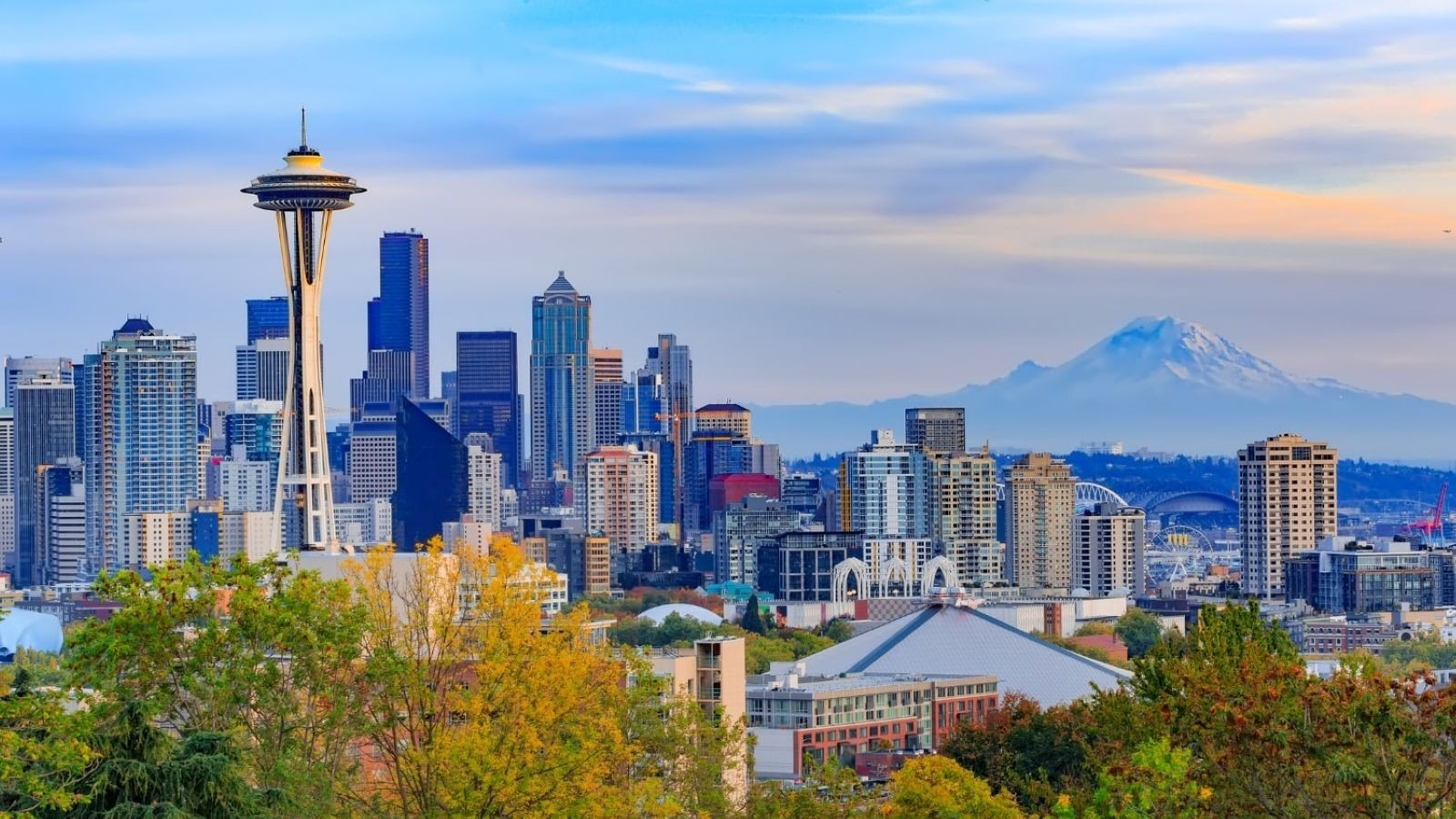
SEATTLE – King County Superior Court Judge John F. McHale barred Kalshi election contracts in Washington, ordering KalshiEX LLC to stop offering, accepting or facilitating any wager on elections or politics in the state.
The amended preliminary injunction, signed Aug. 12 and announced by the state attorney general’s office the next day, leaves the exchange’s commodities, climate, economics and finance markets open to Washington traders. It sets a $120,000 daily penalty for missing a Sept. 2 geofencing deadline.
The Elections Tab Goes Dark, Commodities And Finance Stay
Kalshi must “cease marketing, advertising, promoting, conducting, operating, facilitating, distributing, offering, or accepting event contracts, or other contracts, instruments, or products in Washington, related to sports, elections, politics, entertainment, culture, tech and science, or mentions,” the order says, naming the “Sports,” “Elections,” “Politics,” “Culture,” “Tech and Science” and “Mentions” tabs on the platform.
Then it draws the line: “This does not include bets in the following categories, ‘Commodities,’ ‘Climate,’ ‘Economics,’ and ‘Finance.'”
Four of the 11 topics the court says Kalshi lists are expressly carved out. The findings describe the platform as carrying Elections, Politics, Sports, Culture, Crypto, Commodities, Climate, Economics, Mentions, Finance and Tech & Science.
Aug. 19 And Sept. 2, Then $120,000 A Day
Kalshi has until Aug. 19 to implement IP-address and residency-based geofencing, and until Sept. 2 to implement a multi-source geofencing solution provided through GeoComply, designed to stop anyone inside Washington from buying any covered contract.
The order sets a price on missing the second date. Kalshi must either pay the state $120,000 for each day past Sept. 2 until implementation is complete, or file a sworn affidavit from a Kalshi or GeoComply representative explaining the delay, after which the court may impose penalties it sets itself if the company fails to show sufficient diligence.
Kalshi must also give Washington the same implementation updates it gives Michigan and Nevada, and let the state’s lawyers join its discussions with GeoComply. The state reserved the right to seek recovery of fees and losses incurred by Washington consumers on or after Sept. 2.
The 2026 And 2028 Races Washington Money Can No Longer Reach
Control of Congress leads the 2026 board, and the 2026 Senate odds run opposite the House. Republicans are favored to hold the Senate, while Democrats are heavy favorites for the House.
Those prices are payouts, not probabilities. The implied column converts each payout into the probability it prices in, and the two sides of a market sum past 100% because the margin is built into both numbers.
The combined balance-of-power market prices a Democratic Senate with a Democratic House at +110, a Republican Senate with a Democratic House at +125, a Republican sweep at +500 and a Democratic Senate with a Republican House at +1600. The 2028 presidential race, priced alongside the midterms on the US election odds tracker, falls in the same prohibited category.
Kalshi Won Election Contracts In Federal Court In 2024
Election contracts are the category Kalshi fought for first and won. The Commodity Futures Trading Commission issued a final order on Sept. 22, 2023 prohibiting the company from listing its Congressional Control Contracts, on the ground that they amounted to gaming or election gambling.
Judge Jia M. Cobb of the U.S. District Court for the District of Columbia granted Kalshi summary judgment and vacated that order, finding the commission had erred in categorizing the contracts as gaming or gambling. She denied the commission a stay pending appeal on Sept. 12, 2024.
The D.C. Circuit then refused to stay her ruling, and the contracts went live for the November 2024 elections. The commission “failed at this time to demonstrate that it or the public will be irreparably injured absent a stay,” the appeals court held on Oct. 2, 2024.
That win settled what a federal regulator could do. It did not settle what a state could do.
The Order Reads Federal Law To Allow A State-By-State Map
McHale rejected the preemption defense on express, field and conflict grounds, holding that the Commodity Exchange Act does not displace Washington’s gambling code at Chapter 9.46 of the Revised Code of Washington.
The reasoning turns on the same statutory provision the D.C. Circuit quoted in 2024. The act’s special rule for event contracts, 7 U.S.C. 7a-2(c)(5)(C)(i)(I), lets the CFTC find a contract contrary to the public interest when it involves terrorism, assassination, war, gaming or “activity that is unlawful under any Federal or State law.”
McHale read that last clause as proof that states keep the power to define what is unlawful within their borders. He concluded that “certain types of contracts and transactions may be allowed in some states and not in others.”
The order also dispatched Kalshi’s operational argument that the CFTC’s impartial access rule at 17 C.F.R. 38.151(b) forbids geofencing. The rule “does not require Kalshi to violate state law,” the court wrote, and “an anticipated inability to match Washington traders with other traders nationwide is not discrimination in providing access.”
Against that, the CFTC ordered Kalshi on Aug. 11 to keep its exchange operating under the act’s core principles, invoking its emergency authority after the company reported a market emergency. The two directives now sit on the same company at the same time.
Advertising, Open Positions And What Comes Next
The advertising ban covers local marketing targeted at Washington or Washington residents, and requires Kalshi to make good-faith efforts to exclude the state from nationwide campaigns “to the extent it is technologically feasible to do so.” The court found that Kalshi’s provision, marketing and advertising of illegal gambling activities are unfair or deceptive acts under RCW 19.86.020, citing an advertisement telling consumers they could “bet on the NFL even though [they] live in Washington.”
Traders holding positions may exit them. The order states that Kalshi “will not prohibit users from exiting positions they already hold,” and nothing in it stops a self-identified Washington customer from closing an account and withdrawing funds. Kalshi must hold the status quo on transaction fees collected from those customers, and preserve logs, communications, geolocation determinations and marketing data until the court says otherwise.
McHale required no bond from the state, under Civil Rule 65(c) and RCW 4.92.080.
Washington’s 10 U.S. House seats are on the November ballot. Once the geofence lands, Washington election odds will price without any Washington money moving through Kalshi.
The document is an amended preliminary injunction rather than a final judgment. The underlying case, State of Washington v. KalshiEX LLC, No. 26-2-10264-3 SEA, has not been tried.
