
D.C. Mayor Primary Preview: Lewis George Out Front as the City Picks Bowser's Successor
- D.C. votes Tuesday, June 16, to nominate its next mayor. With Muriel Bowser stepping down, it is the first open mayor's race since 2014, and in a city this Democratic the primary is what actually settles it.
- Seven Democrats qualified, but the race is really between two. Ward 4 Councilmember Janeese Lewis George, 38, runs to the left; former at-large Councilmember Kenyan McDuffie, 50, runs to the center.
- Lewis George leads comfortably. Among likely Democratic voters, a late-May City Cast DC poll had her up 39% to 34%, and an early-June Washington Post-Schar School poll widened that to 36% to 25%, an 11-point edge, with about a quarter still undecided.
- The markets now call it lopsided. Polymarket and Kalshi both price Lewis George around 90% to win the nomination, with McDuffie down in the single digits to low teens, on Polymarket volume above $140,000. Backing from Eric Holder and a soft word from Bowser has not moved it for McDuffie.
- For the first time, D.C. is running a mayor's race on ranked-choice voting, with up to five names allowed per ballot. That format is McDuffie's likeliest way back, since he has more room to grow on second-choice support.
WASHINGTON,D.C - After more than a decade with Muriel Bowser in charge, D.C. is about to hand the mayor's office to someone new. Bowser said last year that she would not run again, and on Tuesday, June 16, Democratic voters decide who takes her place.
In practice, that decision ends the contest. No one but a Democrat has run the city since D.C. won home rule in the 1970s, so the candidate nominated this week is all but certain to be sworn in come January.
The Front-Runner and the Challenger
Seven Democrats made the ballot, but the money, the crowds and the polling all point at two of them, both veterans of the D.C. Council.
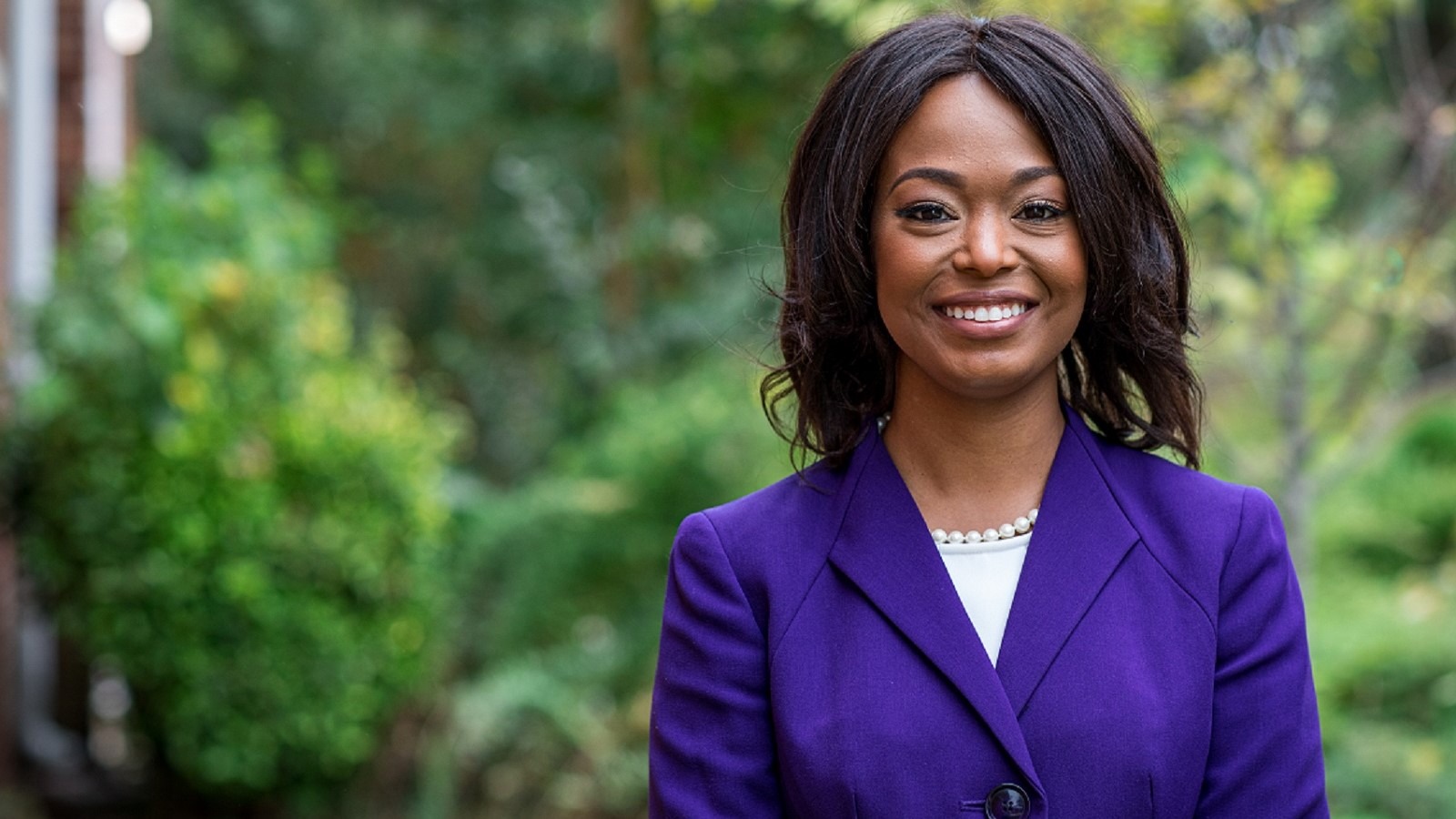
Janeese Lewis George, 38, represents Ward 4 and has set the pace. She calls herself a democratic socialist, draws her muscle from labor and progressive groups, and has built her pitch around schools, child care, the cost of living and tighter oversight of D.C. police. She also vows to haul the Trump administration into court to protect the city's right to run its own affairs, and she has jabbed at Bowser more than once along the way.
Kenyan McDuffie, 50, is the one chasing her. He surrendered an at-large council seat in January and re-registered as a Democrat to get in, capping years in local office that included a run representing Ward 5. His themes are growth, business and public safety, and he has rounded up much of the city's establishment.
The other five never found altitude. Gary Goodweather, an Army veteran out of the real estate world; Hope Solomon, a businesswoman; Rini Sampath, who works for a federal contractor; Vincent Orange, a former councilmember; and Ernest Johnson, who sought the office once before, fill out the rest of the field.
What the Betting Says
Two separate yardsticks point the same way: the polling and the money.
Start with the polls, which measure the share of voters who say they will back each candidate. Late in May, a City Cast DC survey of likely Democratic primary voters put Lewis George at 39% and McDuffie at 34%, with close to one in four still undecided. By early June, a Washington Post-Schar School poll had stretched her lead to 11 points, 36% to 25%. Those are slices of the voters surveyed, not ballots already cast, and McDuffie has yet to lead a single public poll.
The betting markets are a different measure, not how many votes a candidate draws but the odds traders give each one to win. There, the lines have swung even harder her way. Lewis George now sits around 90% to win the nomination on Polymarket and close to 91% on Kalshi, a steep climb from the high 60s a month ago, while McDuffie has slid into the single digits to low teens. The action backs up the price: Polymarket alone has taken in more than $140,000, with another $80,000-plus on Kalshi, heavy traffic for a local primary and far more signal than the usual thinly traded city race.
McDuffie's edge is the bigger Rolodex. Eric Holder, the former U.S. attorney general, endorsed him flat out, and Bowser has said she is behind him while withholding a formal endorsement. Neither has chipped away at the lead.
How Ranked Choice Changes the Math
D.C. has never tallied a mayor's race this way, and the new format hands McDuffie his clearest opening. Each voter may list as many as five candidates, first preference down to fifth.
The opening round looks only at top picks. Any candidate named first on a majority of those ballots wins outright, no further steps needed. Come up shy of a majority and the sorting begins: the lowest finisher is cut, every ballot that had ranked that person on top drops to its next listed name, and the totals are recounted. The loop runs again and again, shedding one contender per pass, until a single candidate holds more than half of the ballots still in the mix.
That transfer math is exactly why McDuffie is not done. The pollster who ran the May survey found he had more headroom than Lewis George to pick up votes as the trailing candidates fall away. The hitch: nearly one in five voters told that poll they intended to mark a first choice and nothing more, and a ballot with no backup name has nothing left to give.
Plan on a wait for the result, as well. D.C. keeps accepting mailed ballots for days after polls close and holds the ranked rounds until that window shuts, so unless someone seizes a first-round majority, the official winner may not surface until the following week.
The Federal Shadow
This is no routine city election. Earlier in his second term, President Trump put National Guard troops on D.C. streets, and the city's grip on its own laws and budget has been squeezed by Congress and the White House ever since.
The pressure went straight at this race days before the vote. Asked on Thursday about Lewis George, Trump said he would not like to see the democratic socialist win and floated taking federal control of the city, saying his administration might "take back Washington and run it on the federal basis." Lewis George answered that threatening home rule over how residents vote is an attack on democracy, while McDuffie's campaign said D.C., not Trump, decides who runs the city.
That strain runs underneath the whole campaign. Lewis George frames herself as the one who will resist hardest and take the administration to court. McDuffie counters that a steadier, more cooperative posture will do more to guard the city's economy and its standing. Whichever wins spends the coming stretch governing D.C. with Trump in office.
The Bottom Line
For the first time in 12 years, D.C. is set to pick a mayor who is not Muriel Bowser, and the pick is effectively locked on June 16.
Two questions loom over primary night. Can Lewis George grab a clean first-round majority, or does the ranked count stretch out and keep McDuffie breathing? And which way does that stubborn undecided share, there in poll after poll, finally tip?
Nov. 3 brings the official general election, but in D.C. that is a formality. For live election odds, June 16 is the date that counts.